A better way to collect, curate, and share media
There are so many amazing TV shows, movies, podcasts, books, and bands out there today that it's hard to keep track of everything. Lineup helps you effortlessly save and organize the media you want to watch, listen to, and read. Put everything in one spot and always have something worthwhile to spend your time on.
Company
Big Tomorrow
Role
Lead product designer
My responsibilities
UX / UI design, prototyping

01 CHALLENGE
Lineup started as an internal project at Big Tomorrow, moving through several iterations and identities. Early on, I drove the initial version solo-owning UX, UI, prototyping, branding, and illustration. As the project gained momentum and more designers joined, we transformed the proof of concept into a more refined experience. I eventually went back to reimagine the product to improve the experience and bring it into the age of AI.
Between streaming services, social feeds, and friends’ recommendations, media discovery is everywhere, but it’s also fragmented. There’s no single place to capture what you want to consume or manage what you already own
Common pain points
01. Fragmentation of content across platforms
02. Discovery overload
03. Algorithmic frustration and differences across platforms
04. Subscription fatigue
05. Context switching
06. Inconsistent metadata across media types
02 APPROACH
Opportunity
A single platform could unify media discovery, organization, and social interaction across various media formats.
Hypothesis
If users can organize all media types in one collaborative ecosystem enhanced by AI-powered recommendations, they will engage more consistently and discover content more organically.
The Audience
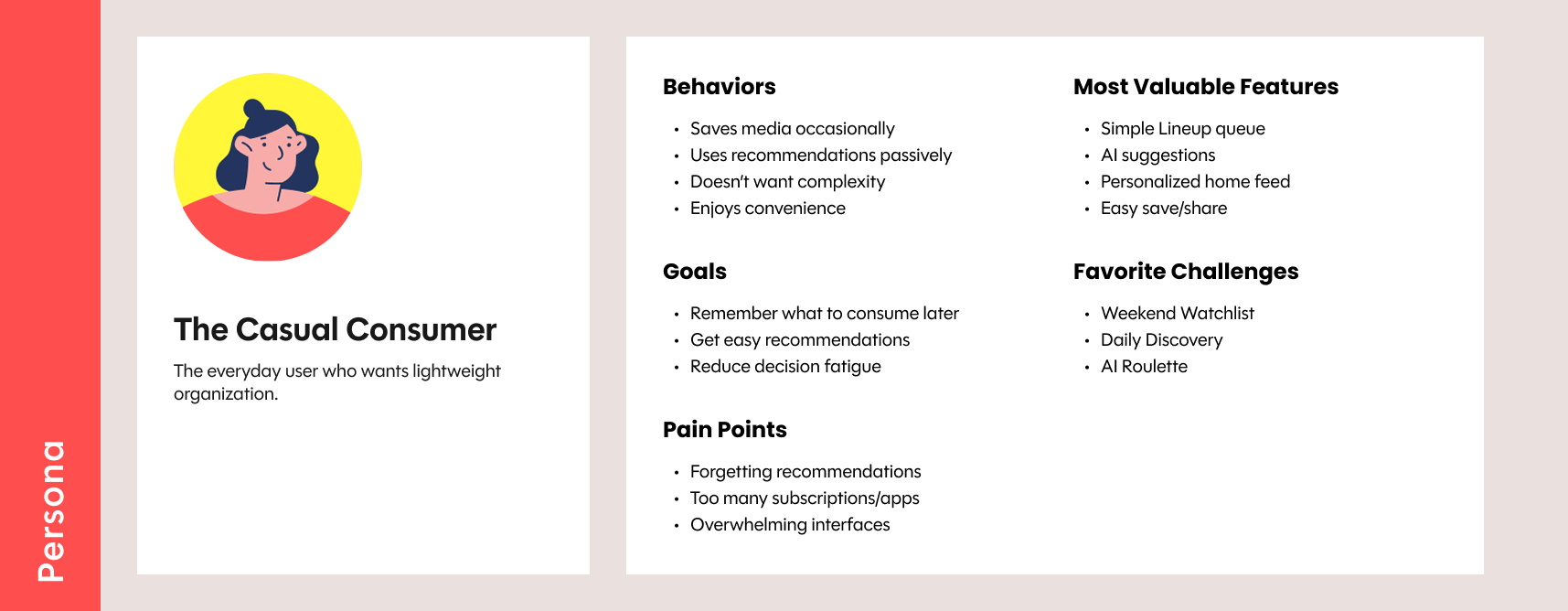
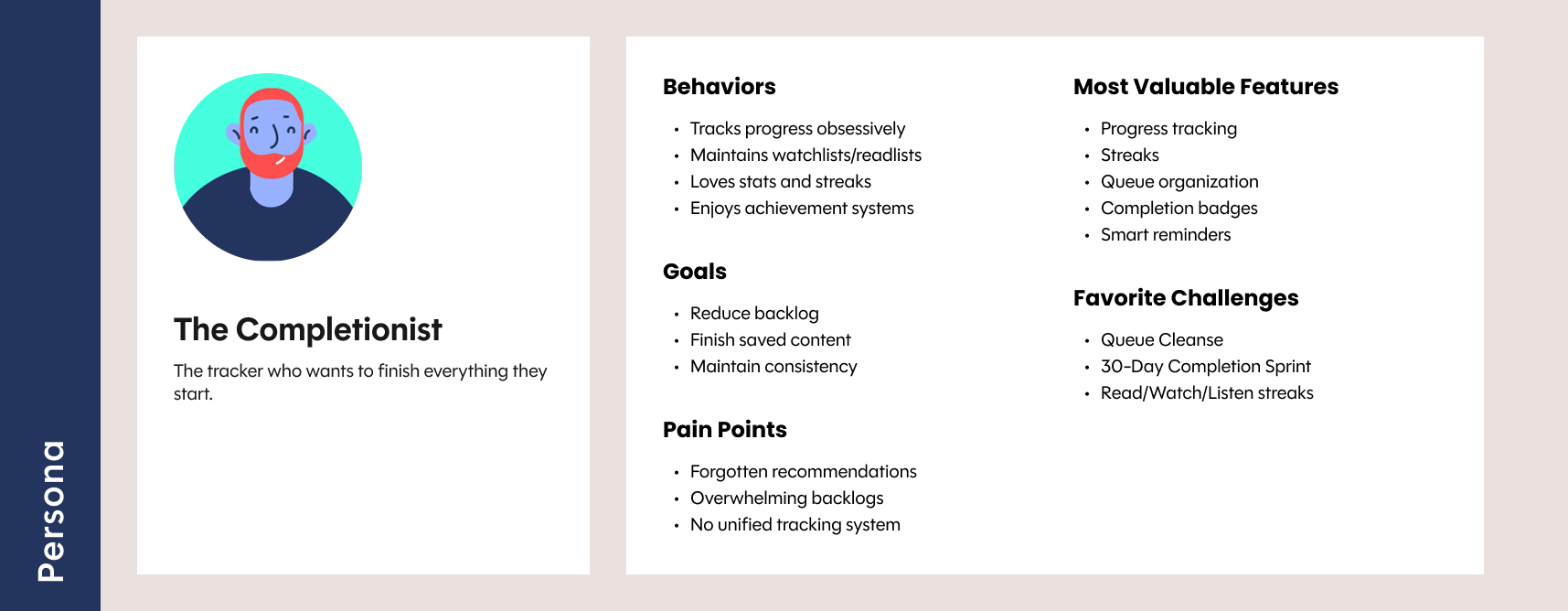
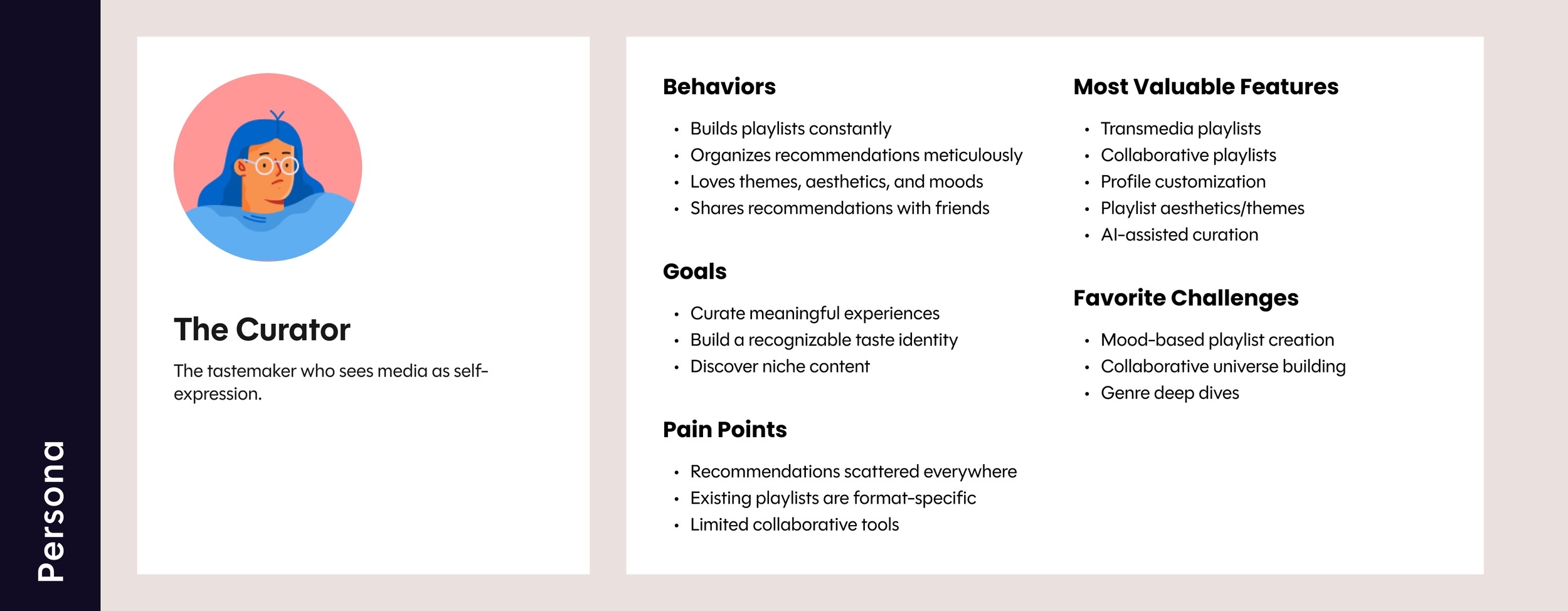
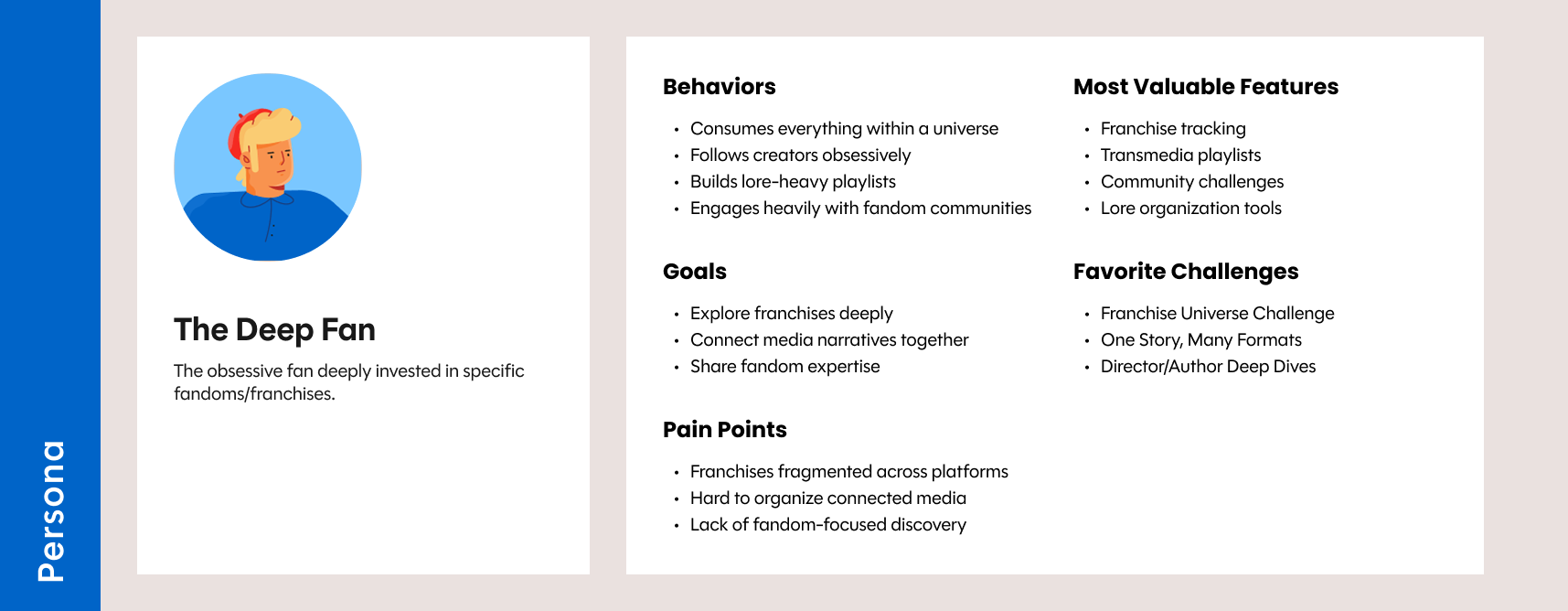
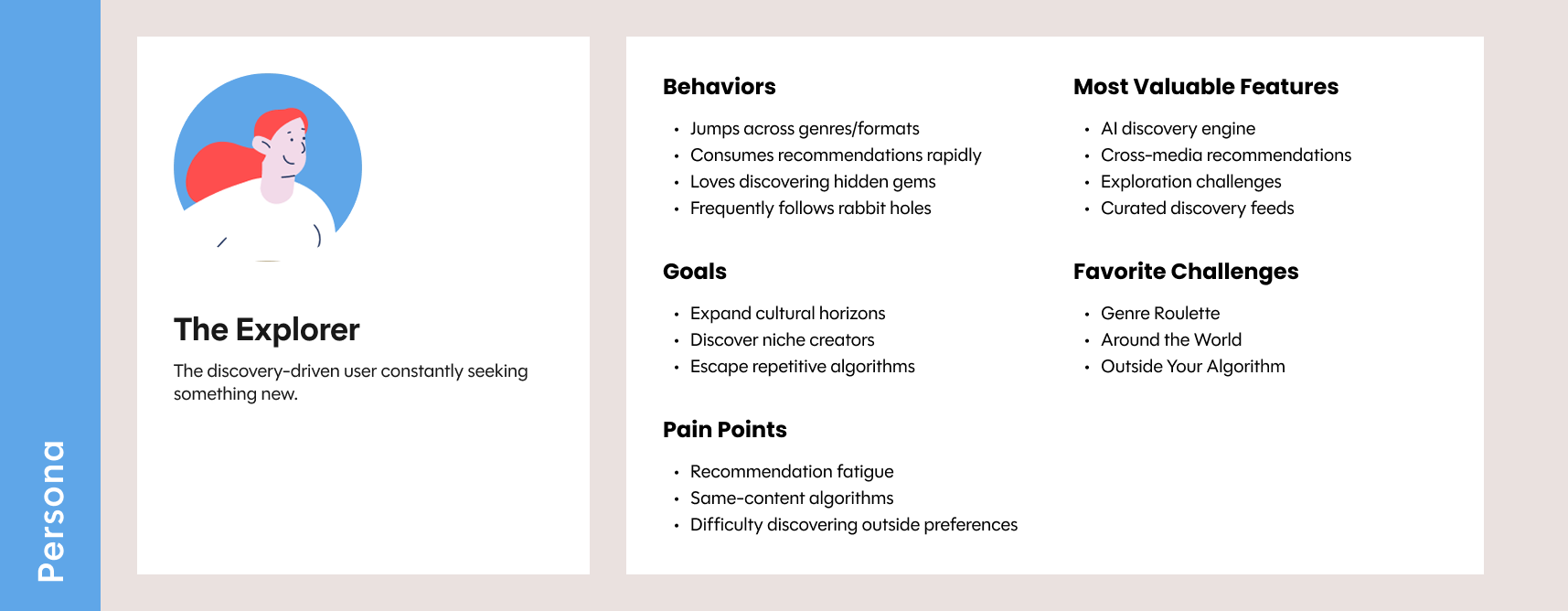
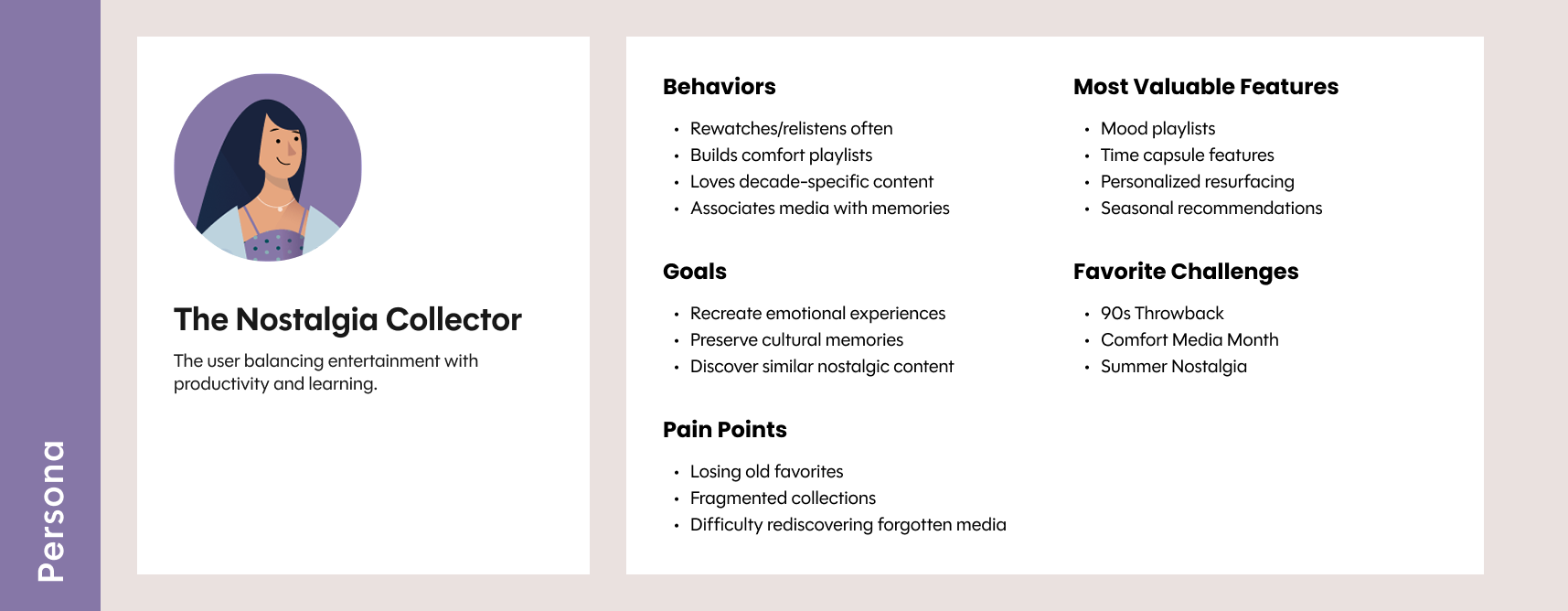
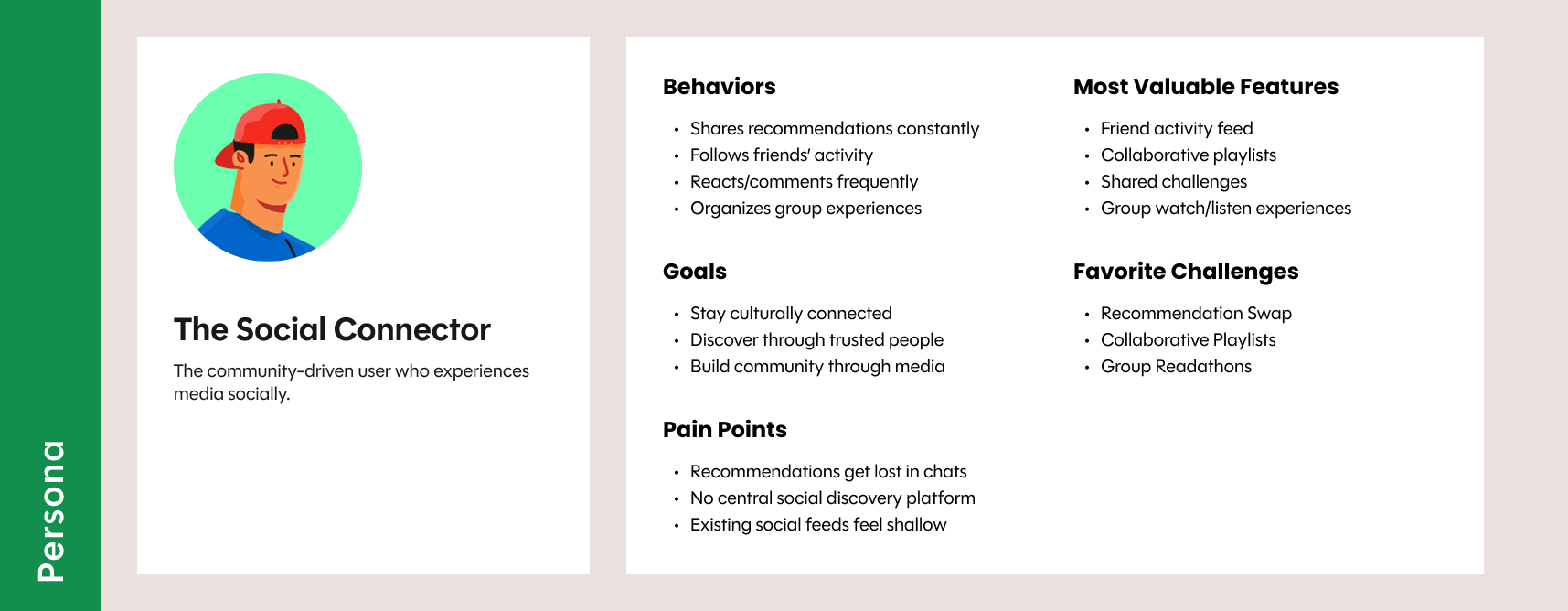
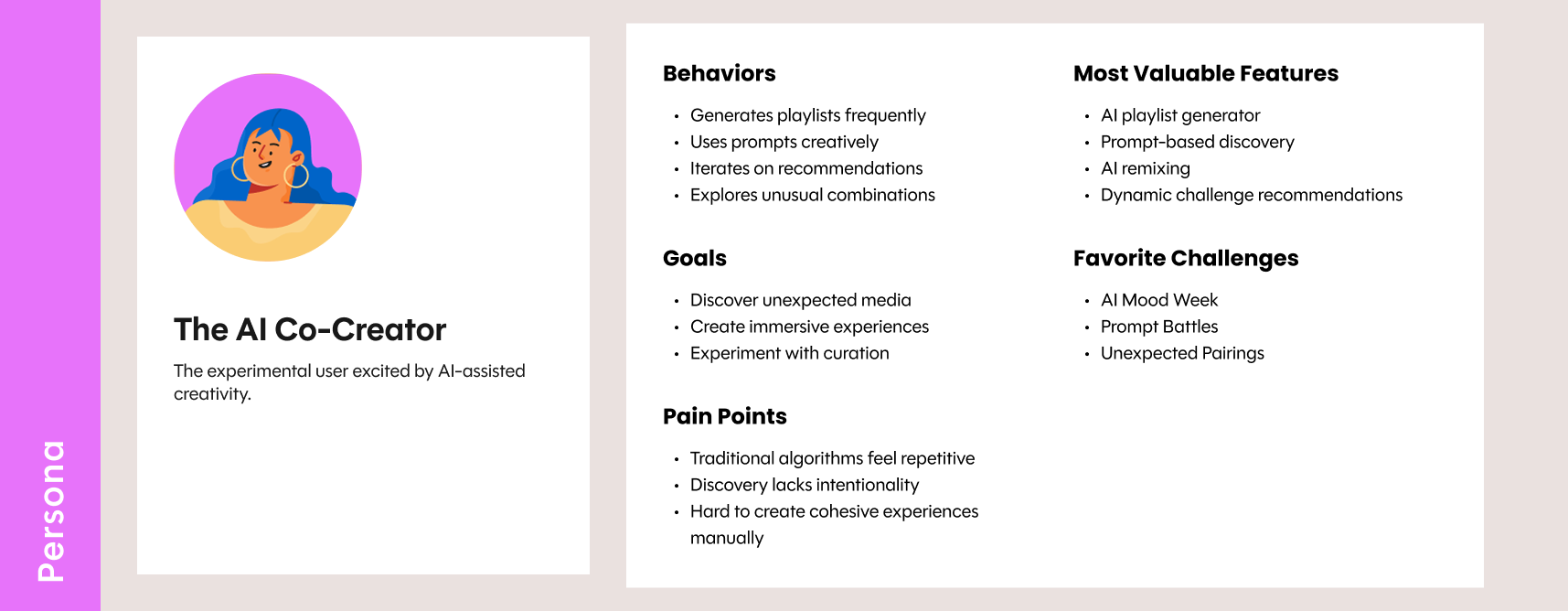
Media-heavy consumers, multitaskers, collectors, audiophiles, cinephiles, bibliophiles
Key Insights
Fragmented Discovery
Users save recommendations across texts, notes, apps, and screenshots.
Media Ecosystems
Users naturally move between related media formats, such as books and their movie adaptations, TV series and their soundtracks, podcasts and documentaries, etc.
Social Trust
People value recommendations from friends more than algorithms alone.
Consumption Anxiety
Users often feel overwhelmed managing unfinished content and finding where they can consume media across numerous subscriptions and platforms that often rotate out media, making it hard to find.
Key Features & Flows
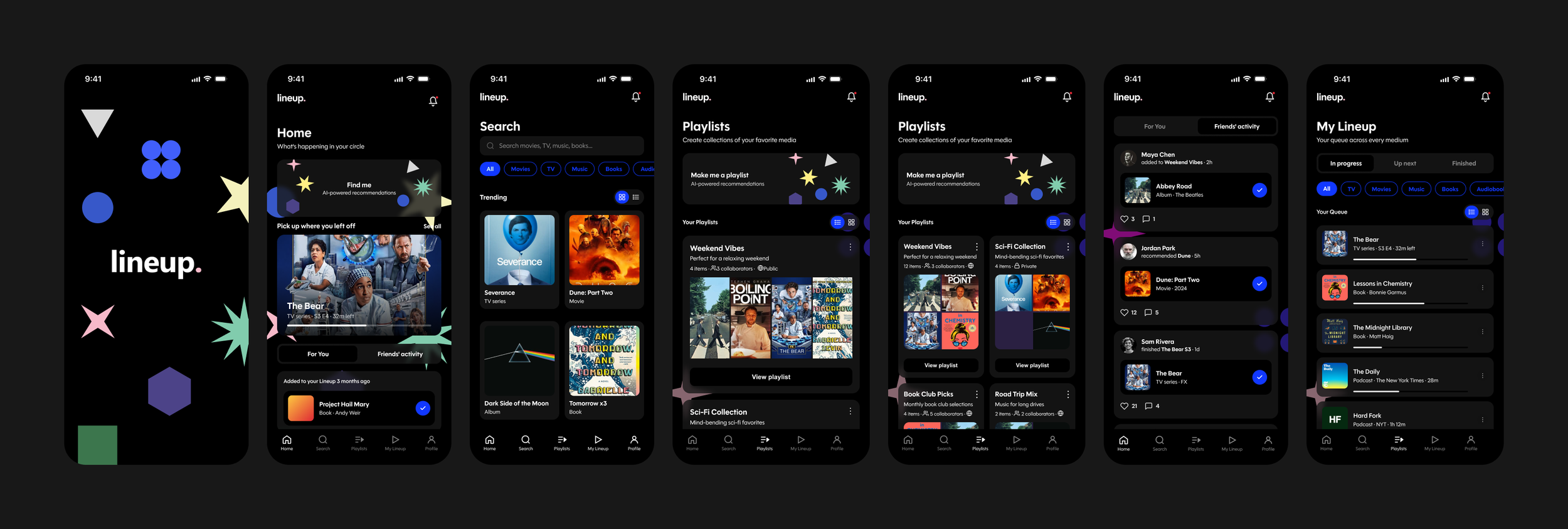
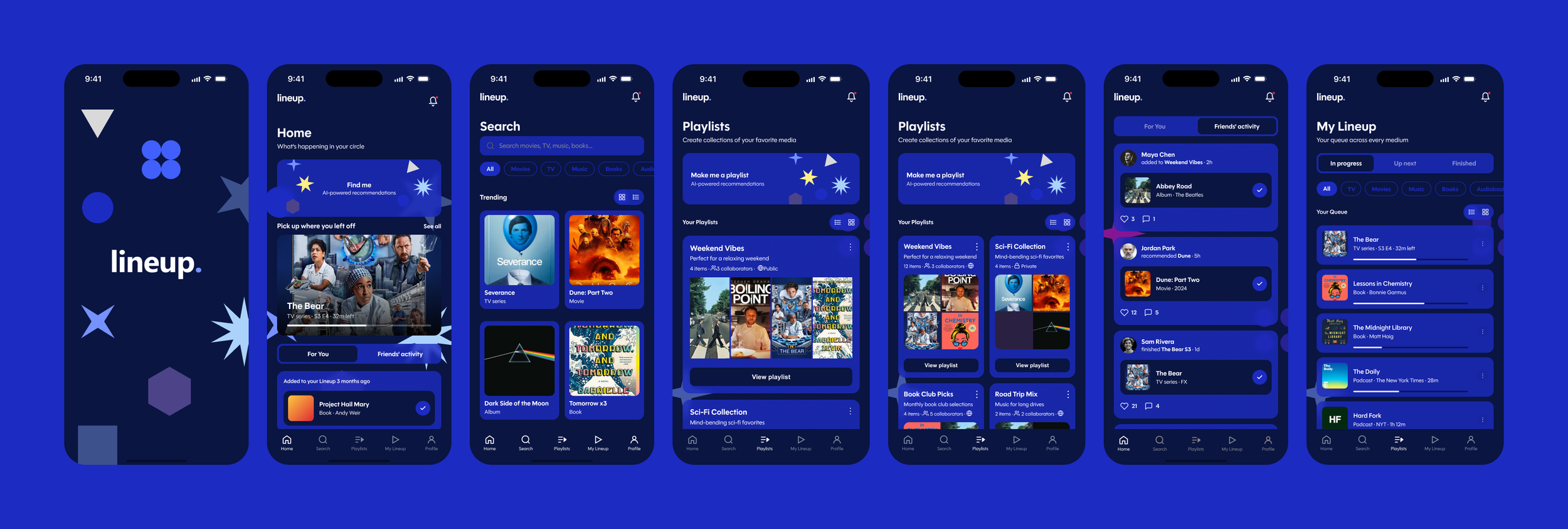
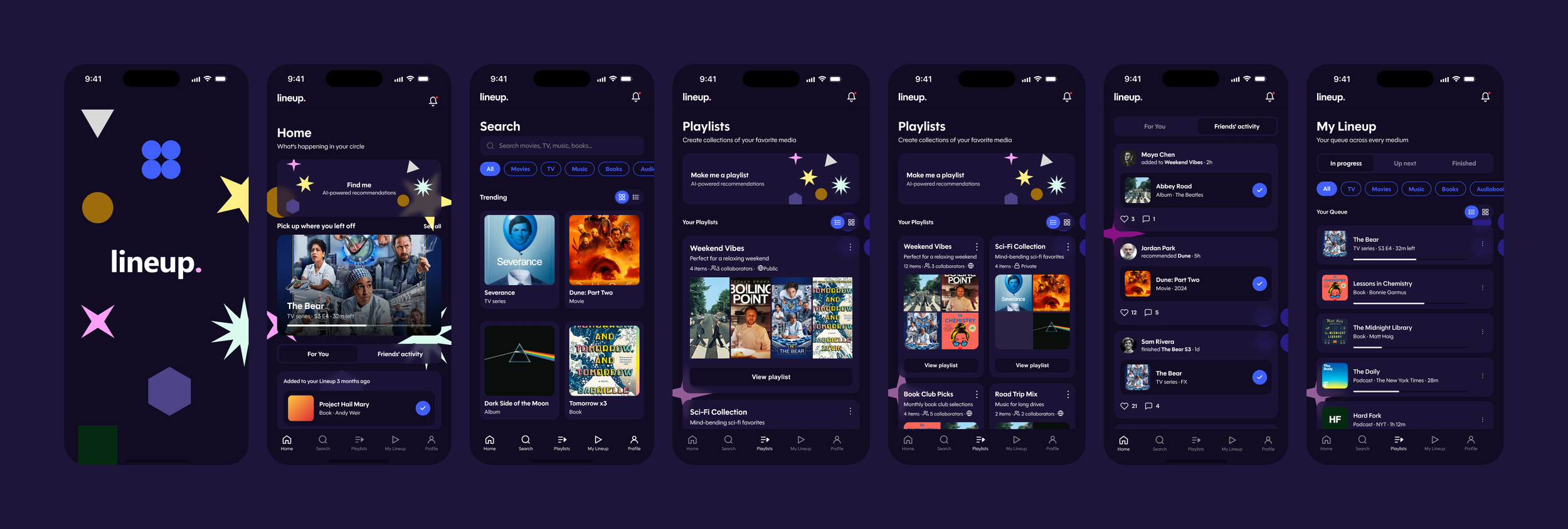
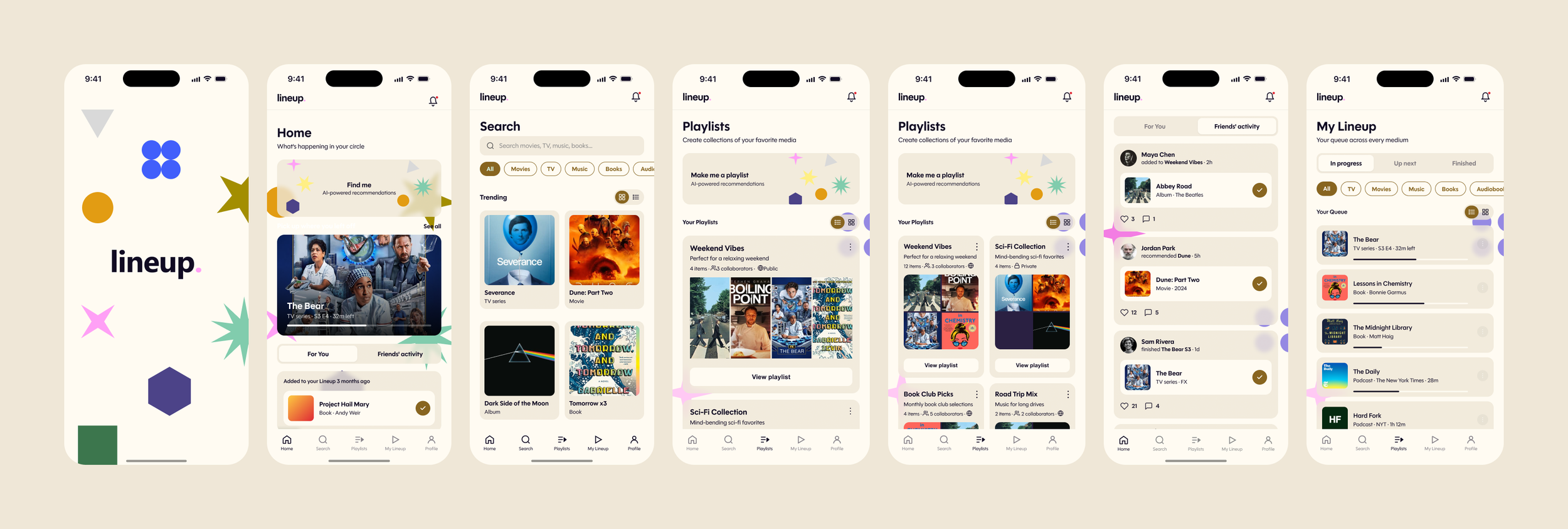
Frictionless Capture
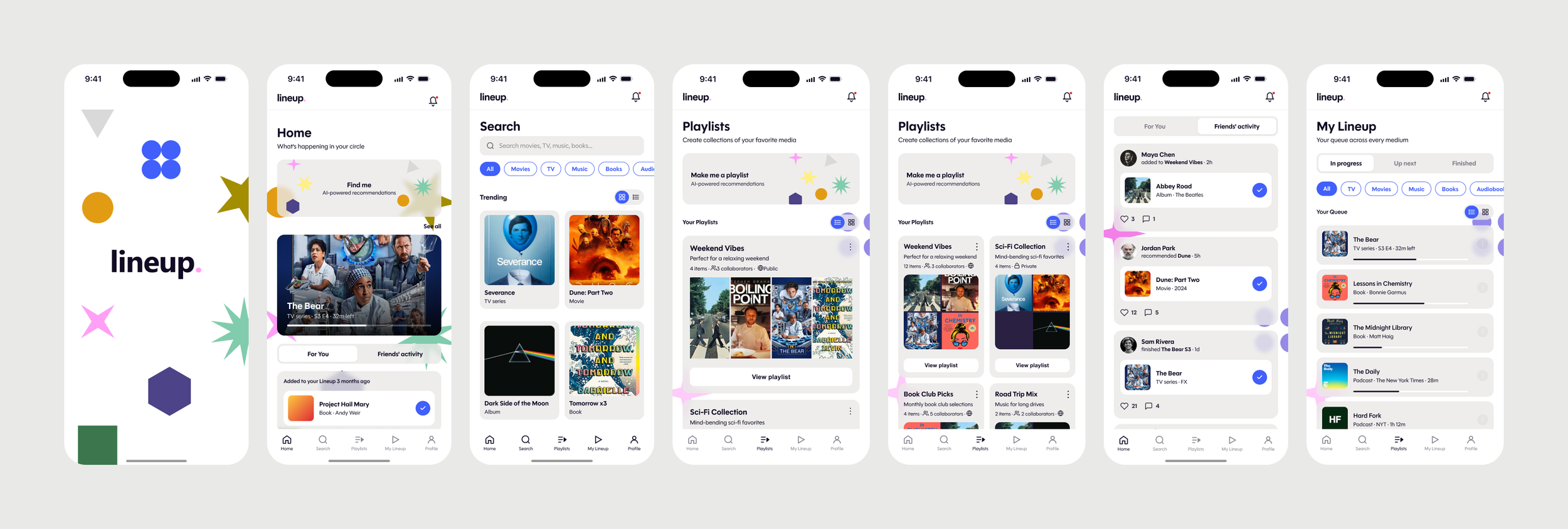
Super easily add the things you want to watch, read or listen to to your queue. You can manually add them to the app, dictate them, or send them to Lineup via text.
Automatic Organization
Titles are automatically organized by media (TV, Movies, Books, Music, Podcasts) and tagged for genre and artist.
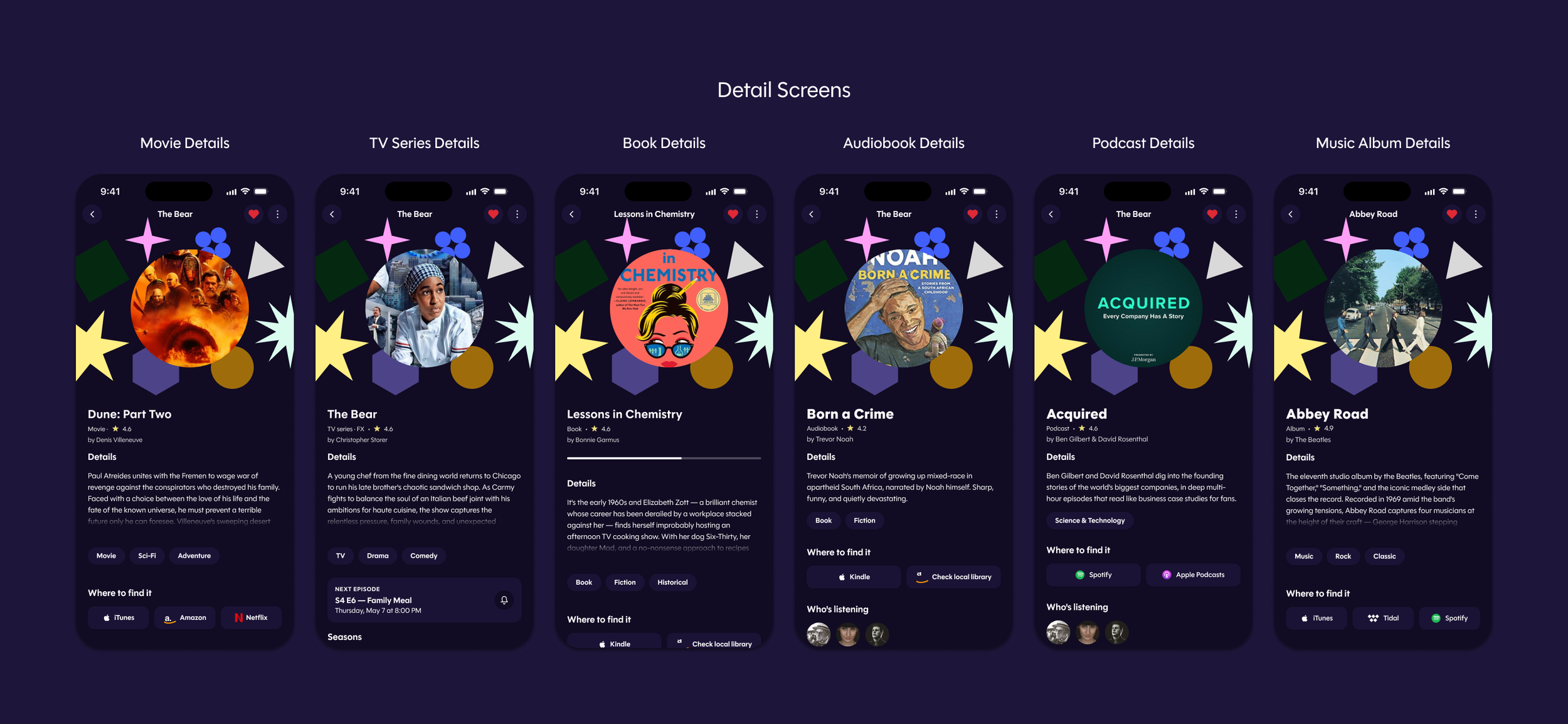
Find Where to Get It
Find out where you can read, stream or purchase any item. Get alerts when things become available on you the services you use.
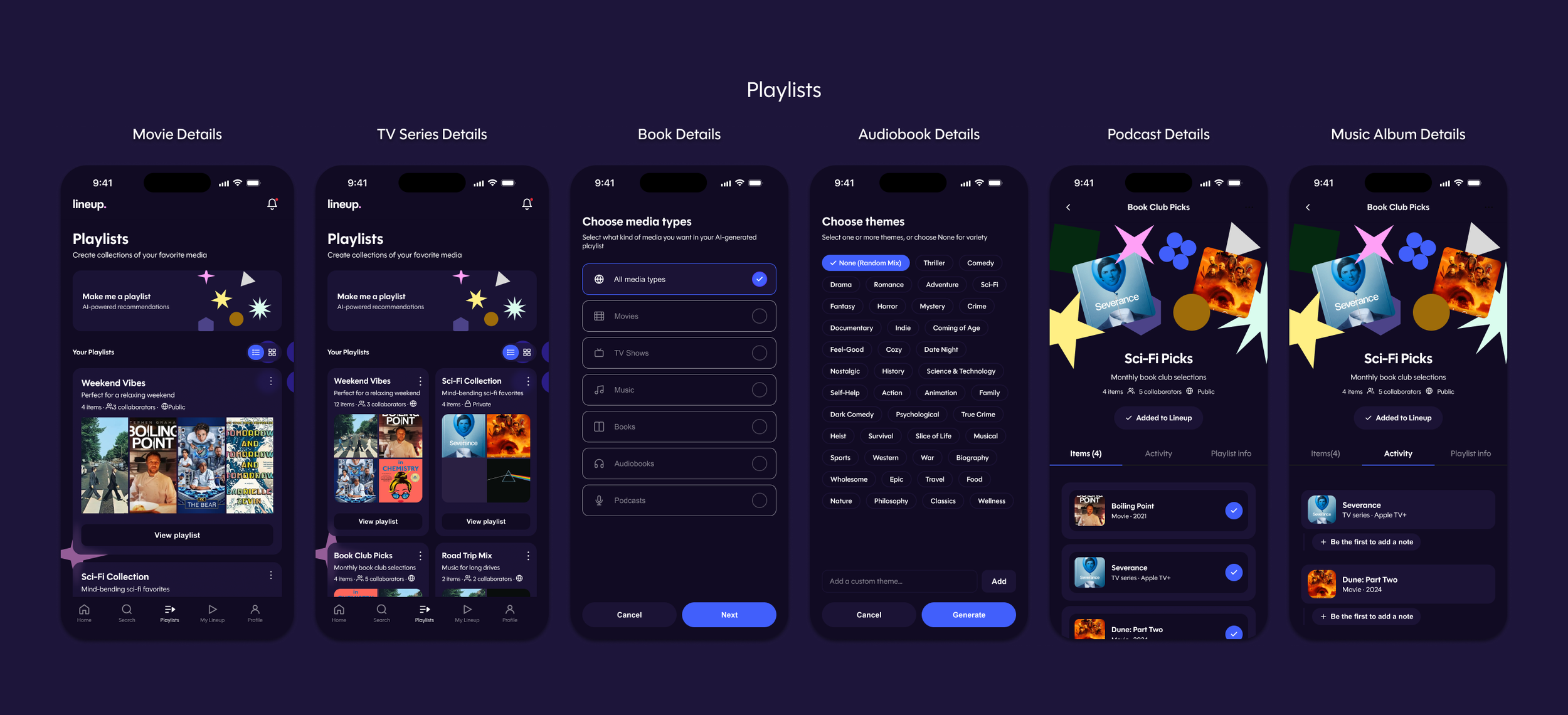
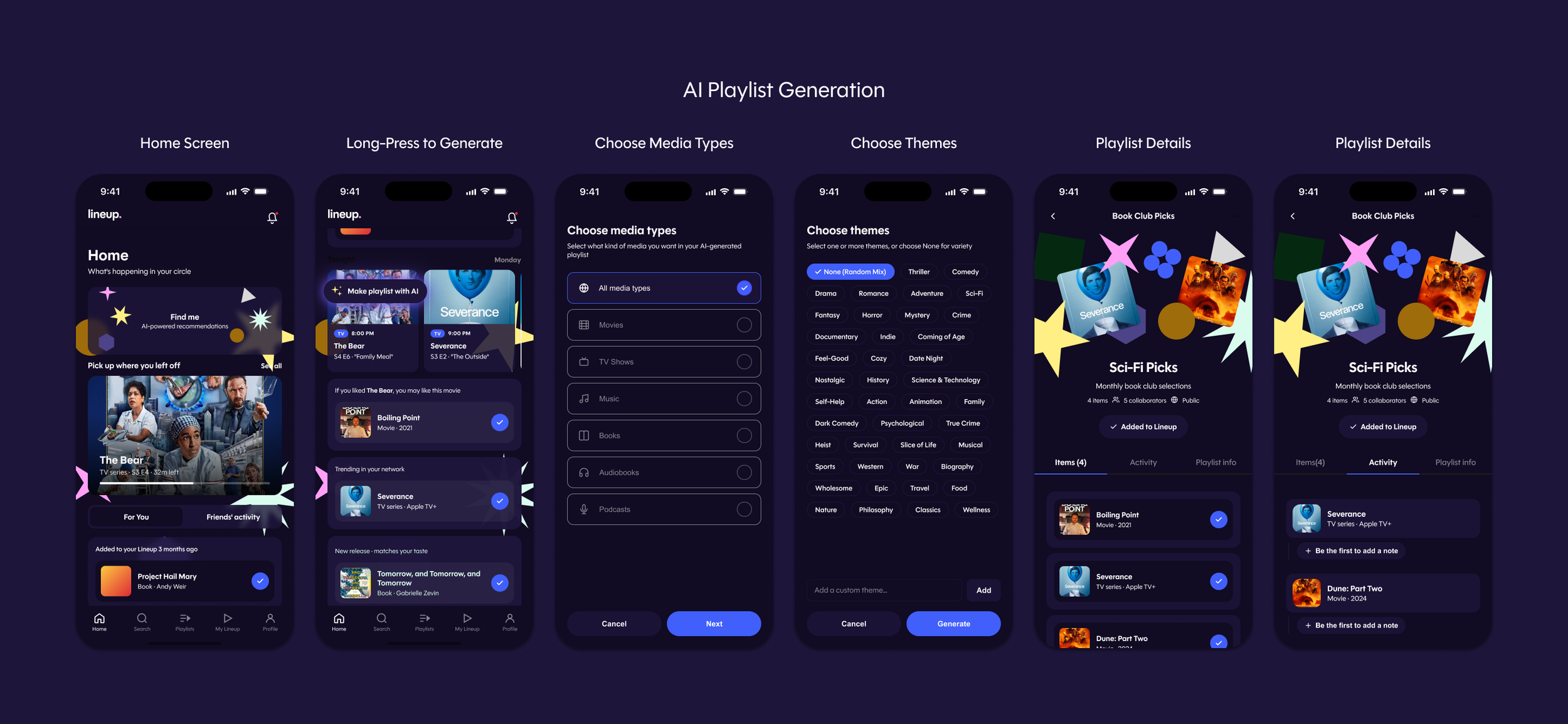
AI-curated Transmedia Mixtapes
Rather than static playlists limited to a specific media type, AI is leveraged to generate mixed-media playlists. Users are given the option of specifying the different media types they’d like included in the playlist or the option for the system to decide entirely. The user is also presented with theme selections to help better guide the system on what to generate.
Tradeoffs
Personalization vs Discovery
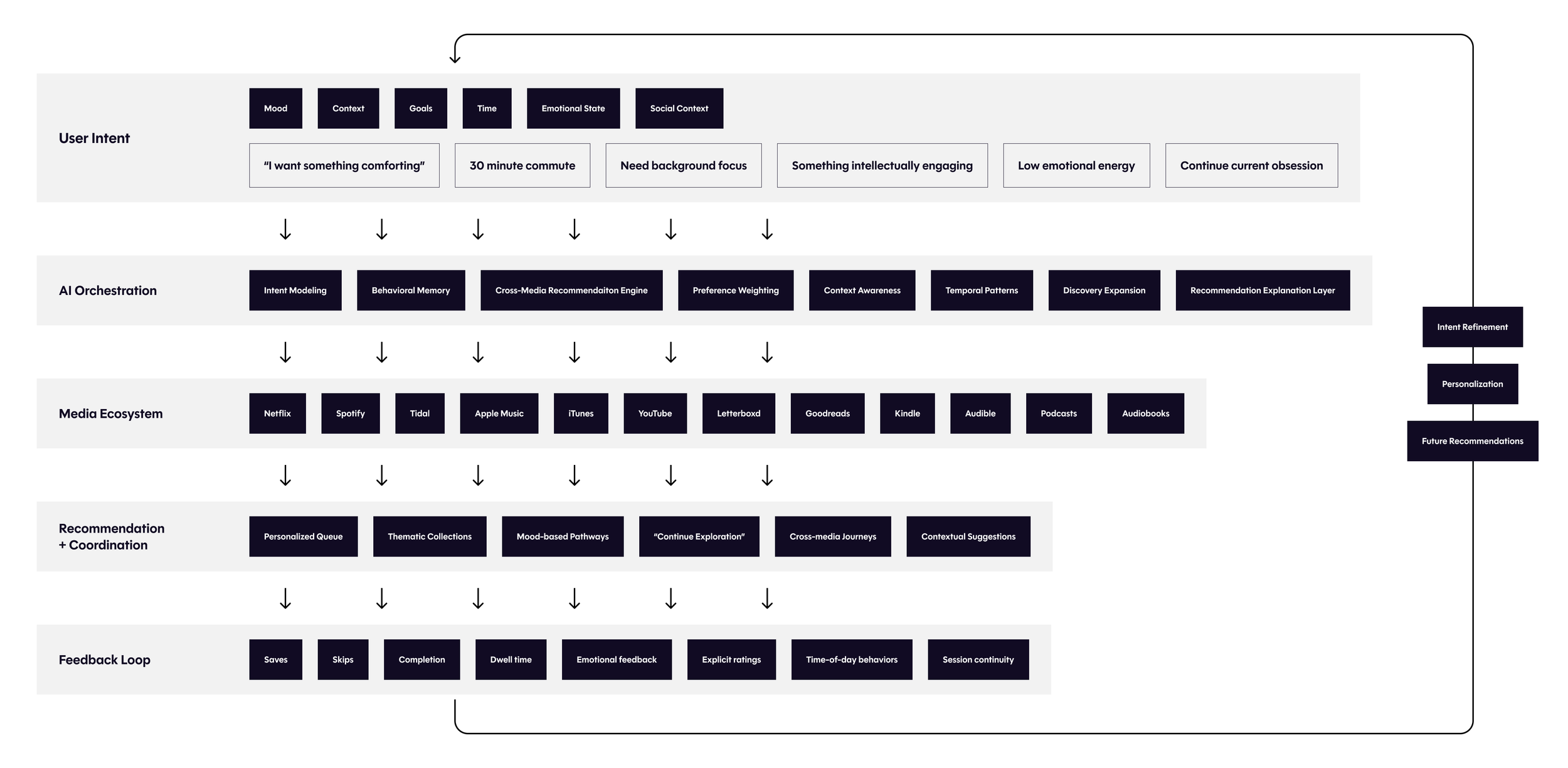
One of the central tensions throughout the project was balancing personalization with meaningful discovery. While users benefit from highly relevant recommendations, overly optimized systems risk reinforcing repetitive consumption patterns and limiting exposure to unexpected or diverse content. The recommendation framework therefore needed to support familiarity without eliminating serendipity. For this reason, we balanced algorithmic recommendations with social sharing.
Additionally, we introduced sections within a user’s feed recommending media they typically don’t consume while being intentionally transparent through descriptive labeling that we were intentionally surfacing different content rather than risking the possible perception that the algorithm simply wasn’t working well. For some people, being recommended media that falls outside their typical consumption patterns may not be desirable. For that reason, we added in settings that allowed users to opt out of certain types of recommendations.
Convenience vs Agency
As AI capabilities expanded throughout the project, maintaining user agency became increasingly important. Intelligent coordination and predictive recommendations can significantly reduce friction, but systems that become too invisible or prescriptive risk diminishing user awareness and control over their own consumption patterns. Transparency and user-adjustable recommendation behaviors therefore became critical parts of the experience design.
03 RESULT
Lineup never shipped as a customer product. The project ended when Big Tomorrow closed, before the AI-era reimagining made it past prototype. What I do have is multiple rounds of user testing across the project's lifetime, on a cross-media organization concept, a previous chatbot concept, and the later AI generation features.
The testing made the design hypothesis legible:
Users consistently valued a single place to capture and organize intent, rather than maintaining lists scattered across platform-specific apps
There was strong interest in cross-media recommendations, especially when tied to mood, context, or time availability
Participants raised real concerns about trust and control — how recommendations are generated, and how much autonomy the system should have over their consumption
What I can't claim from prototype testing: retention, weekly active use, or whether the social-discovery features would have actually driven repeat visitation. Those are the indicators that would have validated the hypothesis end-to-end, and they're the data I'd most want to have.
04 REFLECTION
Working on Lineup shifted my perspective on media consumption from a content-access problem to a coordination and continuity problem. What initially began as an exploration of cross-platform media organization evolved into a broader investigation into how people navigate increasingly fragmented recommendation ecosystems shaped by algorithms, social feeds, streaming platforms, and rapidly shifting digital behaviors.
As the project evolved, the role of AI became increasingly complex. Recommendation systems do more than surface content, they influence taste formation, shape cultural participation, and subtly guide behavioral patterns over time. This introduced an important tension between convenience and intentionality. While intelligent curation can reduce friction and help users rediscover meaningful content, overly optimized systems also risk narrowing discovery, reinforcing behavioral loops, and reducing active exploration.
If I could go back, the artifact I'd want is six months of weekly active user data segmented by AI-generation vs. social-discovery primary use. That would have validated whether "AI enhances taste, not replaces it" actually held up in real consumption behavior, or whether the social features ended up doing the retention work AI couldn't.