Designing narrative infrastructure for immersive environments
As of June 2022, Meow Wolf has welcomed its millionth visitor less than nine months after first opening its doors.
Company
Meow Wolf
Role
Lead UI/UX designer + animator
Year
2021-2022
This work was part of my four-year in-house tenure at Meow Wolf (2020–2024), where I owned the digital product surface across Convergence Station's interactive narrative experience, Omega Mart's interactive narrative experience, and the Meow Wolf App.
01 CHALLENGE
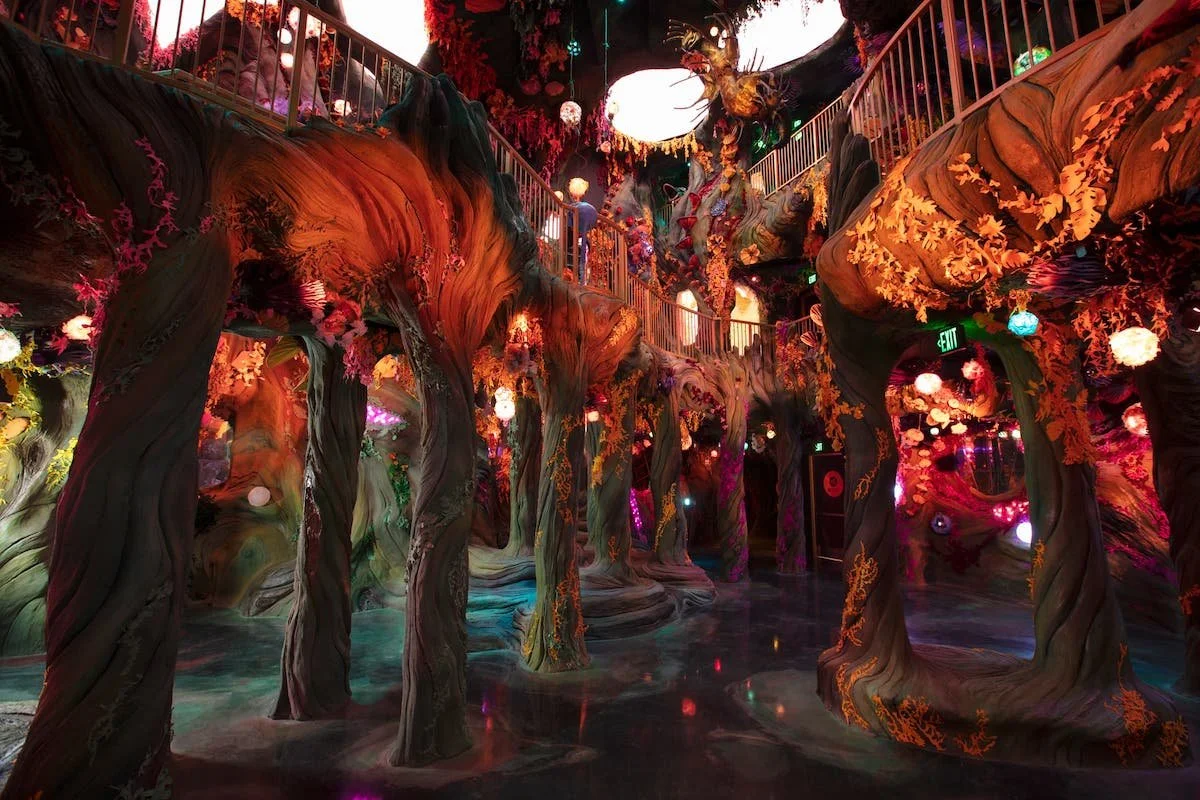
Convergence Station required a digital experience capable of supporting millions of guests moving through a nonlinear story experience within a physical environment while maintaining immersion and narrative continuity within an environment that is overstimulating and full of distractions.
The challenge was not simply designing screens, but designing a system that could respond contextually to where a guest had been, what they had already discovered, and what the story should reveal next.
Understanding the ecosystem
The work required mapping relationships between:
Physical spaces
Narrative progression
Guest behavior
Interactive devices
Operational constraints
Multi-user states
Environmental storytelling
Rather than designing isolated screens, the process focused on understanding how information and narrative context moved across the entire experience.
Non-Linear Visitor Behavior
Unlike traditional digital products, the experience had to support highly variable behavioral pathways without breaking immersion or narrative continuity.
Traditional UX assumes:
Predictable flows
Controlled pathways
Intentional navigation
However, immersive spaces do not behave that way.
Visitors:
Wander unpredictably
Skip content
Move in groups
Get distracted
Discover things accidentally
Engage at varying depths
Enter emotional states unpredictably
02 APPROACH
Embedded narrative interfaces
The final experience treated each digital interface as an in-world artifact rather than a traditional UI layer.
Interfaces adapted based on:
guest progression
discovered information
location within the experience
narrative state
prior interactions
Multi-device experiential system
The system created continuity across:
kiosks
environmental displays
guest interactions
narrative checkpoints
exploration mechanics
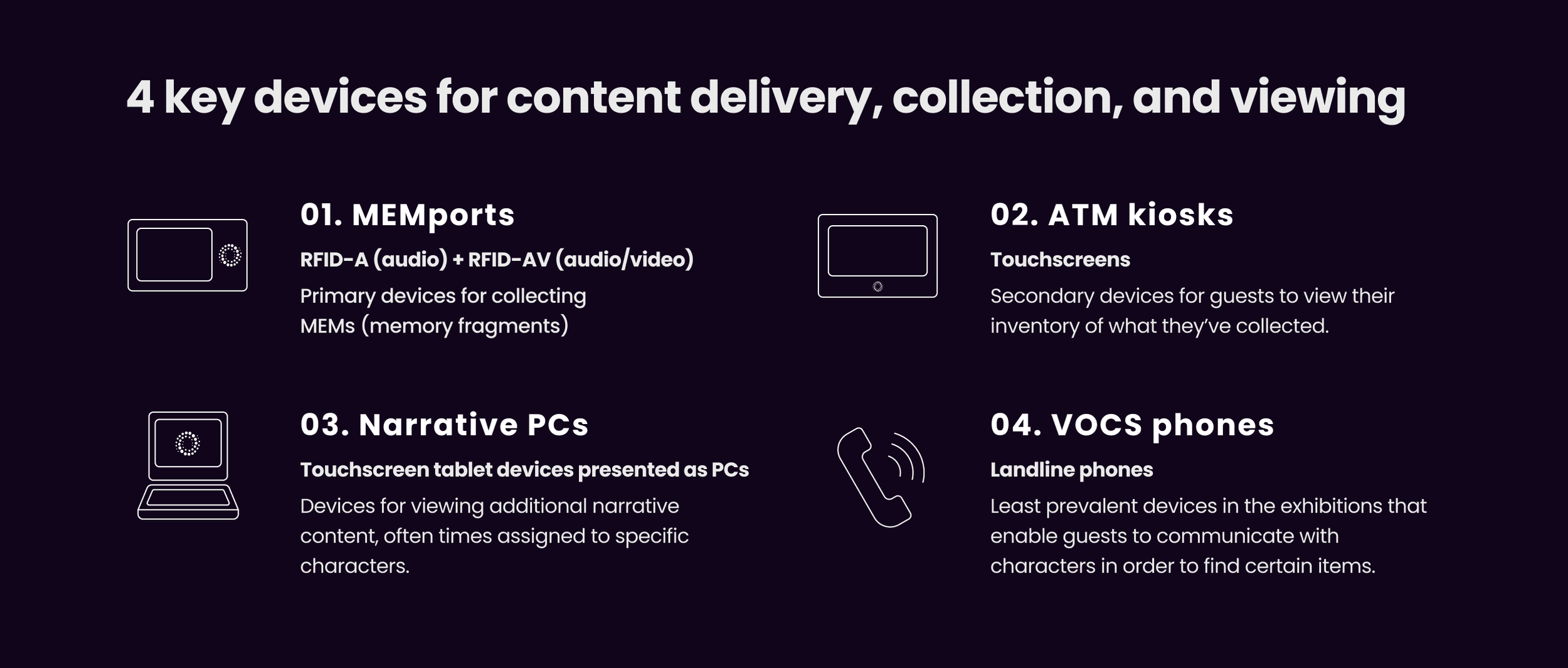
Device Type #1
MEMports
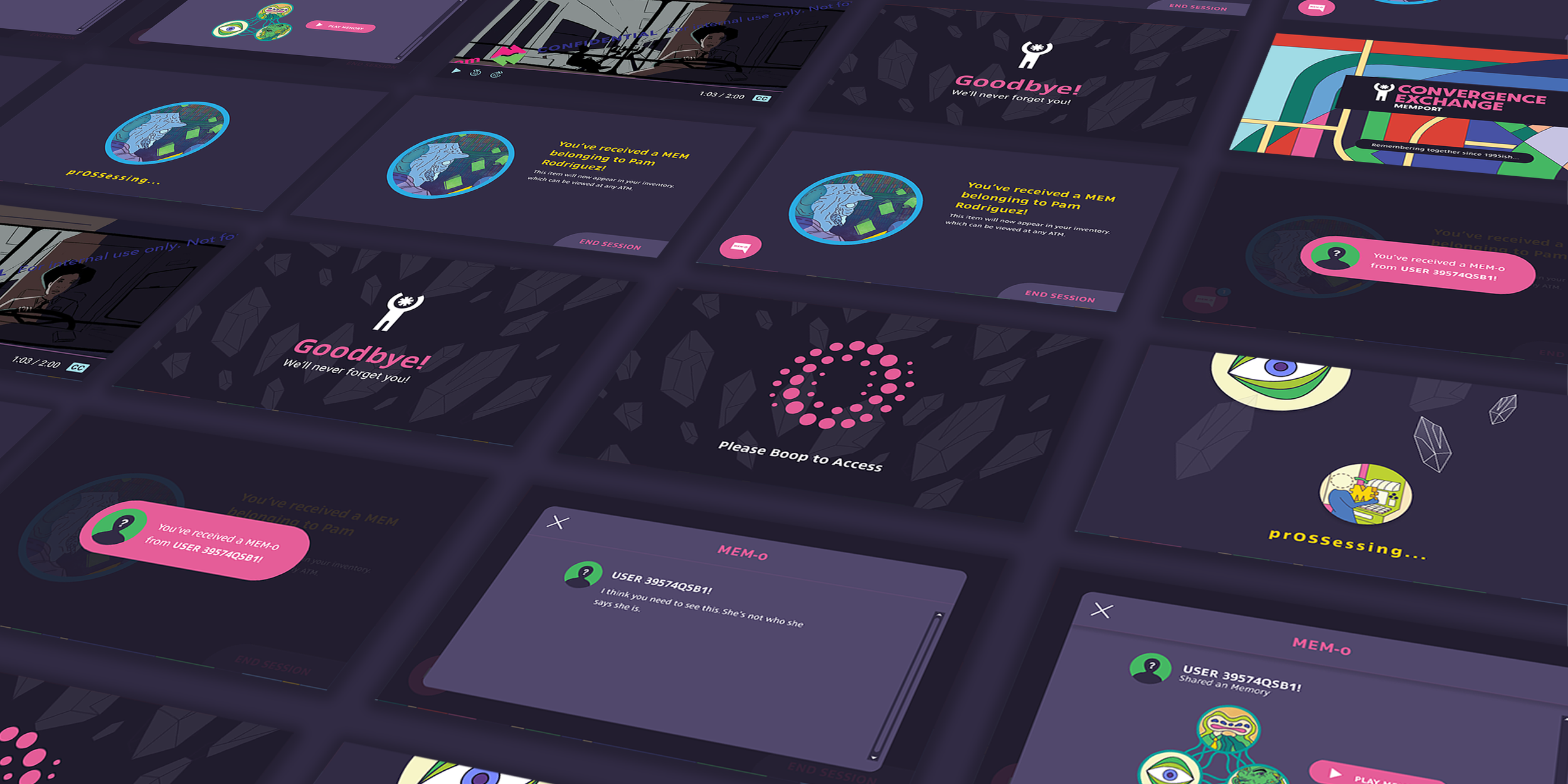
Recall Ports were another way players are able to receive MEMs. These are mostly reserved for special MEMs. Recall Codes are hidden throughout the exhibit. If a player happens upon one and takes note, they can enter the Recall Code at one of these devices in order to retrieve a MEM.
MEMport idle state animation
As a means of enticing viewers towards the Memports that are scattered throughout the space, we wanted the idle state to have motion rather than have them actually idle. We also wanted to give people a peak into Ossuary, where many memories are stored. This essentially works as a screensaver.
It shows memories and memory fragments floating through ossuary. Viewers can see that some fragments of memories are connecting to one another, giving a high-level understanding of how that all works. Oss crystals are surrounding the frame, these crystals have the power to store memories.
MEMport splash screen animation
Splash screen animation MEMports. Given the limitations of the tech involved, the screens on the MEMports tended to experience screen burn when displaying still imagery for too long. As a means of working around this issue, we opted to animate the splash screen for the idle states. Additionally, this drew more attention to the devices in a space where there is a lot vying for peoples’ attention.
Receiving a MEM / restoring a memory
This is the standard flow for receiving a MEM. In this case the player already has the other two MEMs related to this one. Since the system knows that the player has these MEMs stored within their inventory, The memory completes itself and the player is able to view the full memory.
*prOSSessing is an intentional narrative pun, not a misspelling. Oss Crystals power most of the devices within the narrative worlds of Convergence. Memories are often stored in said Oss Crystals.
Device Type #2
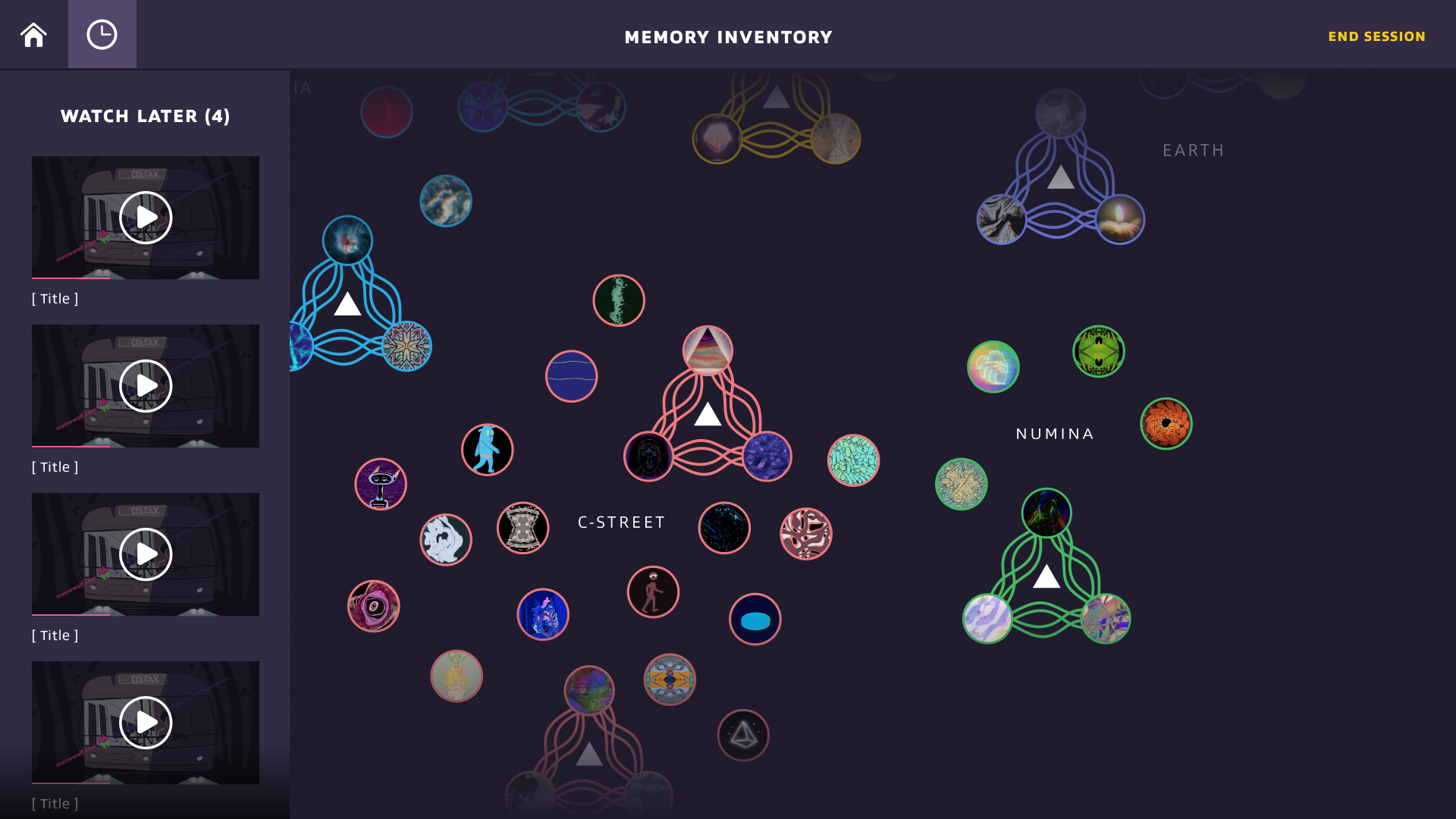
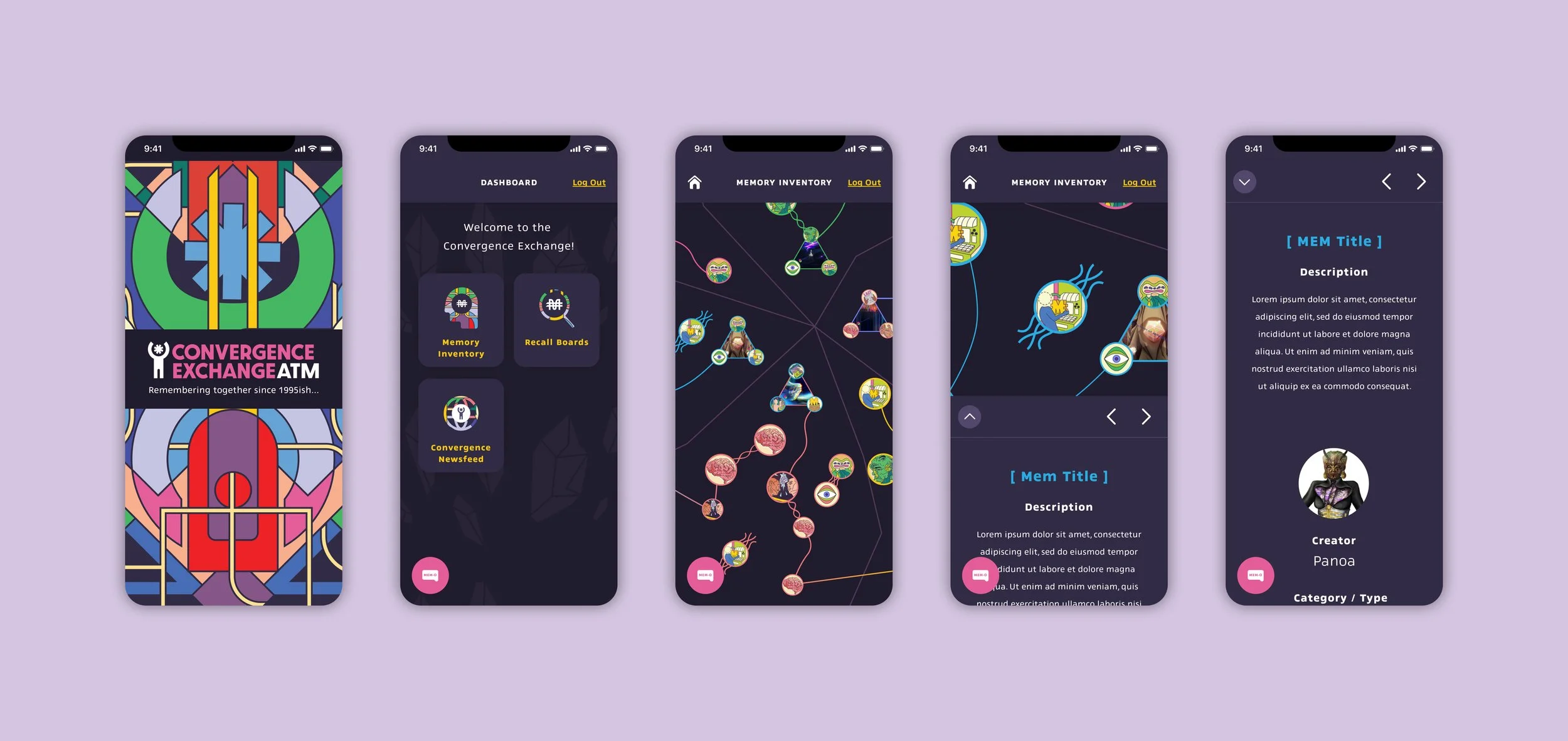
Kiosk Dashboard
Kiosks served as the devices where players would go to check their progress through the gameplay. Here they are able to access their inventory and see the memory fragments and completed memories that they’d collected. The inventory dashboard presented the memories they’d collected on a canvas where they could filter and sort their findings based on what worlds and characters they belonged to. As they unlocked more and more memories, players are able to view the videos of those memories in a linear timeline in the order that the events occurred. As more and more is revealed, they are able to advance in gameplay and start to piece together how the even known as Convergence occurred.
Mobile screens - responsive web
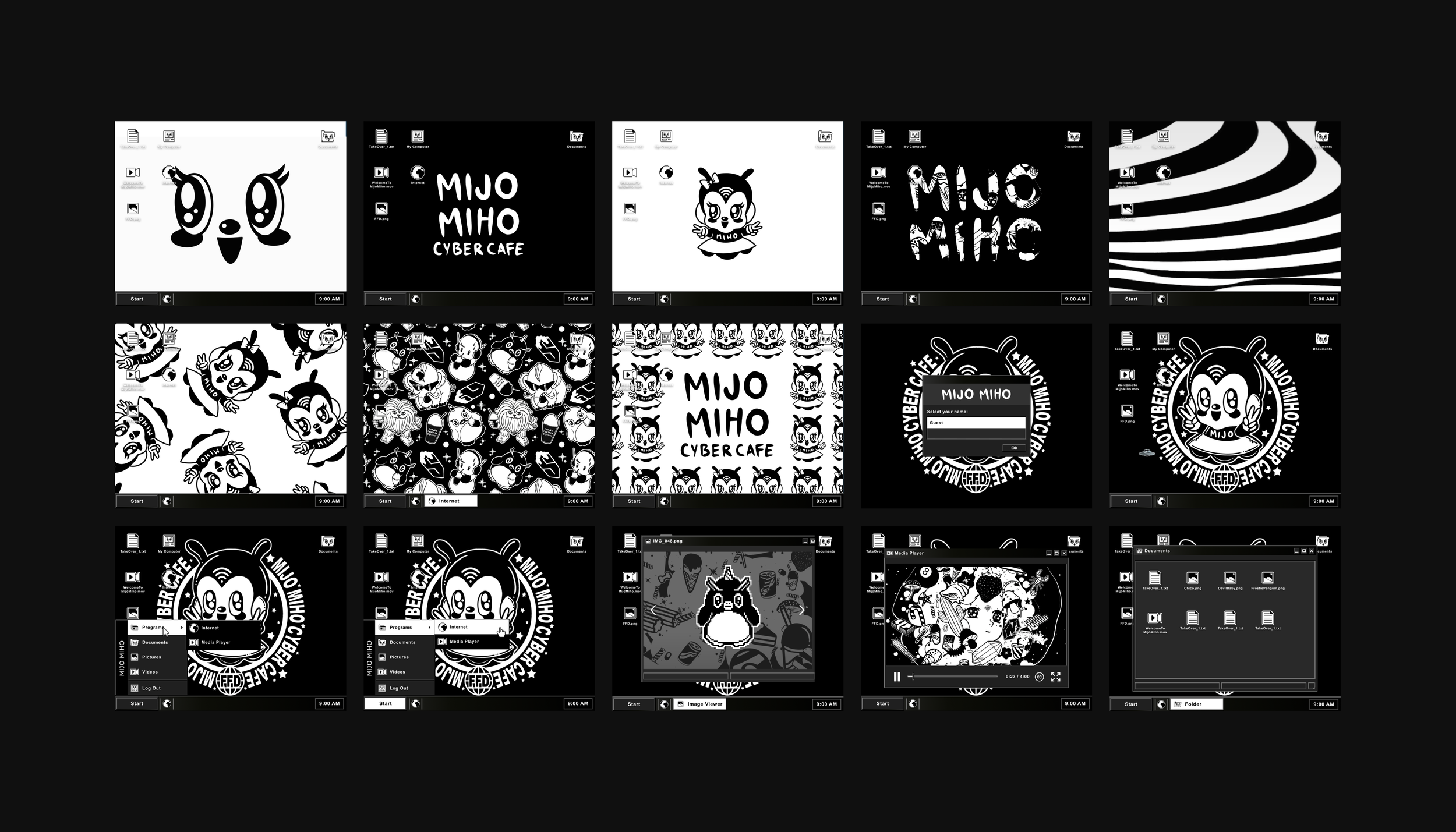
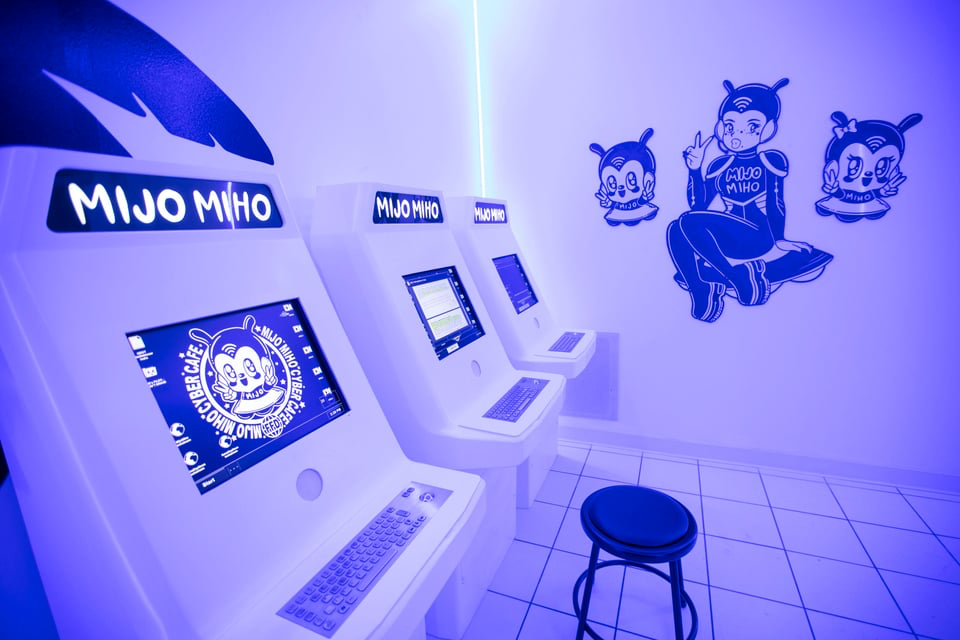
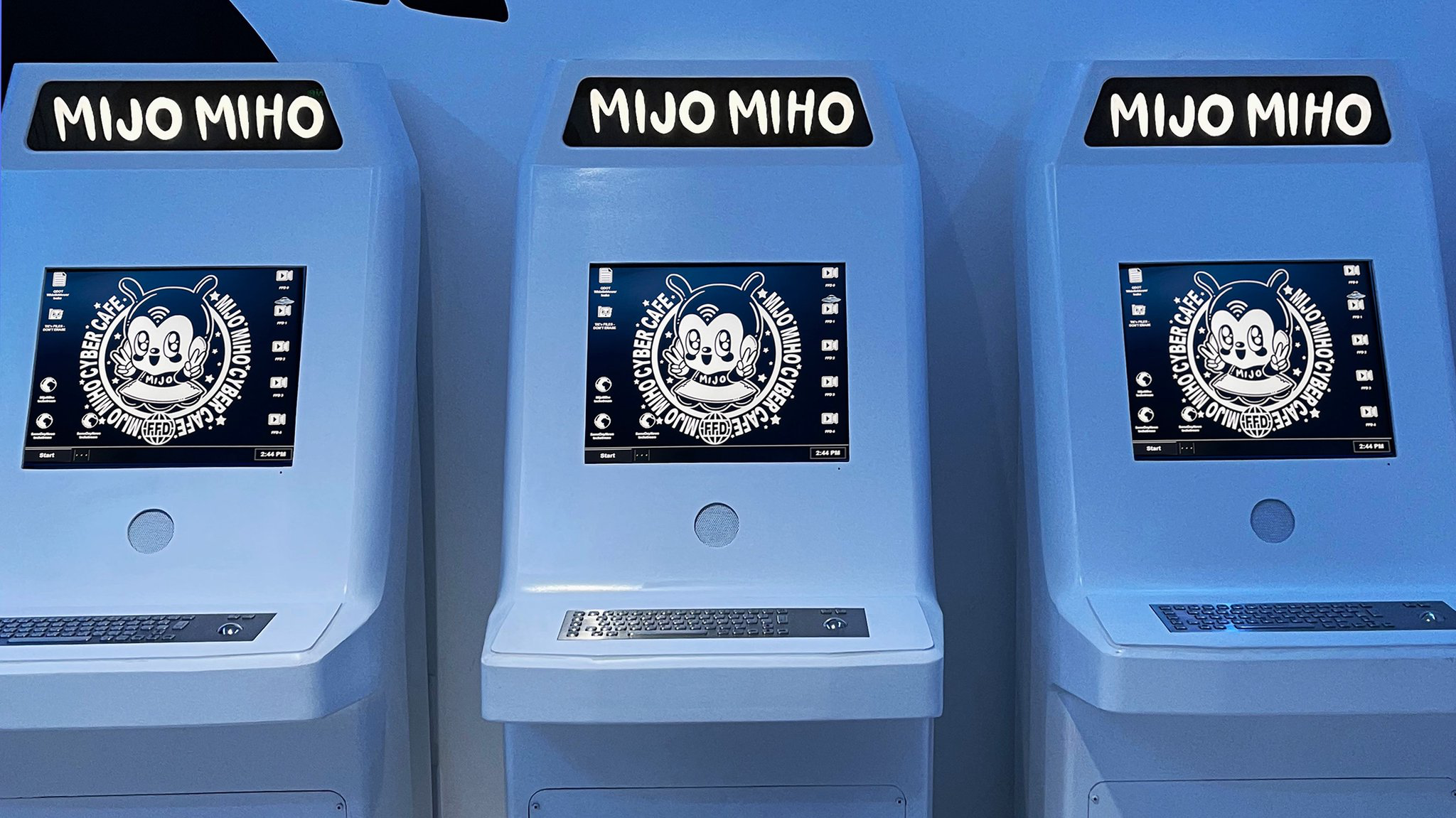
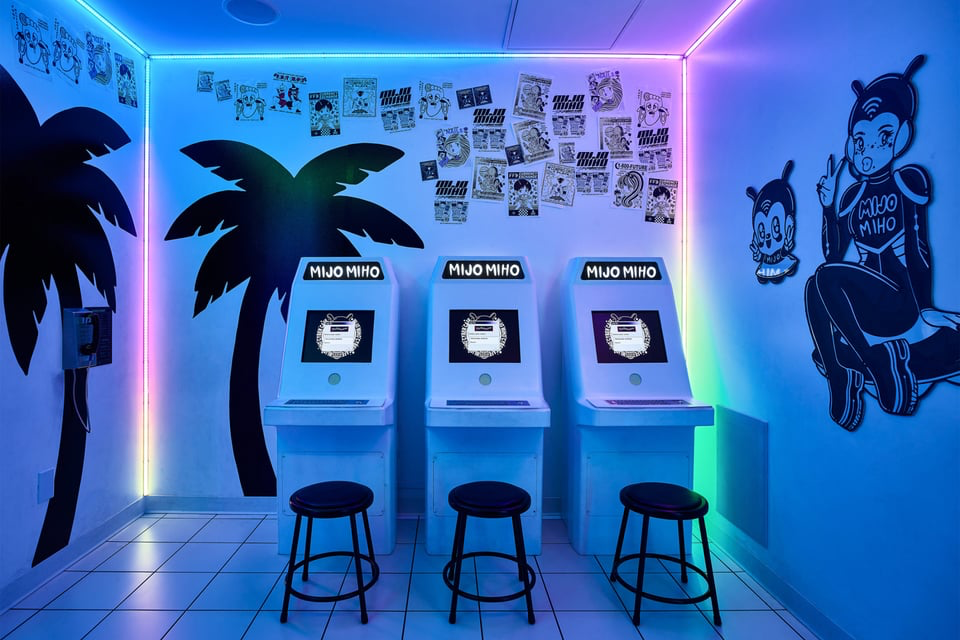
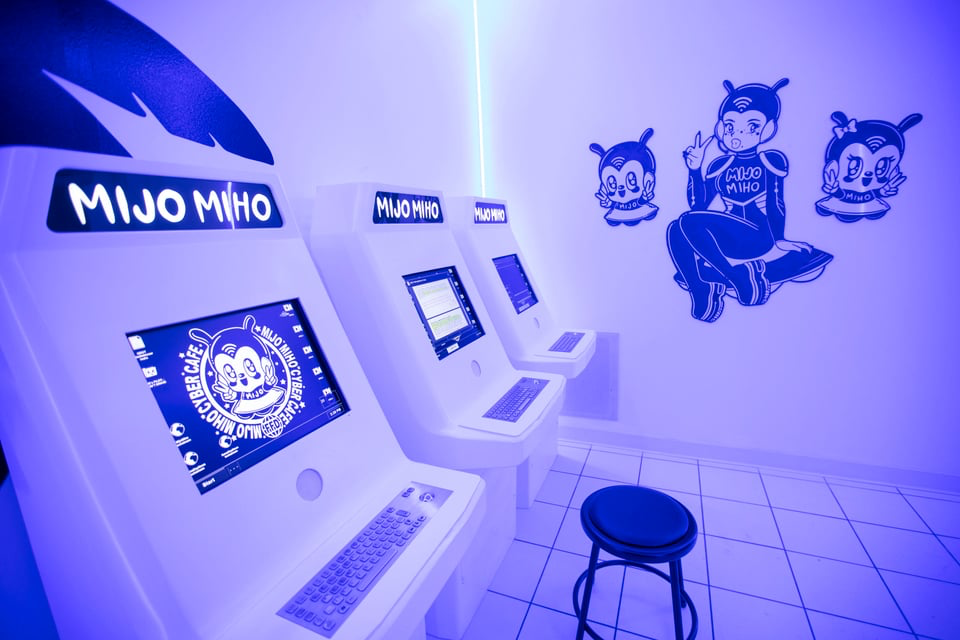
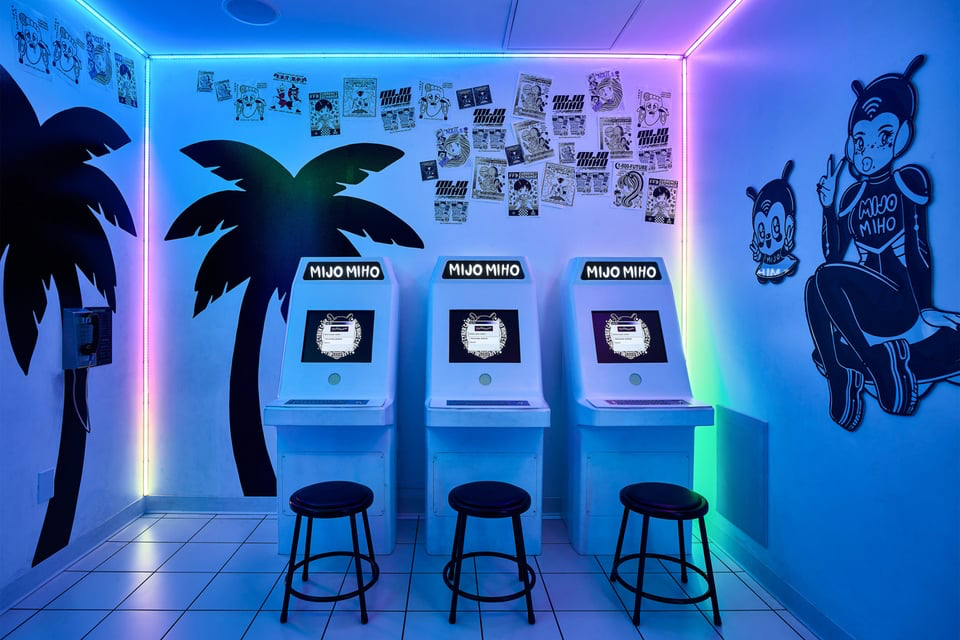
Narrative Computers - Mijo Miho Cyber Cafe
Device Type #3
Similar to the Meow Wolf experience in Las Vegas, Denver also has the concept of narrative computers. While they don’t serve as much of a role in Denver as they do in Las Vegas, they are still utilized as content delivery devices.
These screens are from an internet cafe called Mijo Miho Cyber Cafe, which is located in C-Street of the exhibition. This space was designed by frequent Meow Wolf collaborating artist Nico Salazar who runs a product line called Future Fantasy Delight. I worked with Nico to help create these throwback 90s-era PC interfaces using his artwork.
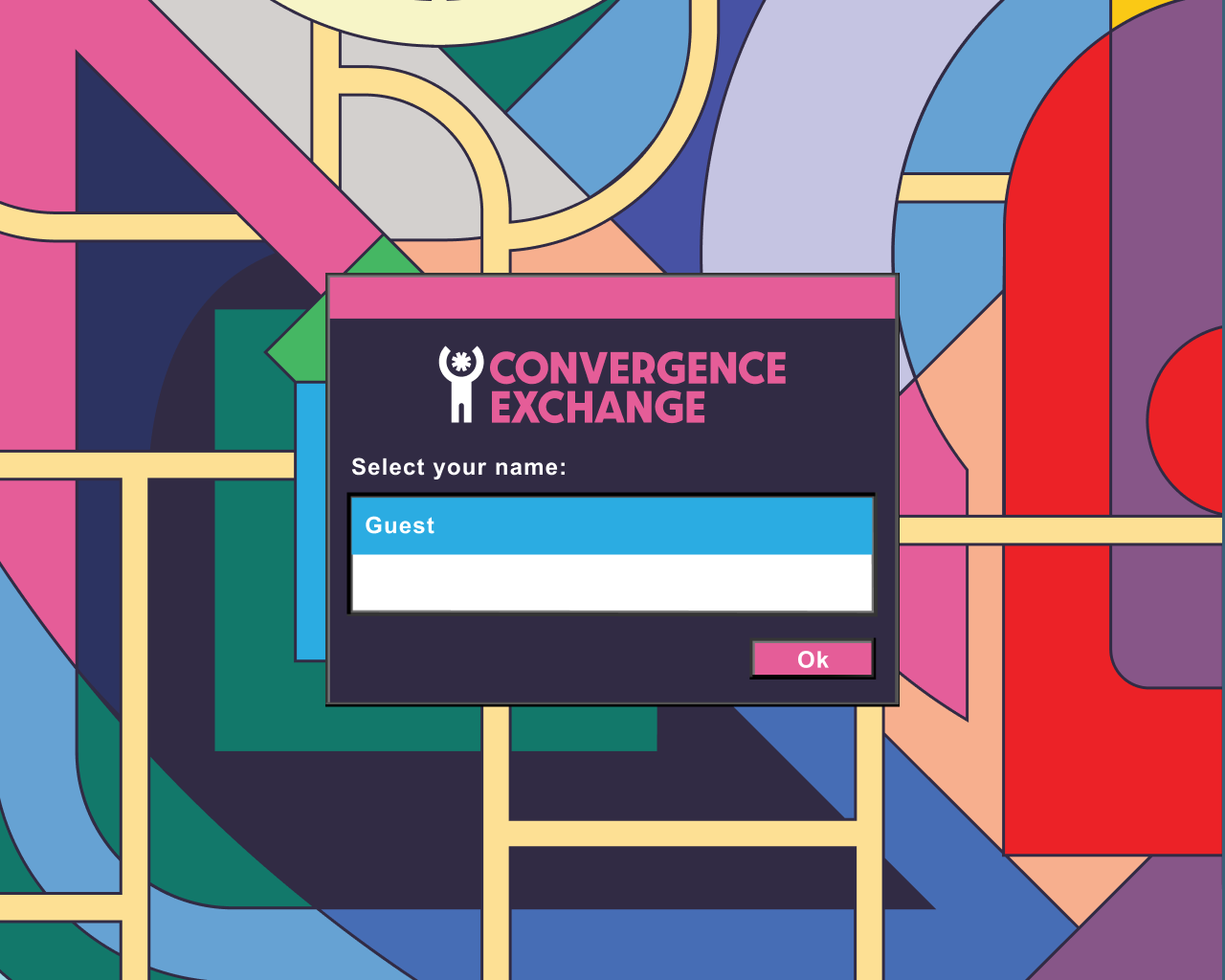
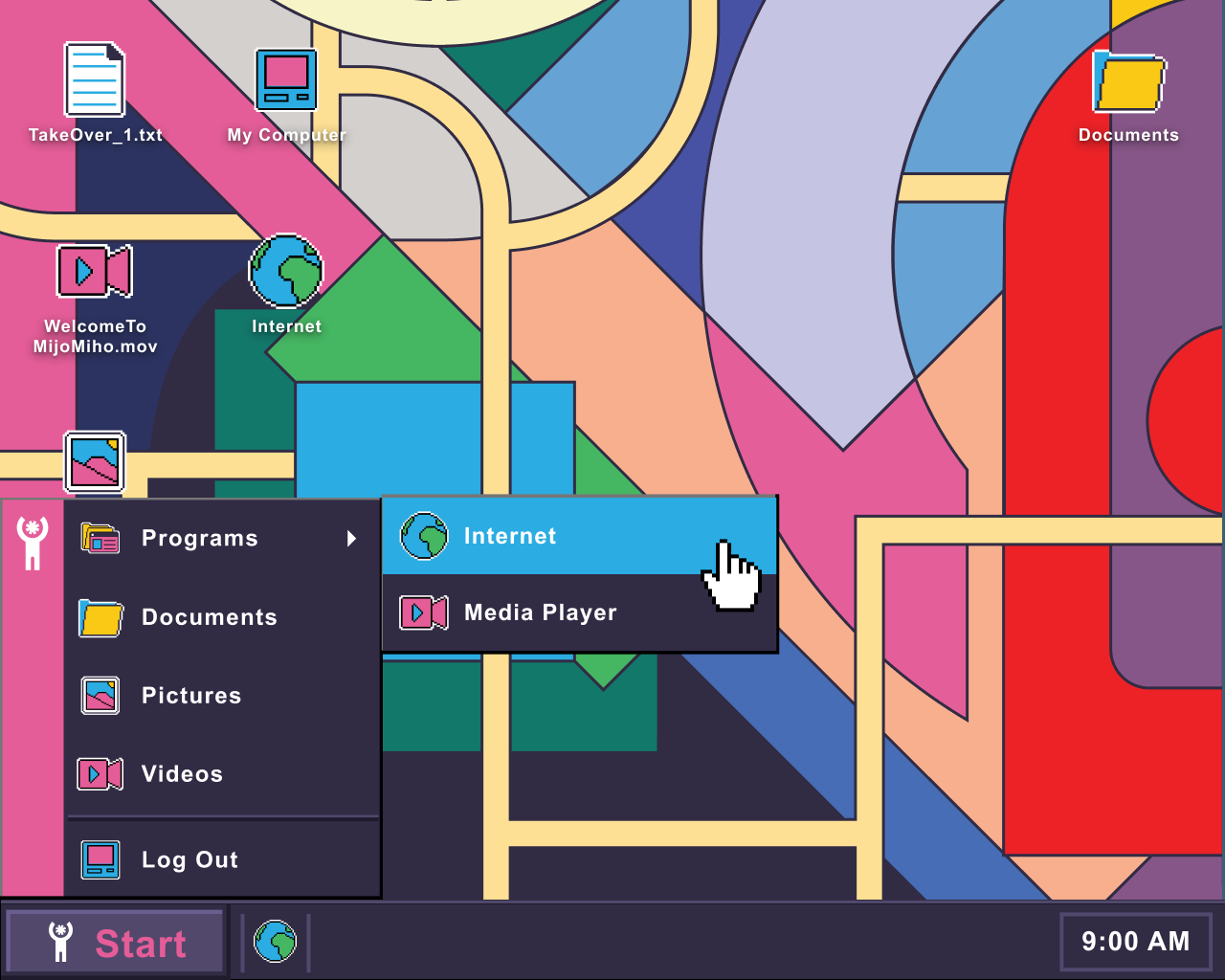
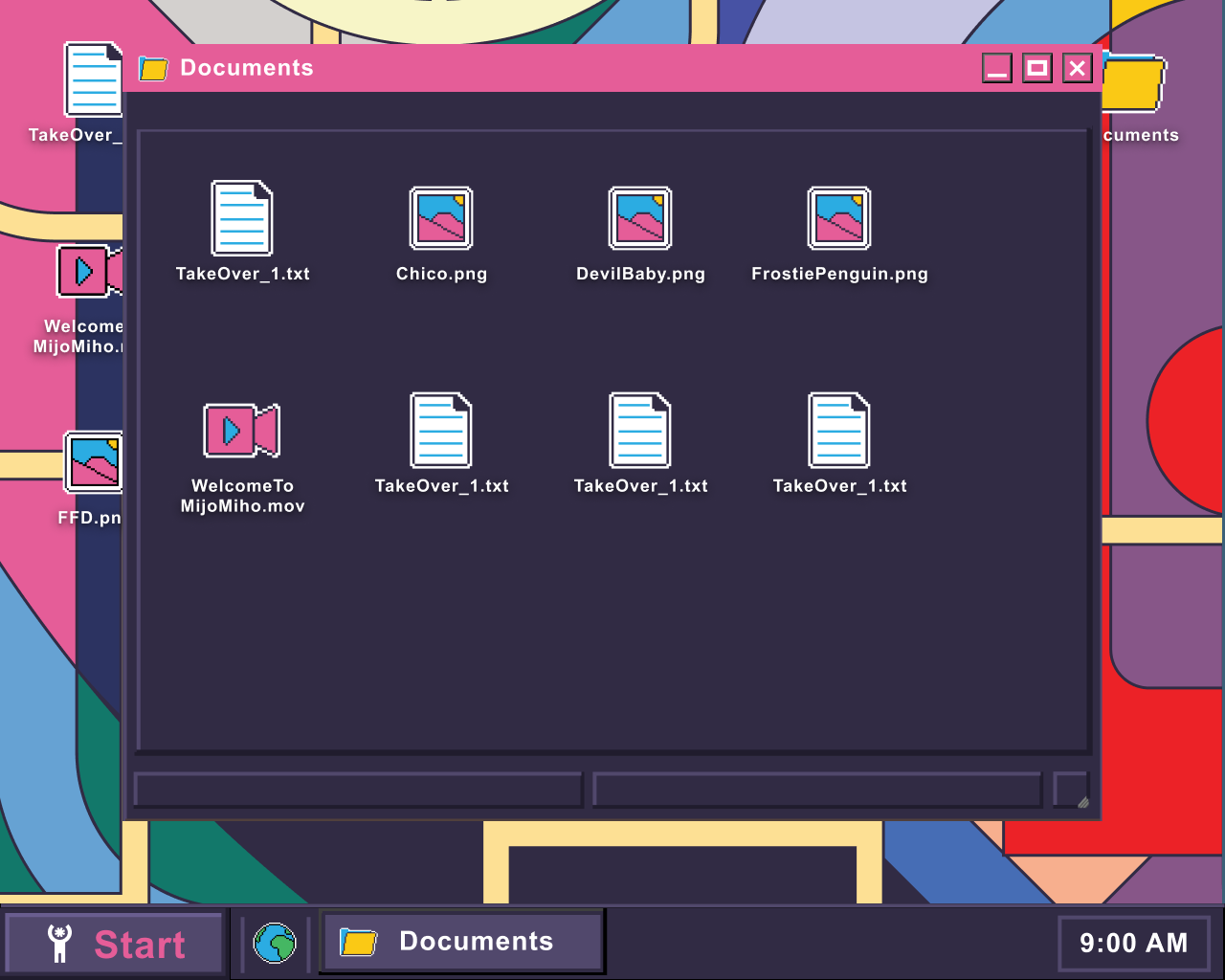
Narrative Computers - Convergence Exchange
Device Type #3
Convergence Exchange essentially serves as the governing bank for memories throughout the worlds of Convergence. Within the Convergence Exchange office there are a number of narrative computers. I helped the Visual Development team create interfaces for the devices in that space.
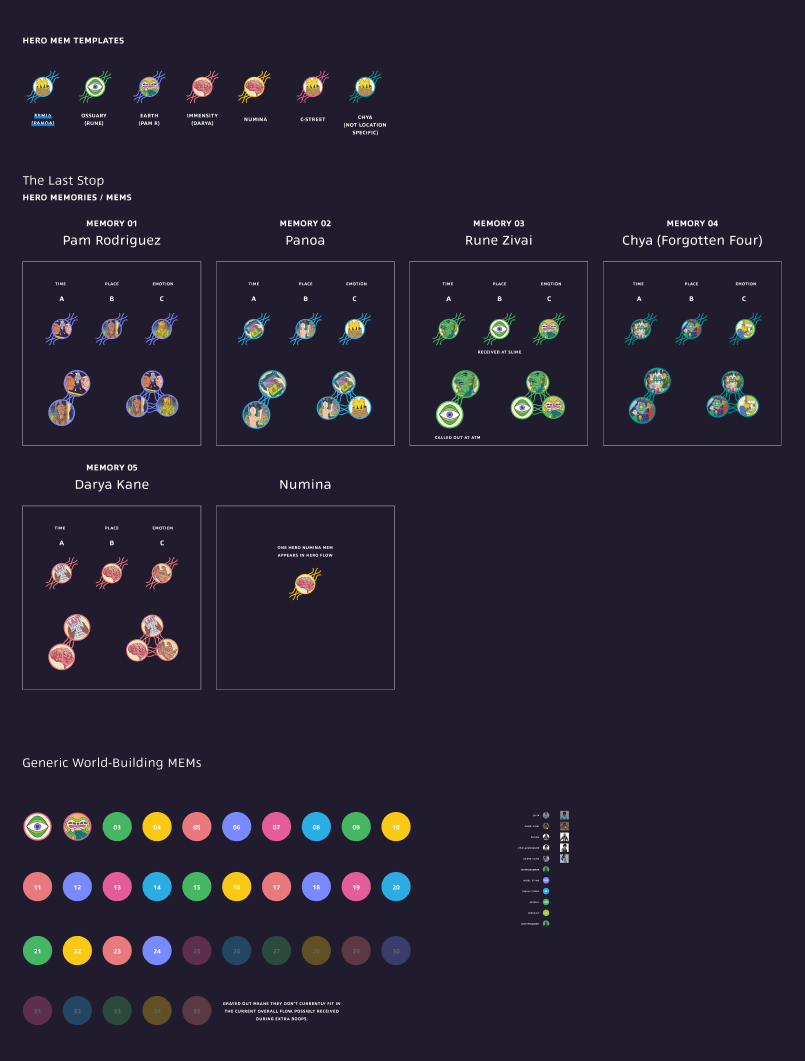
MEMs represent a fragment of a memory and all memories belong to a character. We had hero MEMs that were assigned to characters who are key to the narrative and for ultimately piecing together the story of Convergence. Each MEM was color-coordinated based on the world from which it originated. For each hero memory there were five assets: three MEM assets, one asset for showing when two related MEMs connected, and one representing a fully-restored memory where all three related MEMs connected.
Additionally, we had what we called “world-building MEMs” that were just one off MEMs that could be collected, but didn’t ultimately unlock any key hero memories.
Memory taxonomy

Mapping out a non-linear narrative-driven experience
I spent a lot of time researching nonlinear storytelling. It was quite an undertaking to try telling a nonlinear story without confusing the audience and losing them along the way. Especially in spaces that are full of distractions. The following shows how I laid out the logic for the different MEMs that needed to be collected, the memories they unlocked, and the characters they belonged to. This helped us track assets as well as better understand just how long gameplay would take in the duration of a visit to the exhibition.
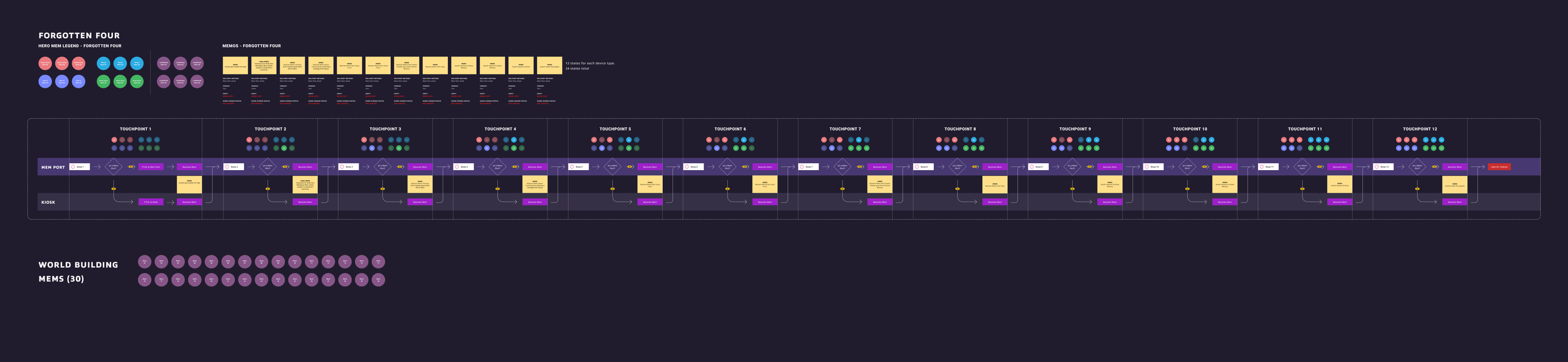

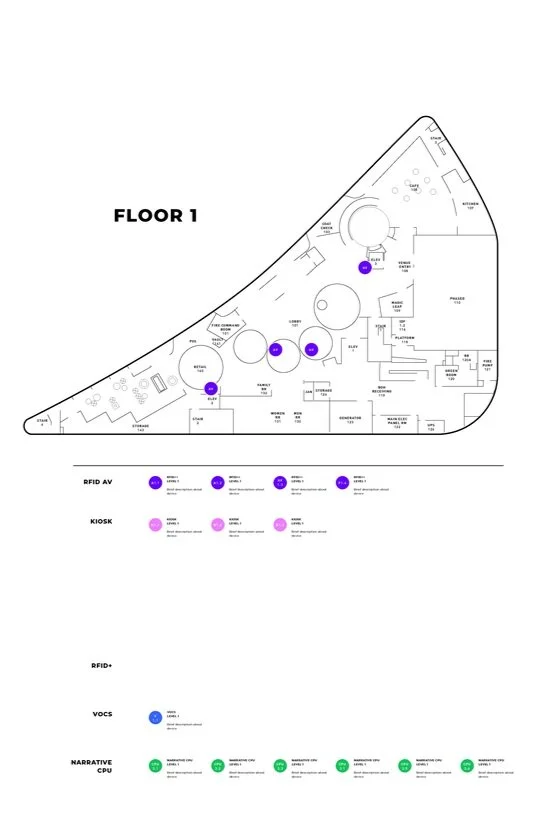
Mapping out key touch points throughout the physical space
All devices were placed prior to establishing an experience design team, so we mapped out the locations of each device to better understand how to navigate visitors through the space, get them to interact with the varying installations throughout the space, and figure out what format some of the content will need to be delivered in depending on the type of device and its placement.
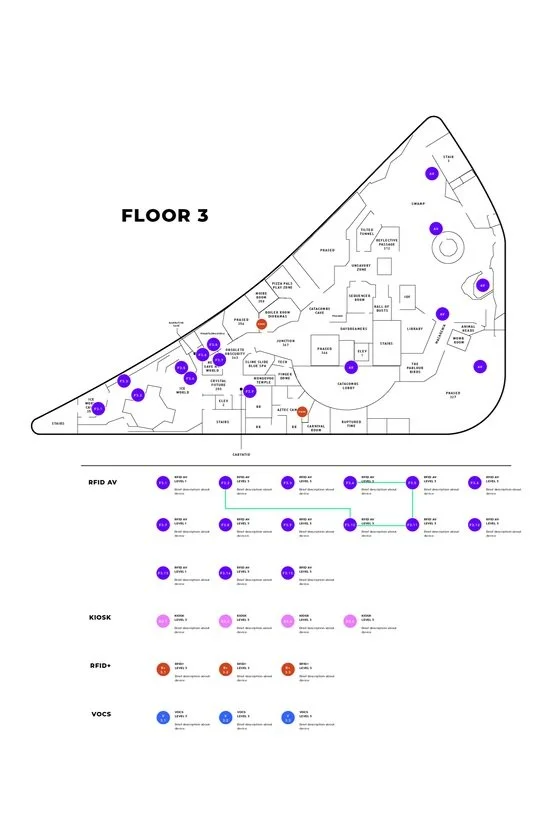
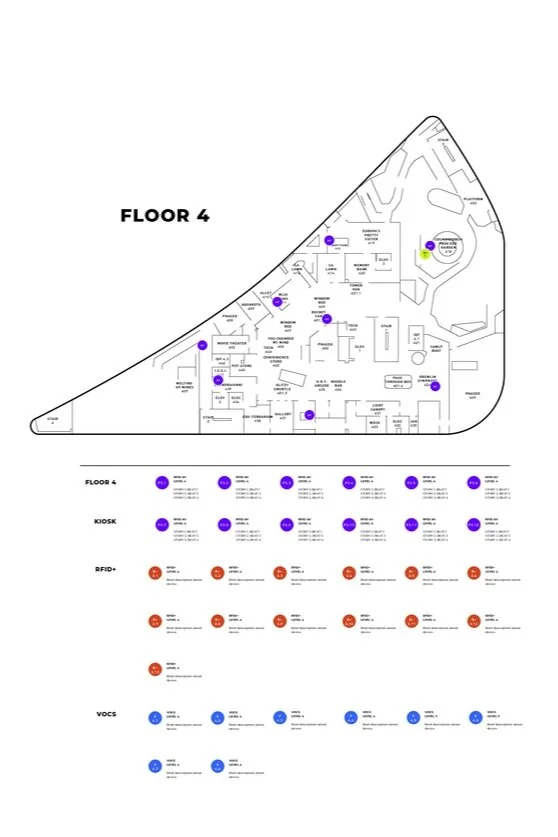
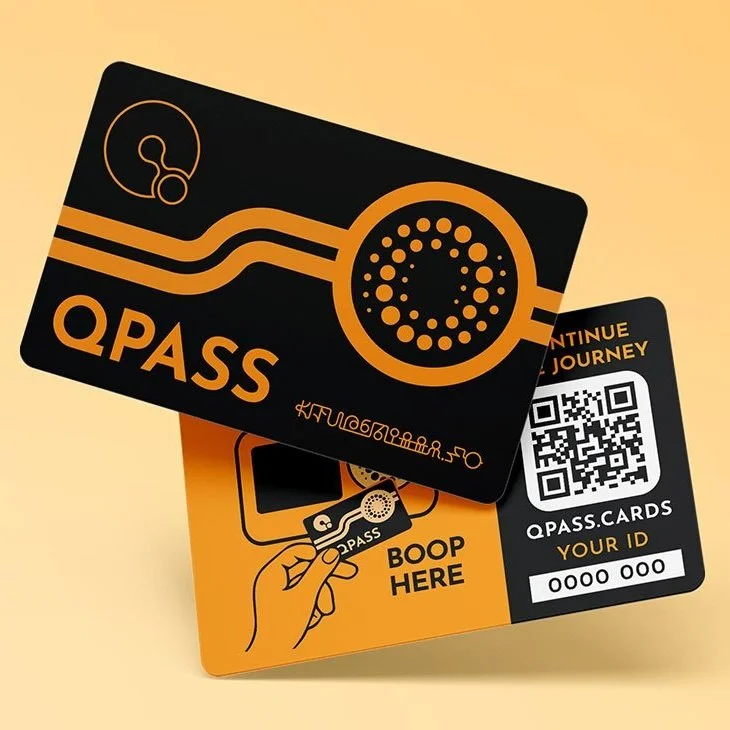
The QPASS was the main interaction tool that would enable guests to participate in the experience. By tapping the card at each device, they would receive a MEM, or a memory fragment, which they would continue to collect until they unlocked all the memories in the experience.
Accessing the experience
There are many challenges associated with designing a digital experience that overlays a physical one. There are even more challenges when the space you’re designing for is still being built and is therefore inaccessible for early testing.
It’s important to gain an understanding of how long any designed experience takes, but it’s even more important to take into account the amount of time it takes to locate and travel to each device within the space. Guests visiting the exhibition are also only there for so long.
In order to test this remotely at first, I created a robust Figma prototype that went through the entire experience. This at least gave us somewhat a sense of how long this would take guests, at least until we could gain access to the space and test it more accurately.
We had several devices in our office in Santa Fe, NM for testing. Since this flow is delivered via the MEMports, I was able to bring up this prototype on those devices for testing as well as demonstrating the experience to our stakeholders.
Testing the experience
Understanding the Worlds of Convergence
Convergence is made up of 4 fictional worlds + Earth:
Numina, Eemia, Ossuary, C-Street, and Earth (Denver being the entry point)
These are the worlds throughout which memories have been scattered for guests to collect.
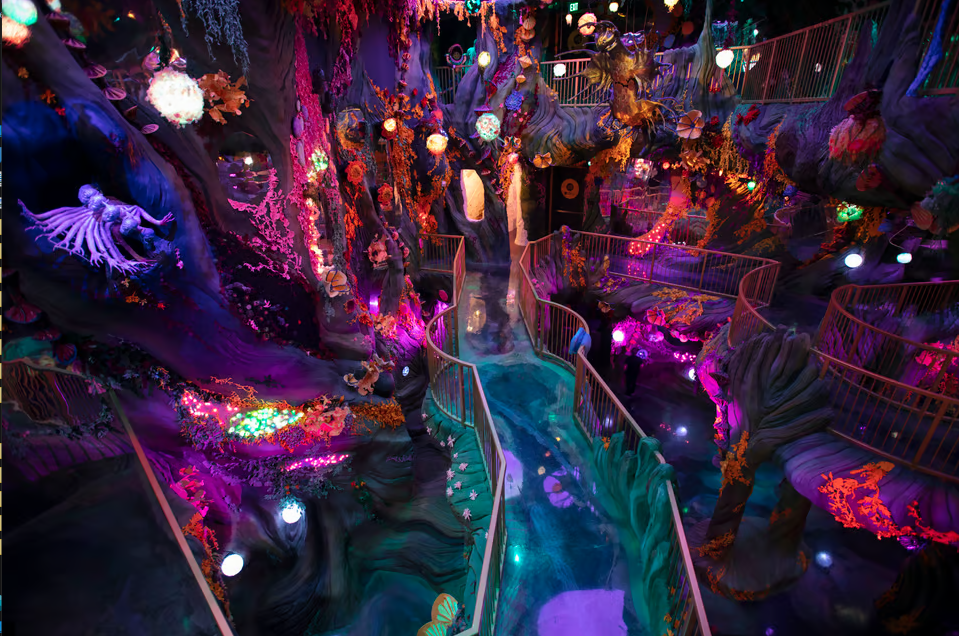
World #1: Numina
Numina is an organic landscape (similar to a swamp) that is actually a sixth-dimensional being. Everything within the space is either an organelle of the single cell or a visitor who has been welcomed into the world.
Numina exists beyond linear time — existing everywhere, and at any point in time, simultaneously. Numina has anchored itself in three-dimensions by joining the Convergence in order to learn about language, linear time, and free will. Numina has knowledge of, what is known in the greater narrative as, The Last Stop.
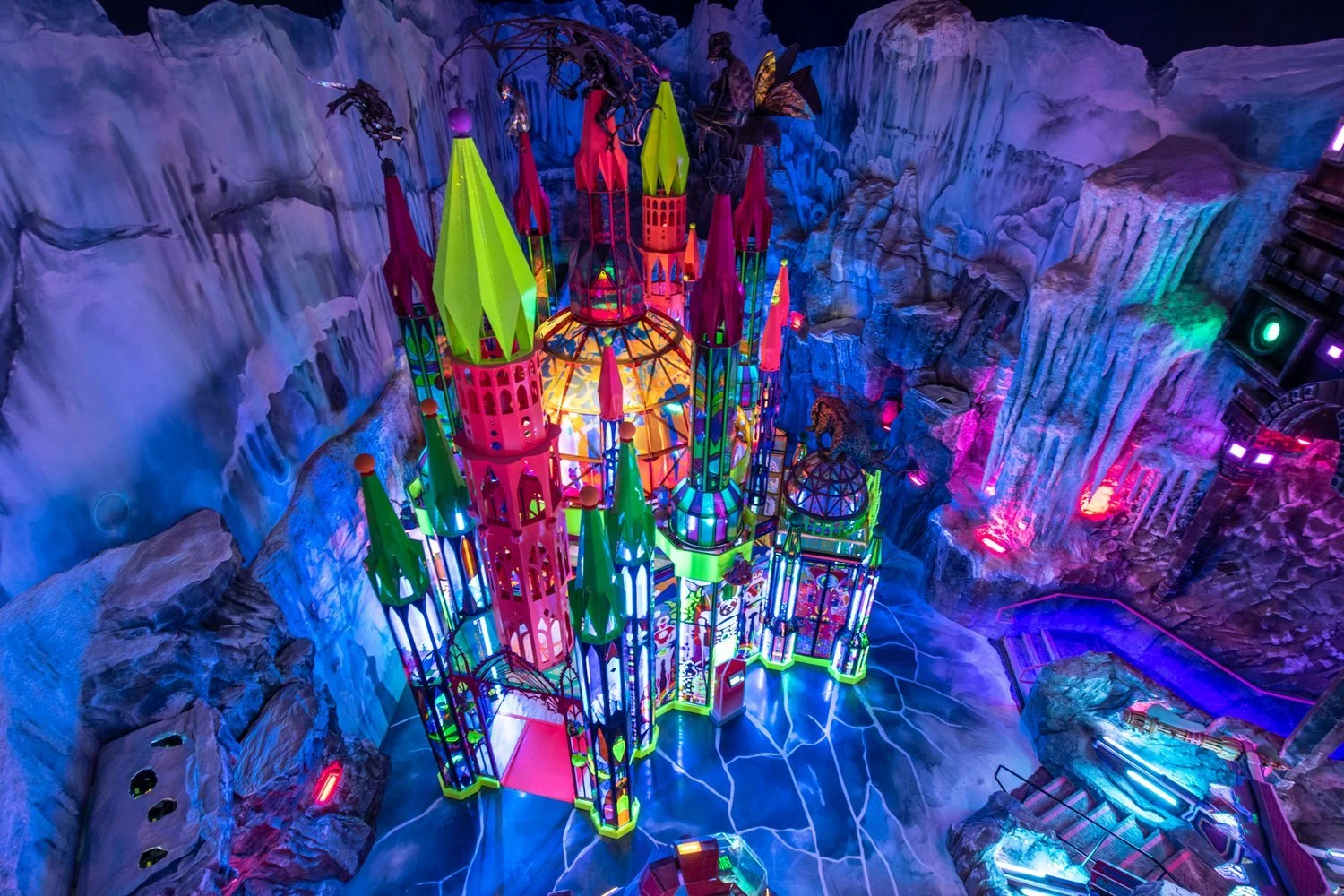
World #2: Eemia
For millennia, Eemians and their navigators explored space using the Navigator’s abilities to create wormholes to stabilize their planet’s orbit around its two suns — until one young pilot compromised this ancient stability and brought on a devastating ice age.
Convergence has given Eemians access to new experiences, but many want to reunite their former planet. Some will take great risks to do so, even putting the entire Convergence in danger.
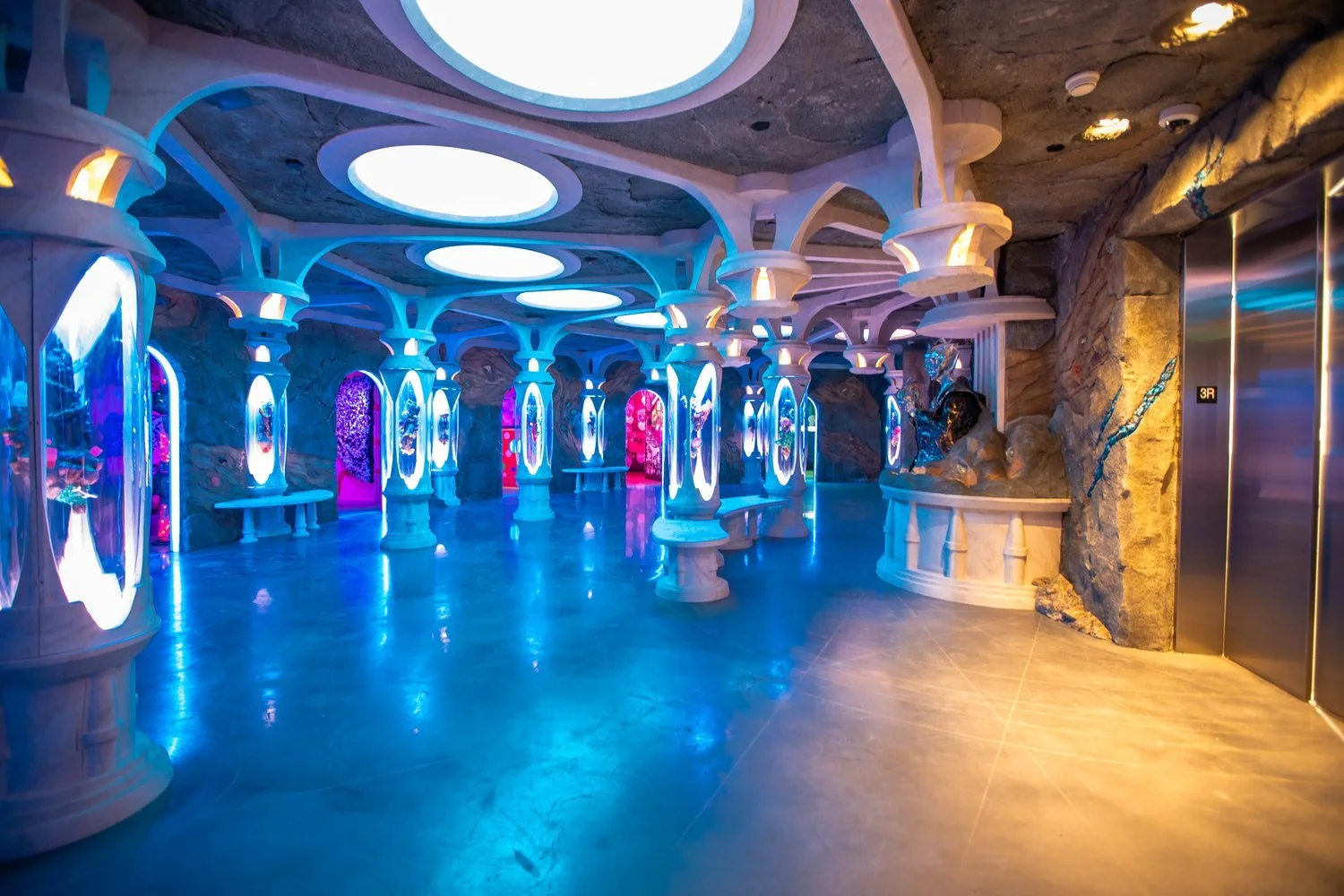
World #3: Ossuary
Ossuary is an ancient underground space that is home to Oss, an unusual crystal with the ability to store memories. Oss has become the “Gold Standard” repository for memories from across the Convergence through both sanctioned and shadow market Memory Trading.
Convergence has made Oss incredibly valued, turning what was once a small economy into a major one. It gave this underground Oss-trading society a chance to resurface, and also bolstered the Library’s trove of multiversal information. But there is a fear that newcomers will corrupt or steal Oss, and some think Ossuary must be protected at all costs.
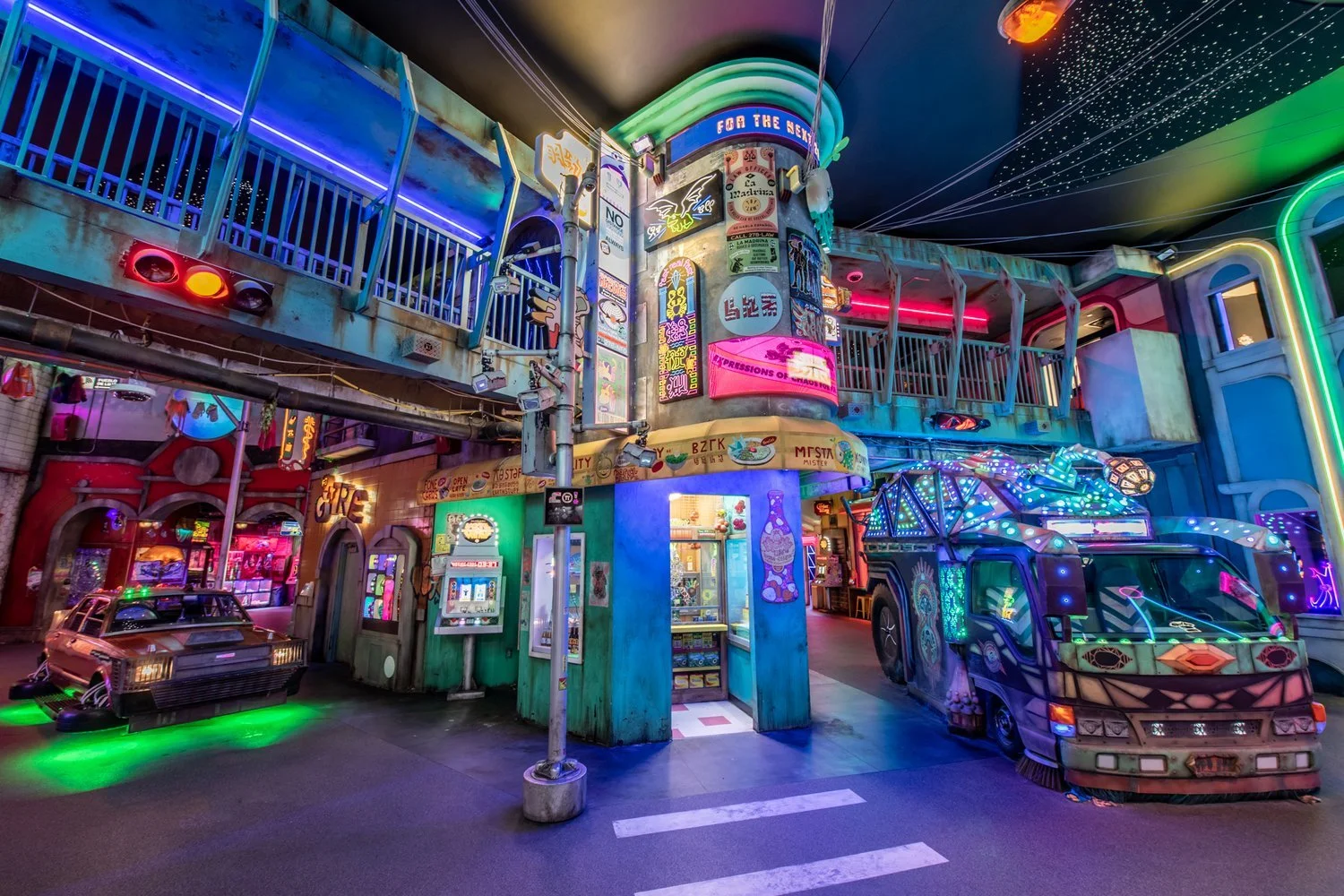
World #4: C-Street
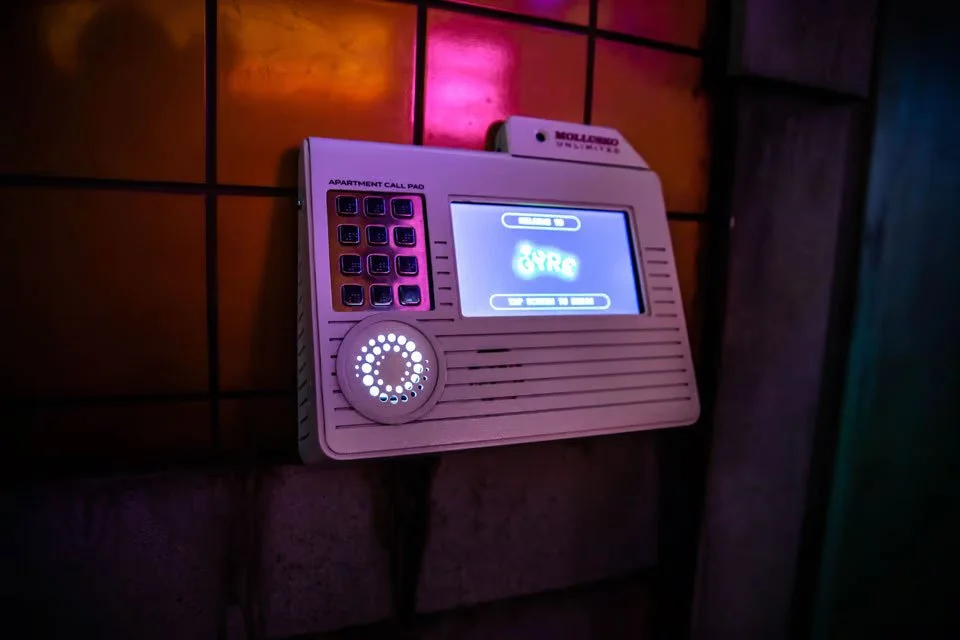
This dense city is a melting pot for beings from across the multiverse. An infinitely large apartment building (The Gyre) continually adds residents. An eternal mayoral election takes place every 20 minutes, keeping the city in a constant state of flux. The economy of Convergence is based around the collecting and trading memory (MEM) and is centered on C-Street’s Convergence Exchange.
Residents of C-Street are elated to have broken off from the control of their former world, The Immensity, to live in a collectivist utopia of their own making. The residents are suspicious of Oleader’s Last Stop proposal, as well as QDOT’s motives in general.
Better understanding the narrative
The Quantum Department of Transportation (QDOT) has created an exclusive travel opportunity in Denver, CO to the Worlds of Convergence, where memories are currency. Travelers can investigate the mystery of four forgotten women who hold clues to a mythological danger that threatens to tear these worlds apart. Participants are invited to discover how they are a part of the story of these alien worlds.

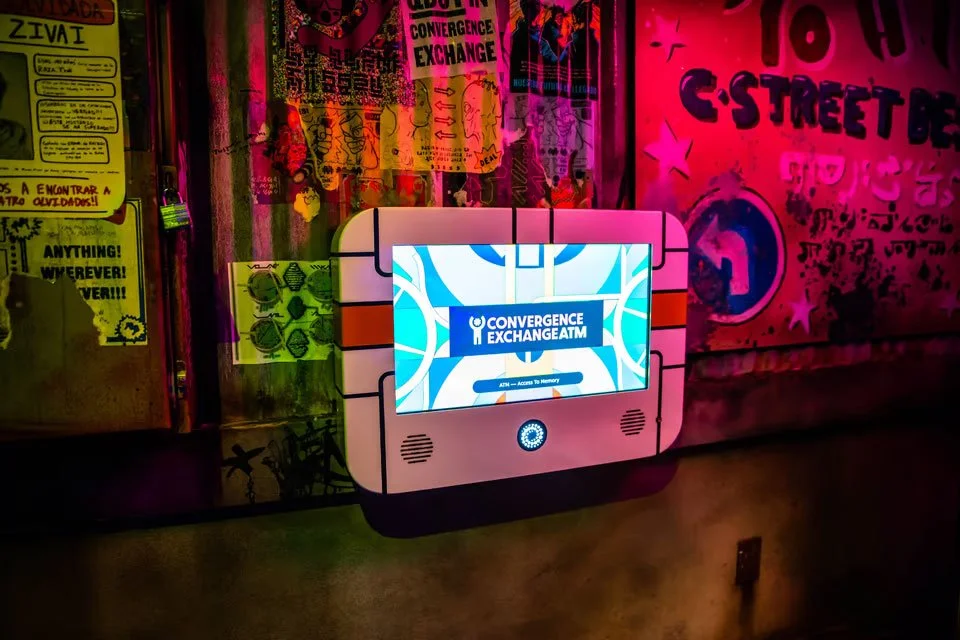
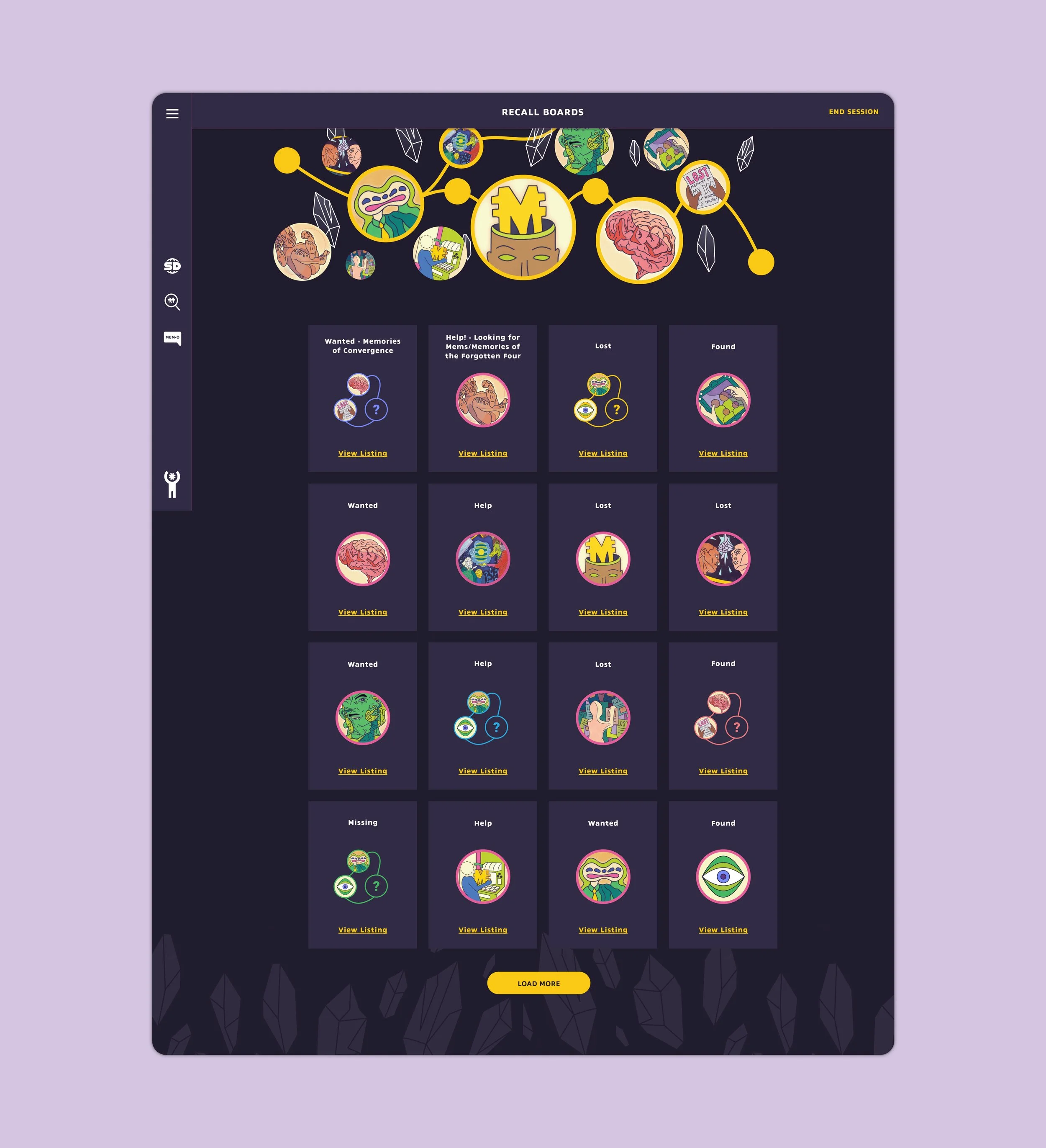
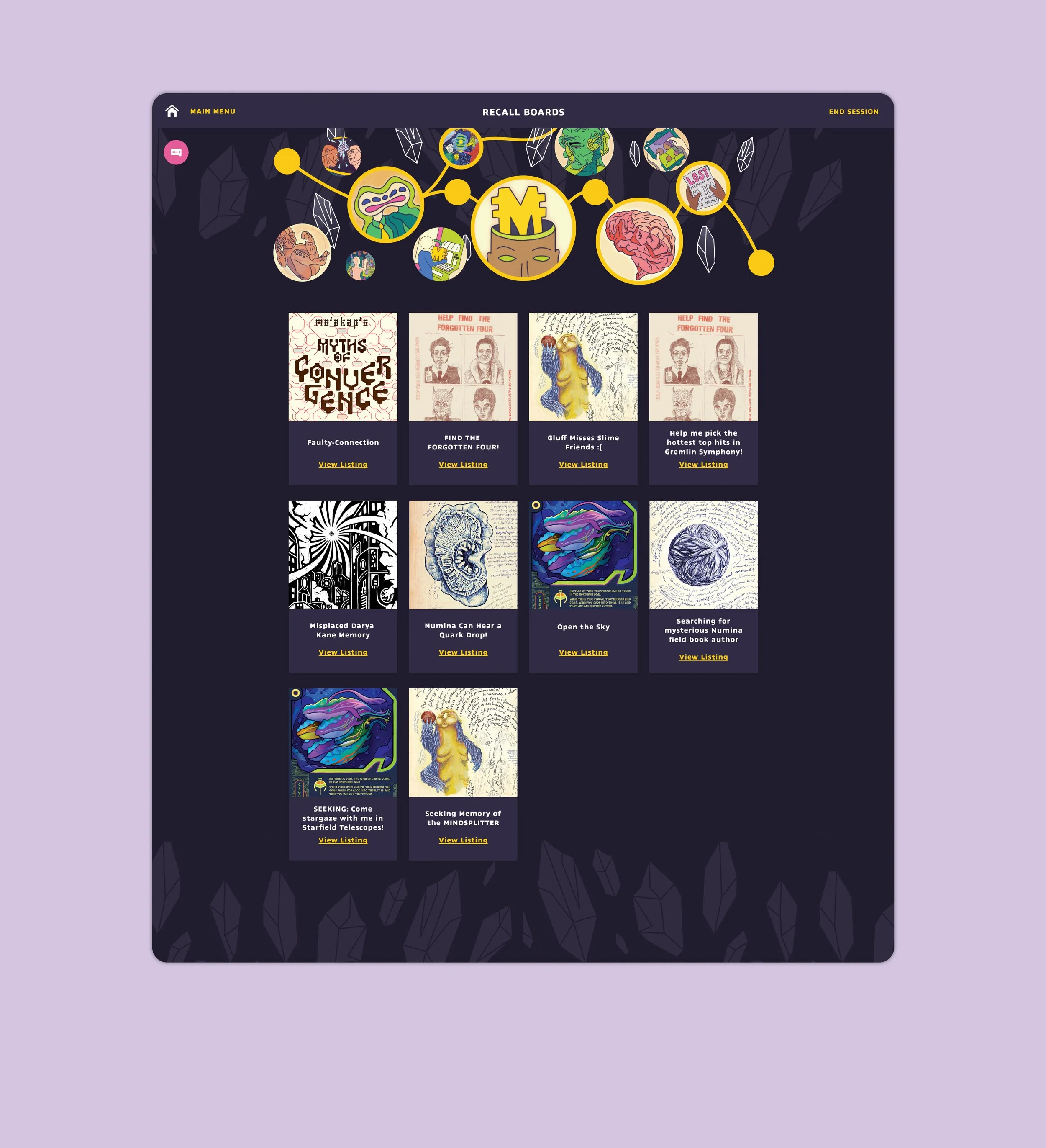
Another feature of the ATMs is a platform known as the Recall Boards. Recall Boards are essentially a Craigslist-like listing of lost or found MEMs and memories.
These boards are mostly filled with world-building narrative content and serves as a springboard for visitors to engage in side-quests.
Additional Screens: Recall Boards
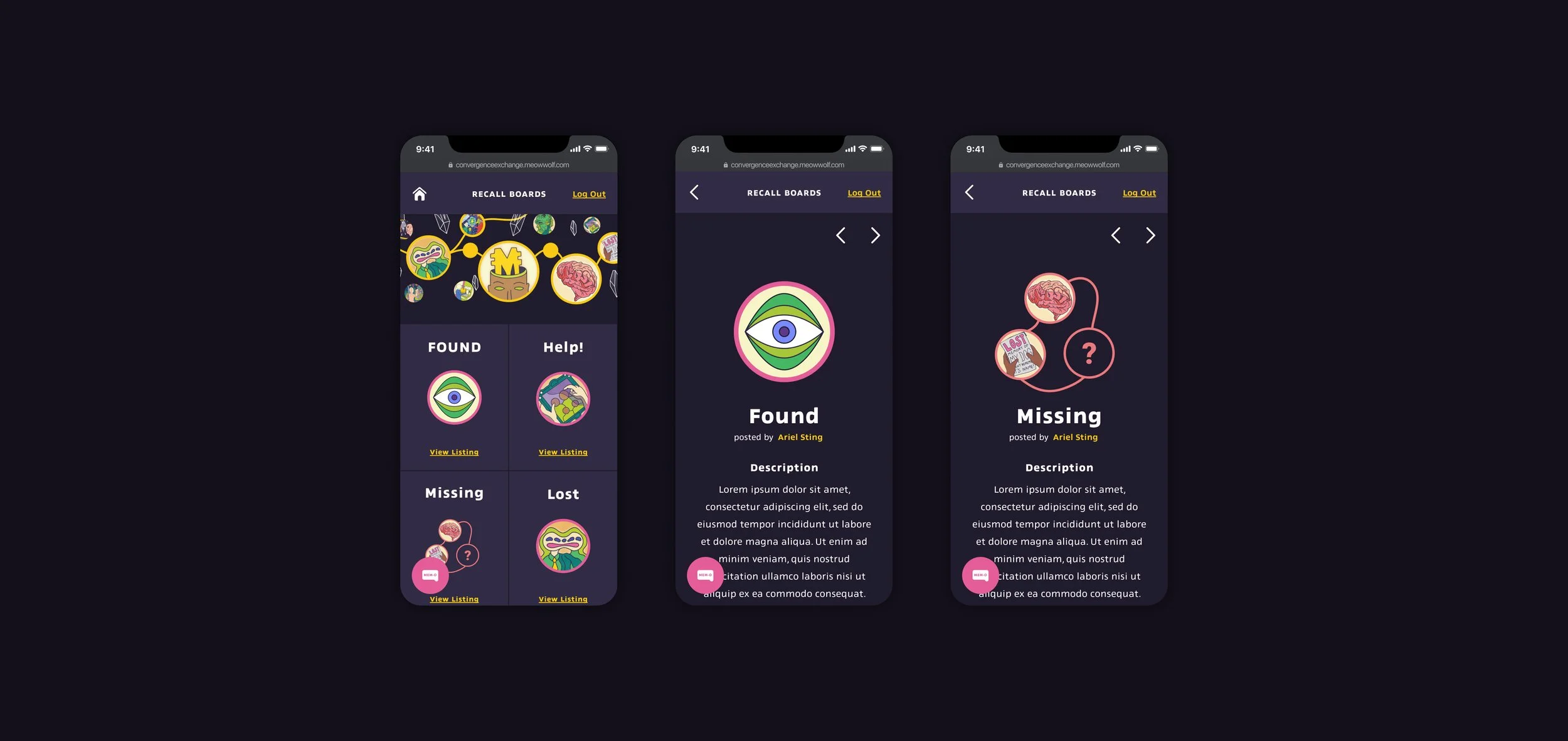
Mobile screens
Header animation
Finale - surrendering memory inventory
The finale of the experience requires you to relinquish all of the MEMs and memories you’ve collected through the exhibition in order to receive the final payoff. This finale was conceived by the story experience team and the animation was created by me.
03 RESULT
Convergence Station shipped in September 2021 and continues to support the venue through 5+ years of operation. The digital narrative infrastructure spanned 25 MEMports across the venue, 4 device types (RFID-A (audio only), RFID-AV (audio/video), ATM kiosks, VOCS phones), and supported 9 distinct narrative threads available to guests. The system operated at the same scale Meow Wolf's physical experiences had reached, without one.
Experience impact
The system helped support a large-scale interactive environment where digital experiences could adapt to different guest journeys without requiring a linear path.
The work contributed to:
stronger narrative continuity
clearer contextual guidance
more cohesive cross-device interactions
reduced friction between exploration and interaction
a more immersive relationship between physical and digital space
Operational impact
The system also created more structured coordination between narrative systems, guest interactions, and environmental touchpoints—helping align creative intent with the realities of live operation at scale.
Status
Convergence Station continues to evolve as a living environment, making the work less about shipping a fixed product and more about designing flexible experiential systems that can grow over time.
04 REFLECTION
Interfaces don't just help tell the story, but are part of it.
Designing for a million guests moving through a physical space pushed me beyond screen-based design. The screens weren’t just supporting the story; they were part of it, behaving like artifacts that responded to each guest’s presence and history. That constraint produced some of the most disciplined work of my career. When the interface is part of the narrative, it must carry memory, so every moment feels less like a prompt and more like the next room in the same unfolding world.
The system shipped, scaled, and continues to operate, but the dataset I'd most want is per-MEMport collection rate segmented by guest dwell time. That would have told us whether the narrative interfaces were doing the work I designed them to do (deepening engagement at specific story beats) or whether they were just being collected as completionist objects. The difference matters because it tells you whether the narrative-as-mechanism hypothesis held up, or whether visitors treated the MEMports as Pokémon-style trophies regardless of story context.