Designing a digital companion for immersive worlds
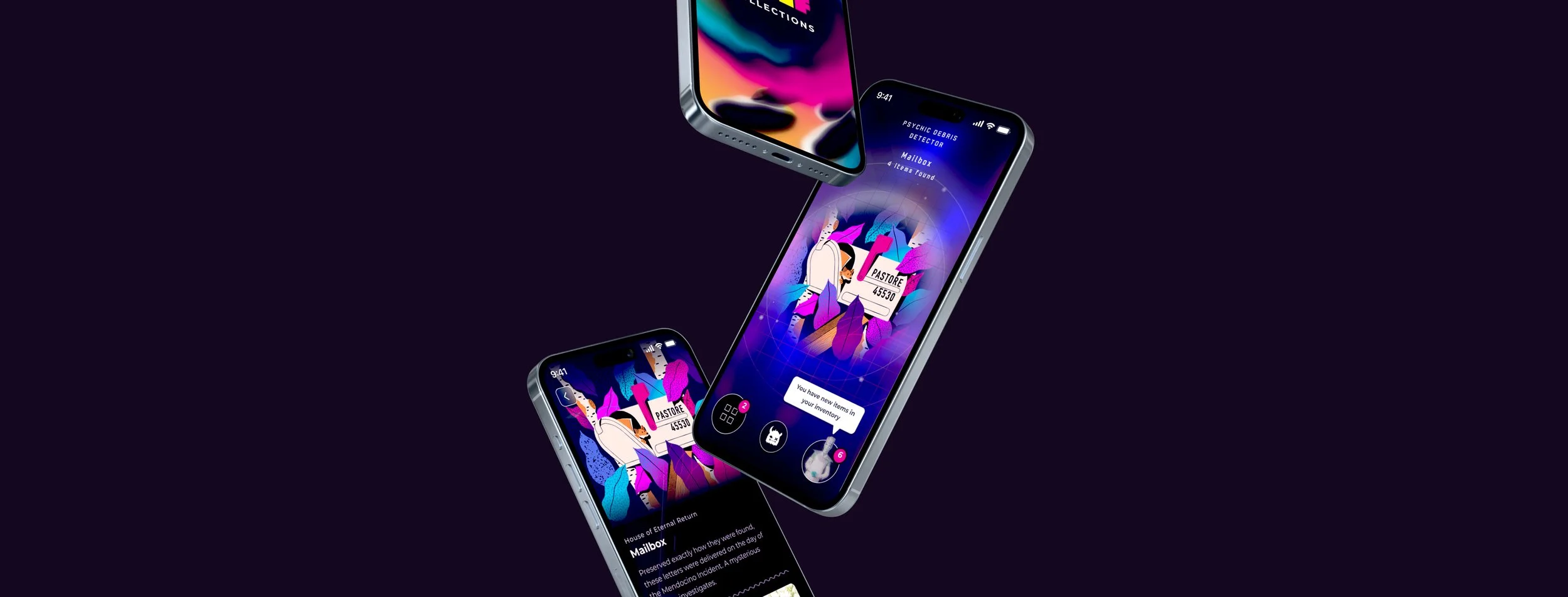
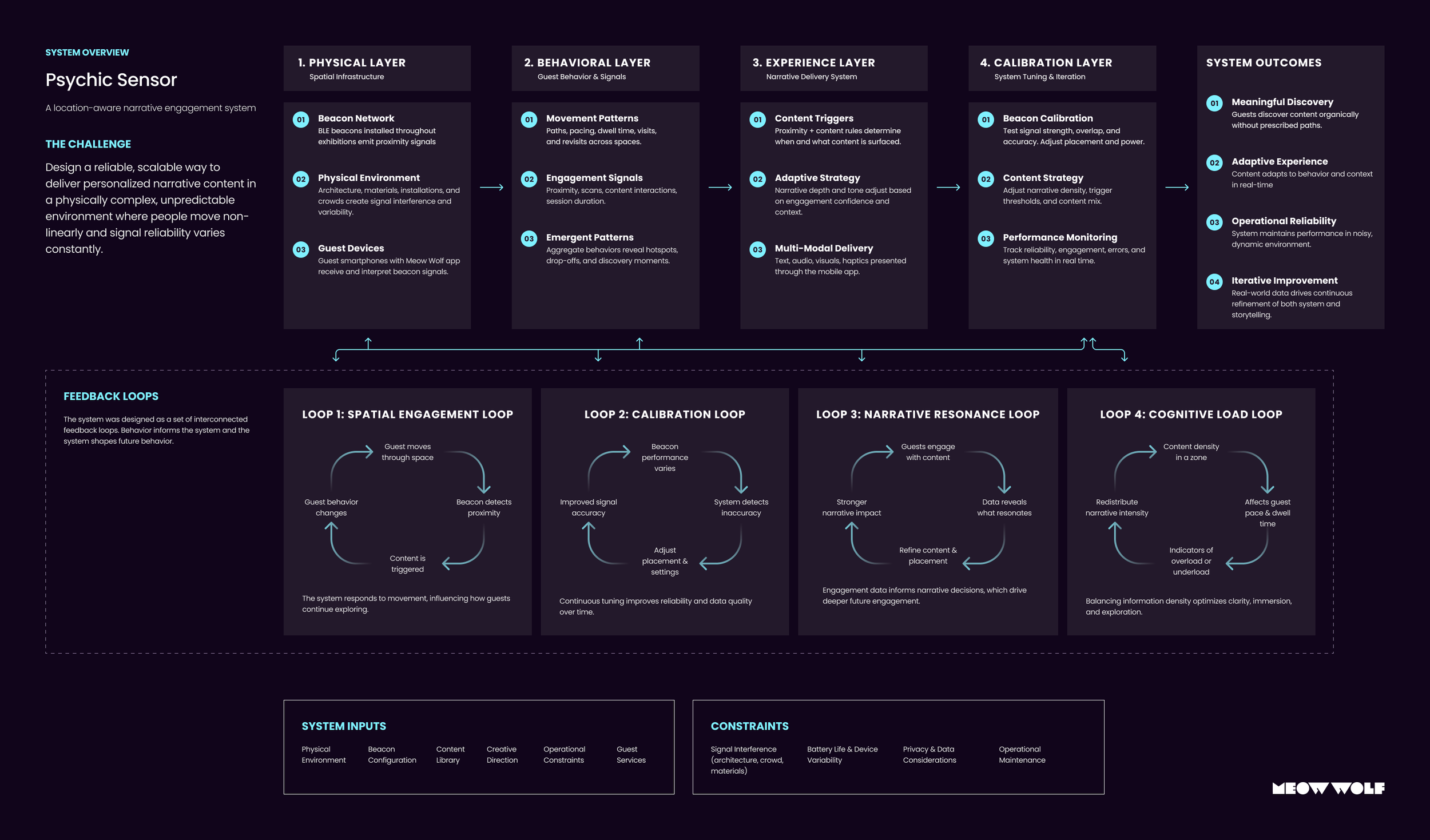
At Meow Wolf, I worked on the design and calibration of a location-aware narrative engagement system and mobile app that enabled guests to discover digital story content embedded throughout a large-scale immersive exhibition.
Company
Meow Wolf
Role
Lead product designer, art director
Year
2024
This work was part of my four-year in-house tenure at Meow Wolf (2020–2024), where I owned the digital product surface across Omega Mart’s interactive narrative experience, Convergence Station's interactive narrative experience, and the Meow Wolf App.
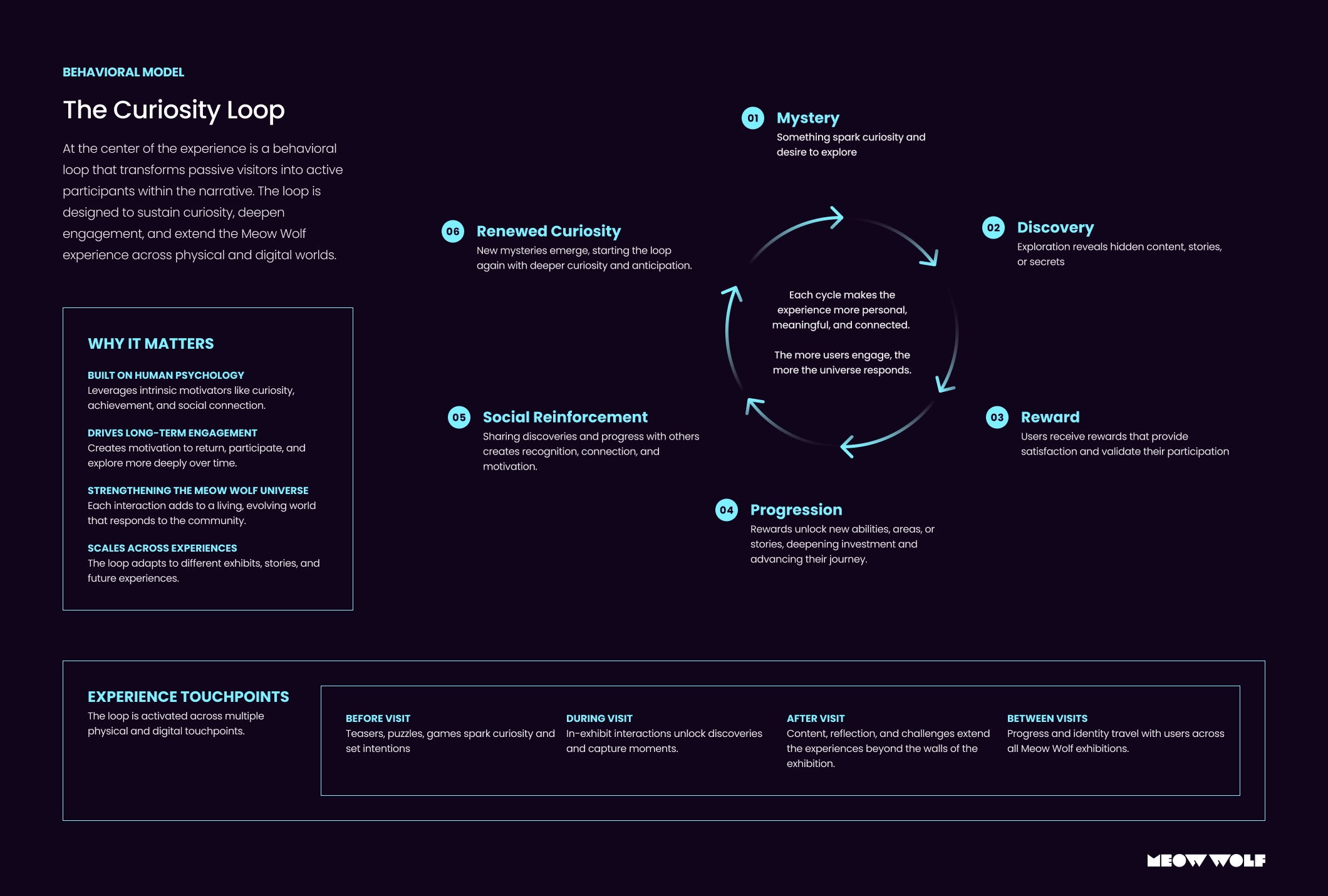
Repeat visitation is limited, constraining long-term revenue growth and increasing reliance on constant new customer acquisition is not sustainable.
How can we create an experience that keeps people coming back?
01. CHALLENGE
Across Meow Wolf exhibitions, repeat visitation is typically around 22-38%
Roughly only 1 in 4 to 1 in 3 visitors come back at least once
Impact and Measurement
Leading Indicators (Short-term)
% of visitors who download and activate the app on-site
% of visitors completing at least one story thread
Return intent signals such as saved quests and notifications opened
Behavioral Indicators (Mid-term)
% of visitors returning within 30, 60, and 90 days
Number of unfinished story arcs per user
Group-based quest sessions engaged
Business Indicators (Long-term)
Annual pass conversion rate
Ticket sales through the app
Merch sales through the app
# of yearly visits per user
02 APPROACH
Hypothesis
Designing for deeper narrative engagement, progression, incompletion, and social play will increase repeat visitation and build customer loyalty.
Challenge: Designing for Unpredictable Physical Behavior
Unlike conventional digital products, this system operated in a highly variable environment:
Guests moved unpredictably through dense physical space
Signal reliability fluctuated due to architecture, interference, and crowd density
Engagement was non-linear and emergent rather than task-based
Content needed to remain discoverable without being intrusive or overwhelming
Design principles driven by business goals
Design for return, not completion
Completion implies that there is no more value left in the experience. Completing the experience opens new narrative threads to encourage ongoing engagement.
Design for scarcity and change
Time-based events and rotating content encourages more immediate visitation rather than further postponement.
Make the invisible visible
Show users what they missed so they have a reason to return. There’s always more to explore.
Design for social engagement
Shared missions and group-based experiences builds rapport with other Meow Wolf fans leading to peer-motivated repeat visitation.
Reward curiosity over efficiency
For narrative-driven, exploratory experiences, efficiency isn’t the goal, but depth is. “Optimizing” the experience actually reduces its value.
Home screen
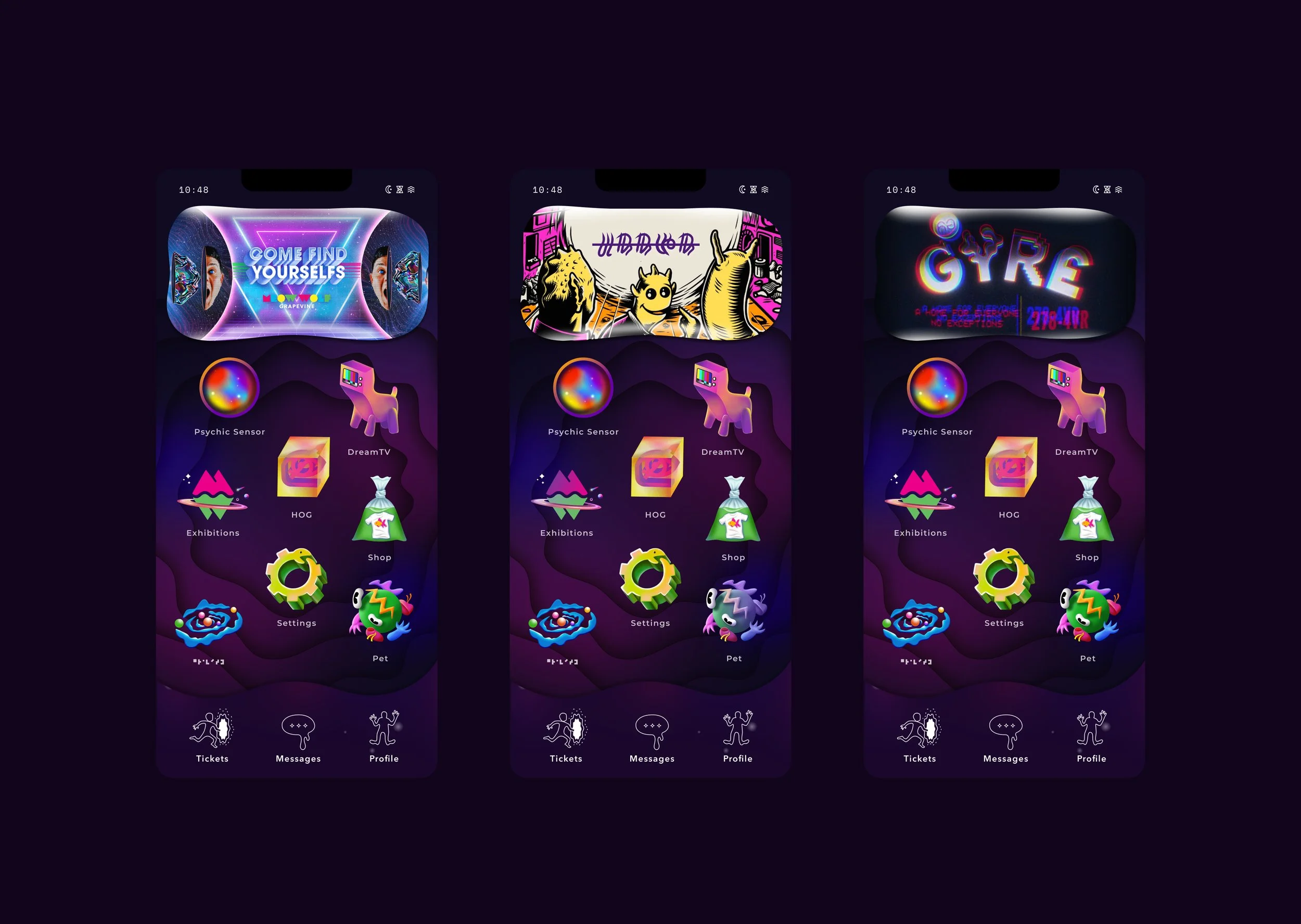
Applet icons
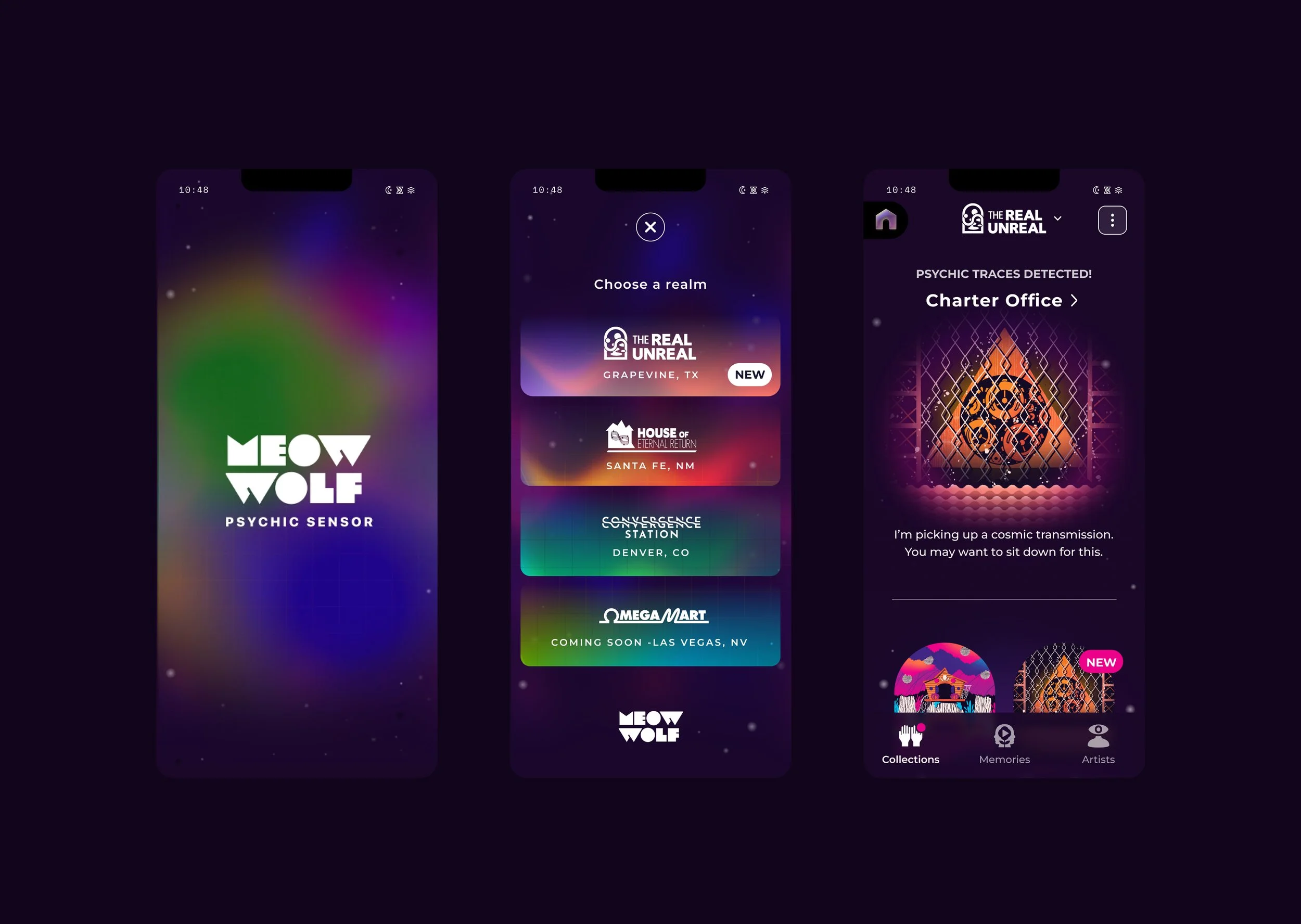
Psychic Sensor
Psychic Sensor
Visitors are guided through the exhibition with light-touch discovery prompts that reveal how to interact, uncover character backstories, and expand the world’s lore—deepening narrative immersion.
Bluetooth beacons embedded throughout an exhibition enables precise, location-based delivery of in-app story content. Significant engineering effort went into calibrating beacon behavior to ensure accurate, timely content delivery in a highly dense beacon environment.
Applet: Psychic Sensor
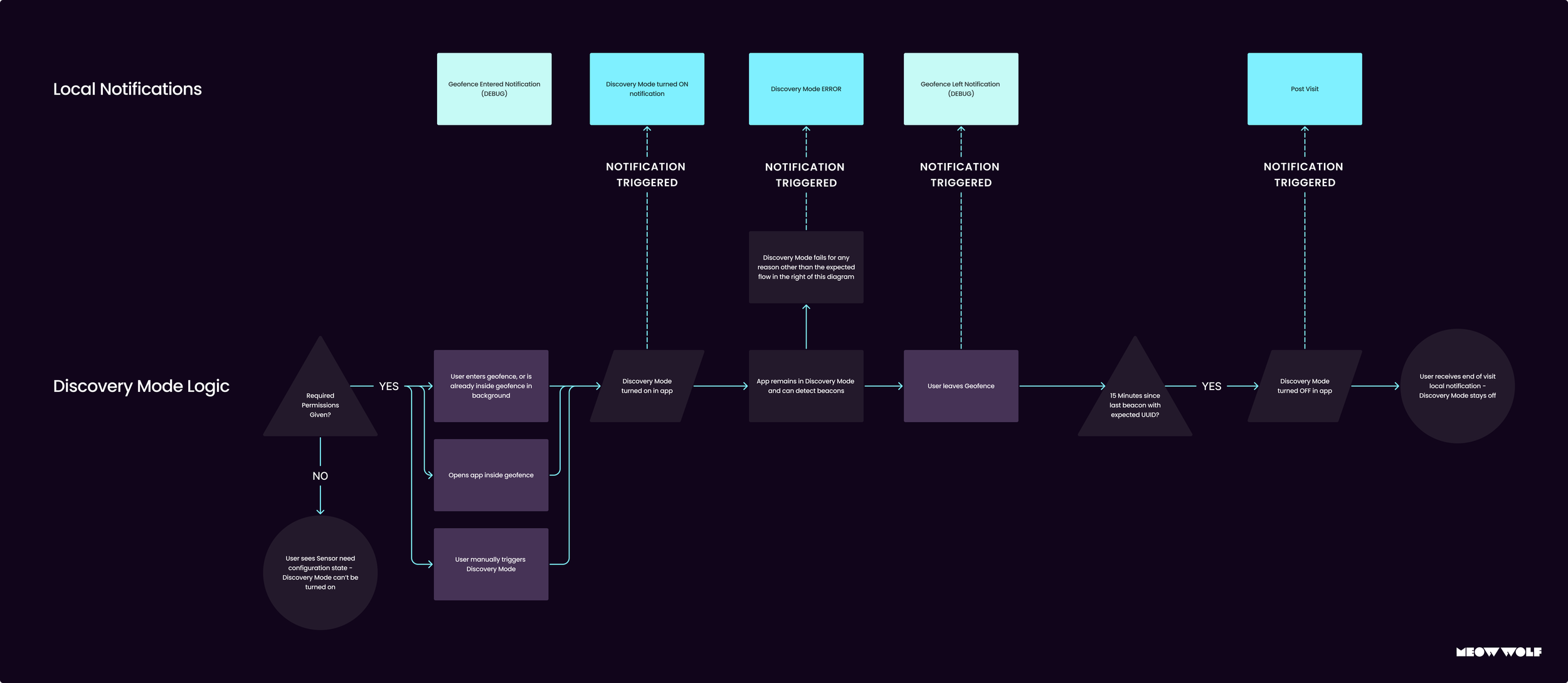
Discovery Mode Logic for Psychic Sensor
The feature relied on a network of strategically placed Bluetooth beacons embedded throughout the exhibition environment. As guests moved through the space, the app used proximity detection to trigger “psychic traces”, narrative-rich packets of content tied to specific rooms, artifacts, storylines, or moments of discovery.
This process had to be done for all 5 exhibitions where the Psychic Sensor feature was integrated.
Designing that system required far more than simply placing hardware in rooms. The work involved calibrating the relationship between:
Physical space
Guest movement patterns
Narrative pacing
Signal behavior
Crowd density
Emotional cadence of discovery
This process had to be done for all 5 exhibitions where the Psychic Sensor feature was integrated.
What evolved during rollout of Psychic Sensor across 5 locations
I worked alongside the project manager on the Psychic Sensor rollout across additional Meow Wolf exhibitions, partnering with the narrative and engineering teams to recalibrate the system for each venue's distinct physical and storytelling characteristics. For example, The Real Unreal in Grapevine, TX is approximately 61,000 square feet smaller than Convergence Station in Denver, which produced denser beacon clusters in tighter exhibition spaces.
After observing overlapping triggers and inconsistent content delivery in those high-density zones, we worked with engineering to identify which beacons to move, remove, or recalibrate, and consolidated collectible narrative content where appropriate. The adjustments produced a cleaner exploration pattern with fewer ambiguous interactions for guests.
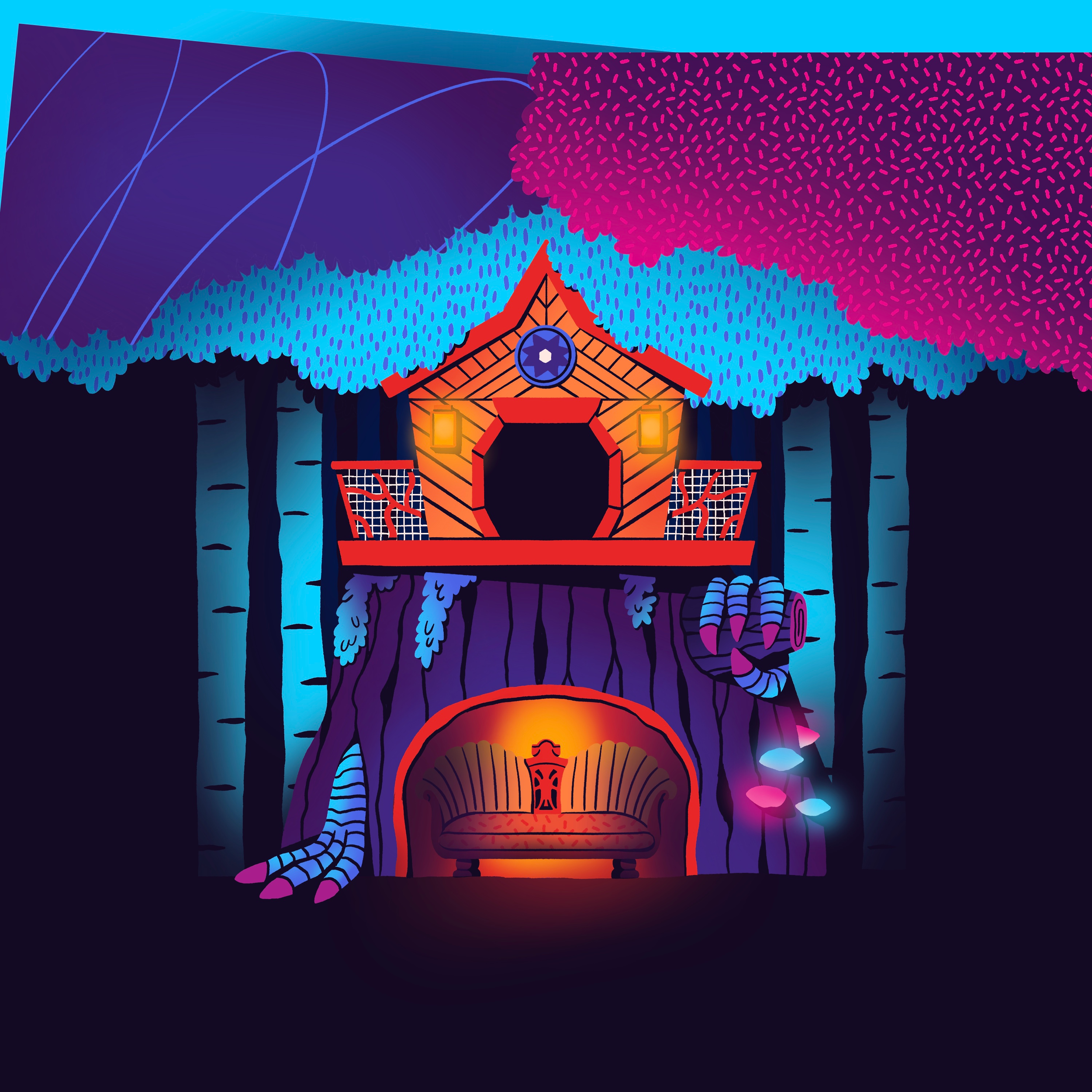
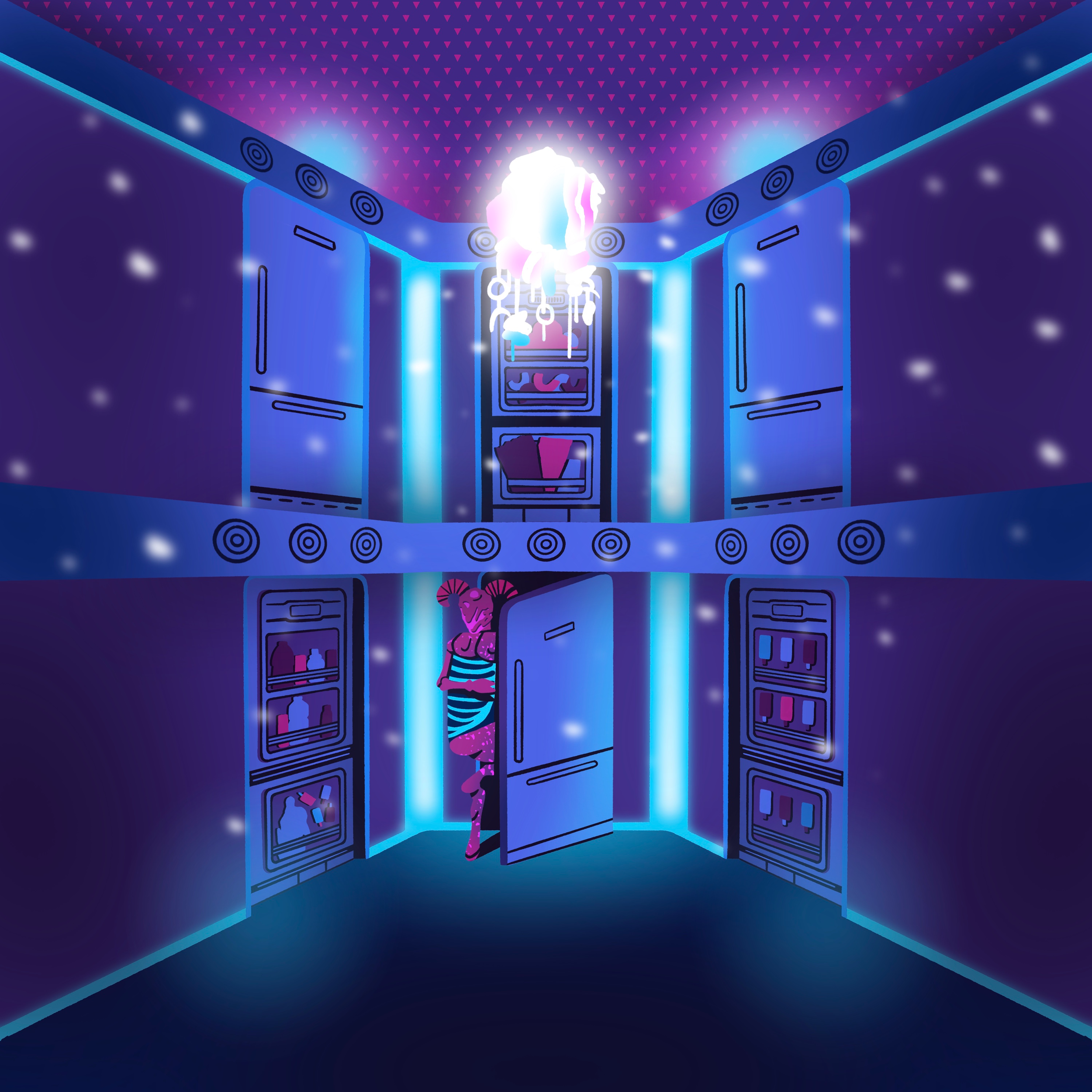
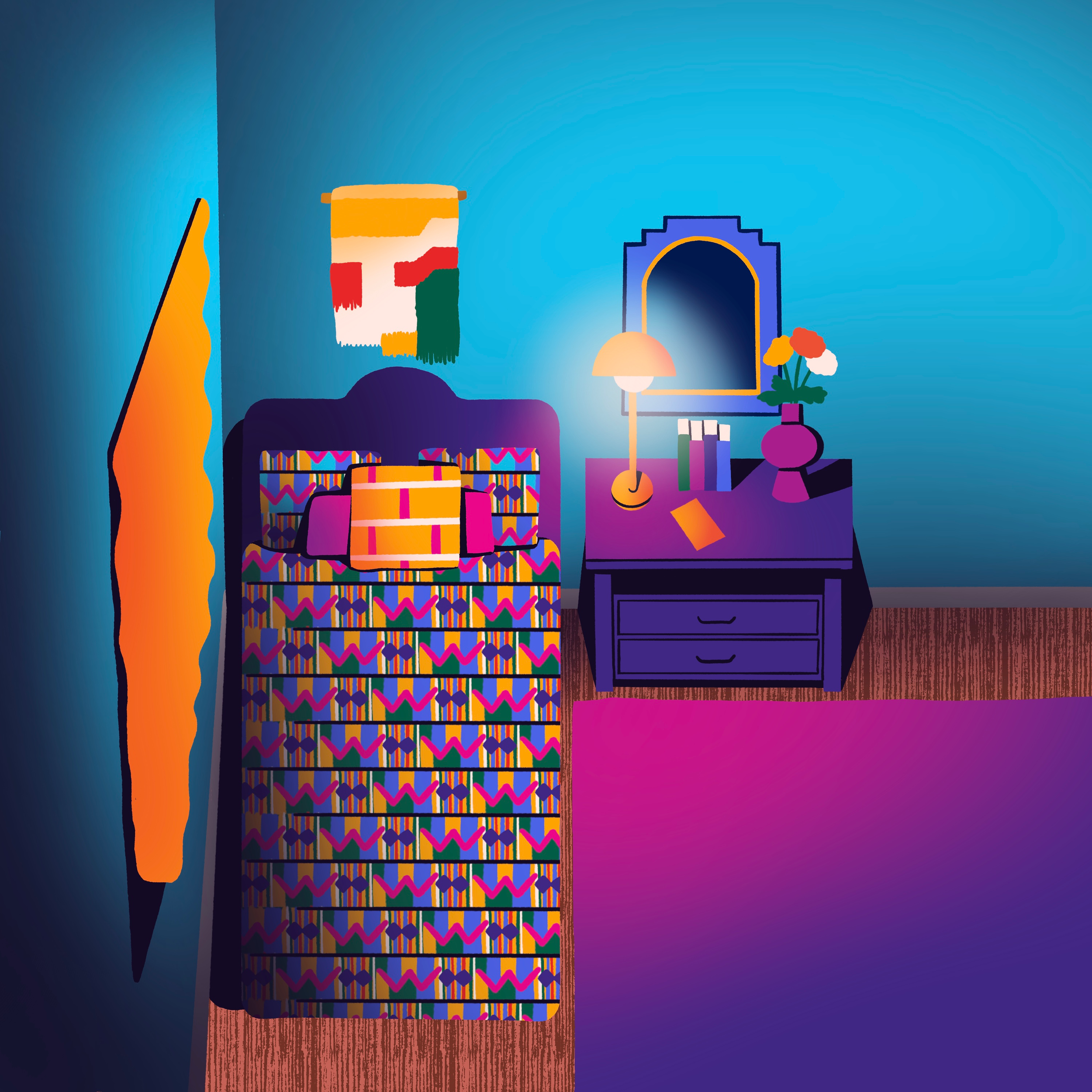

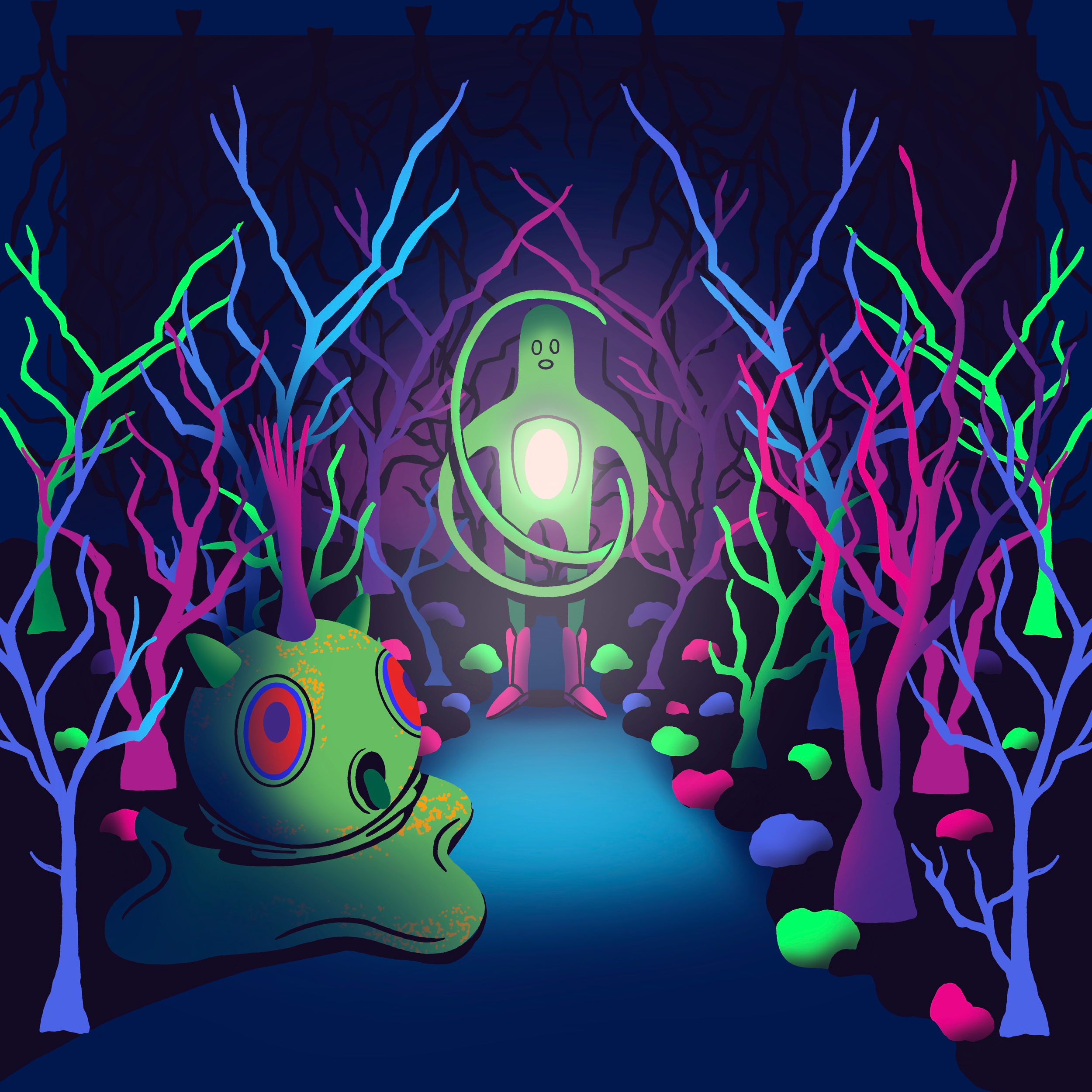
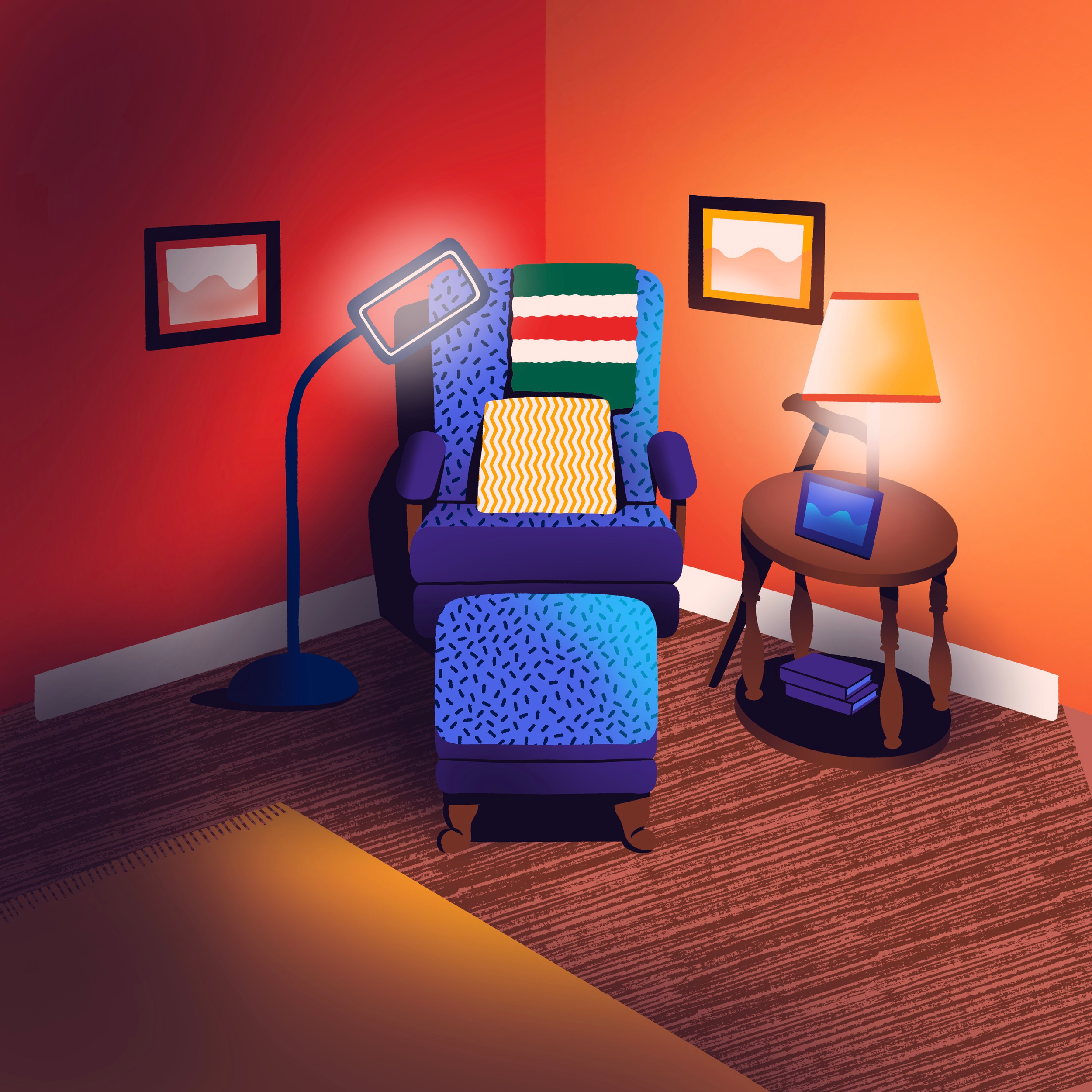

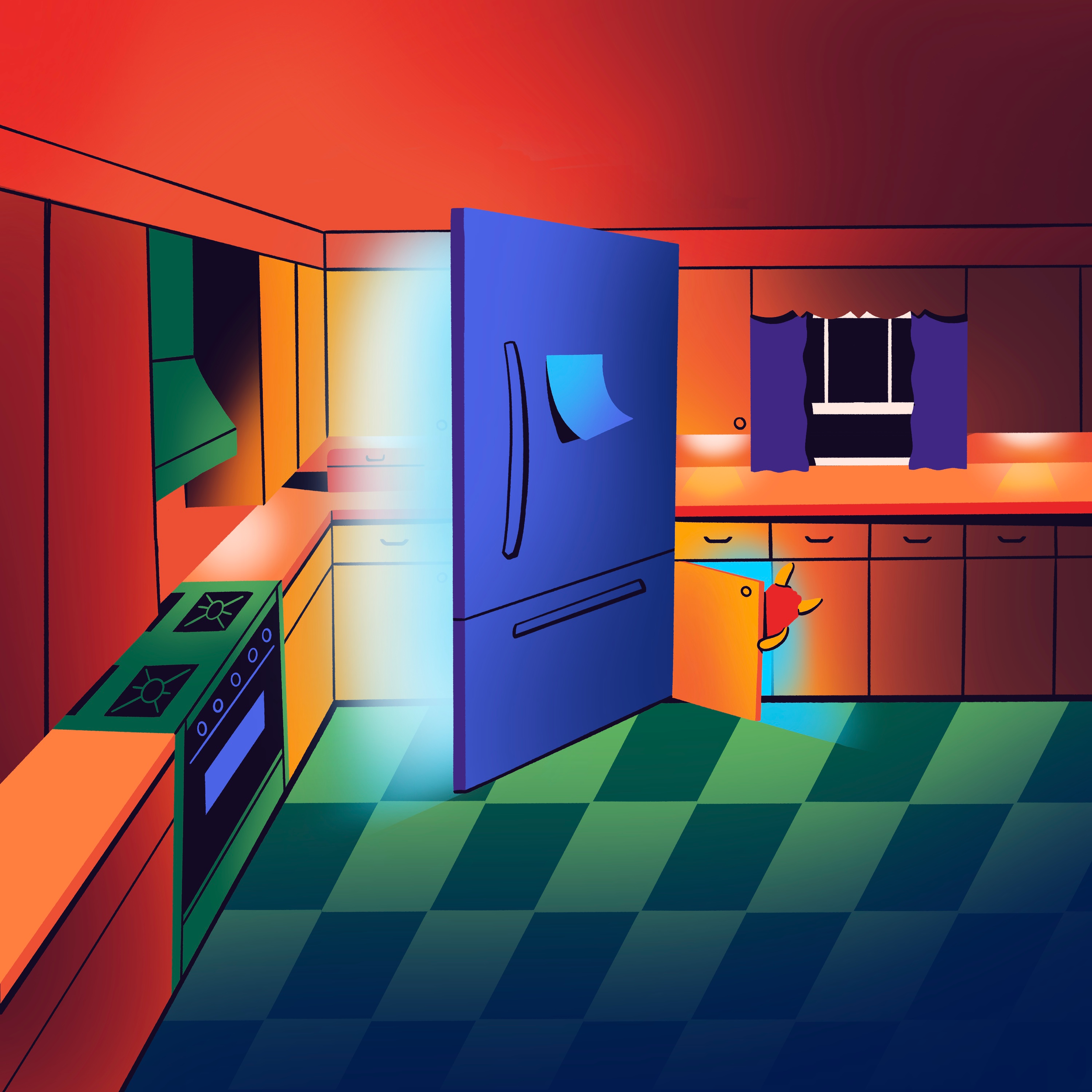
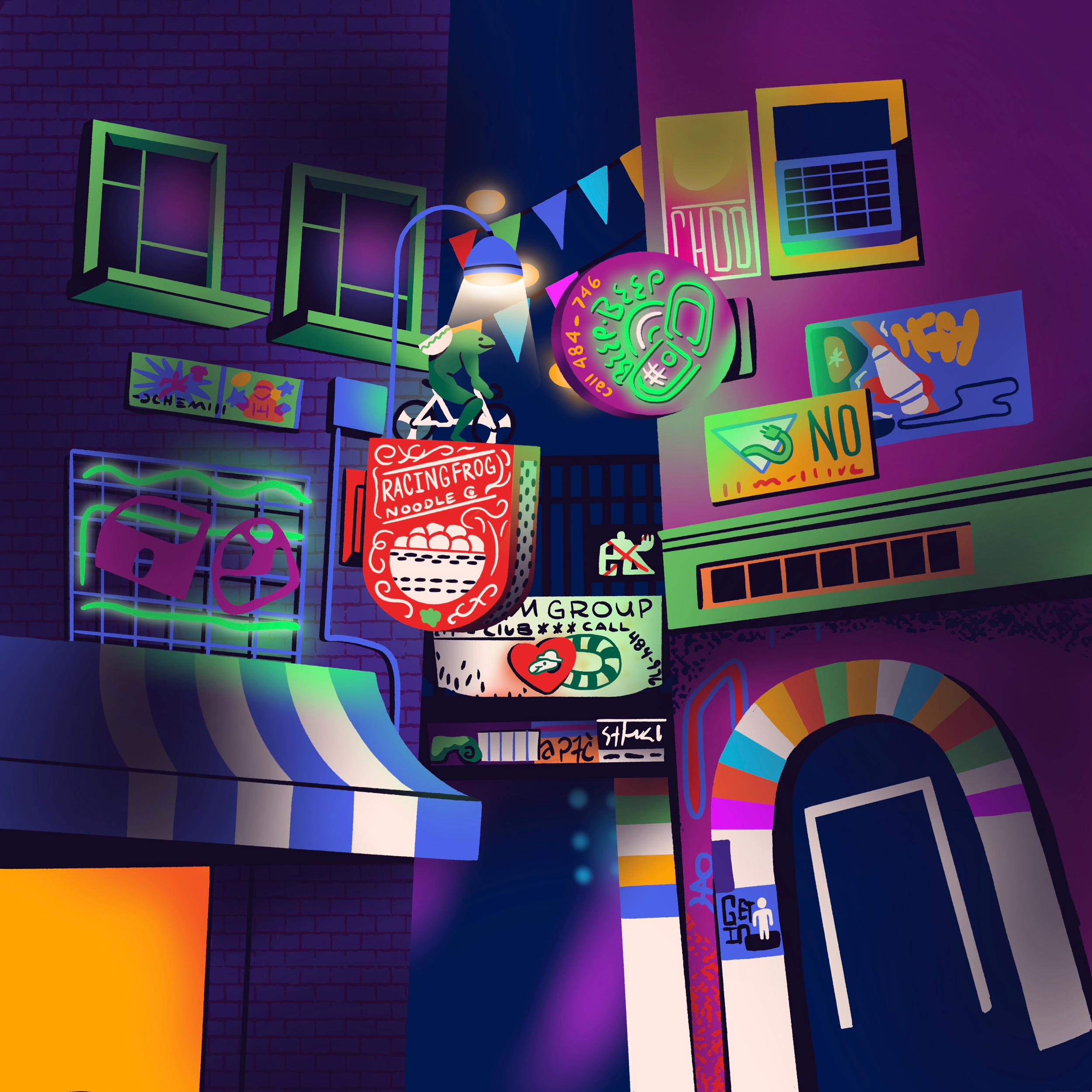
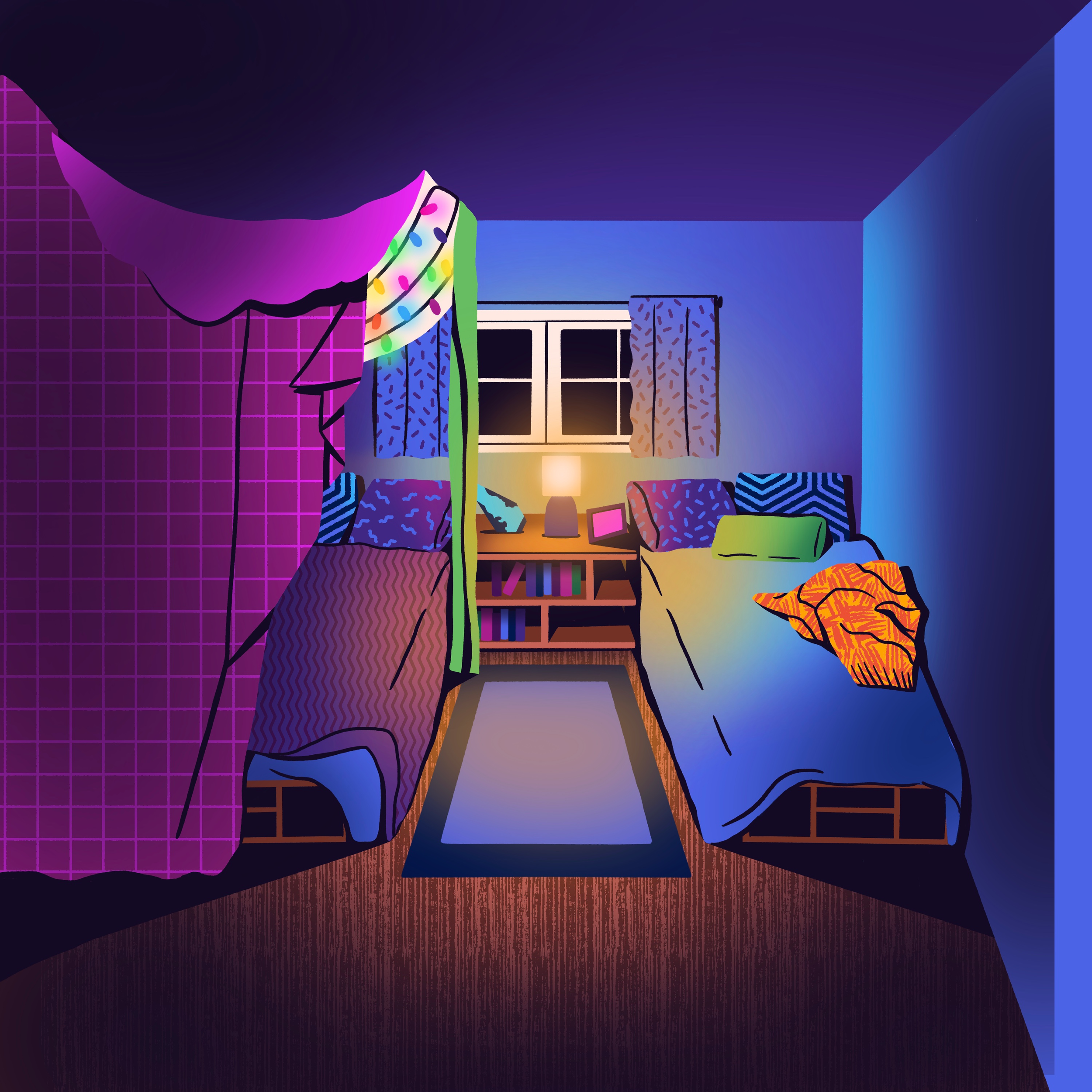
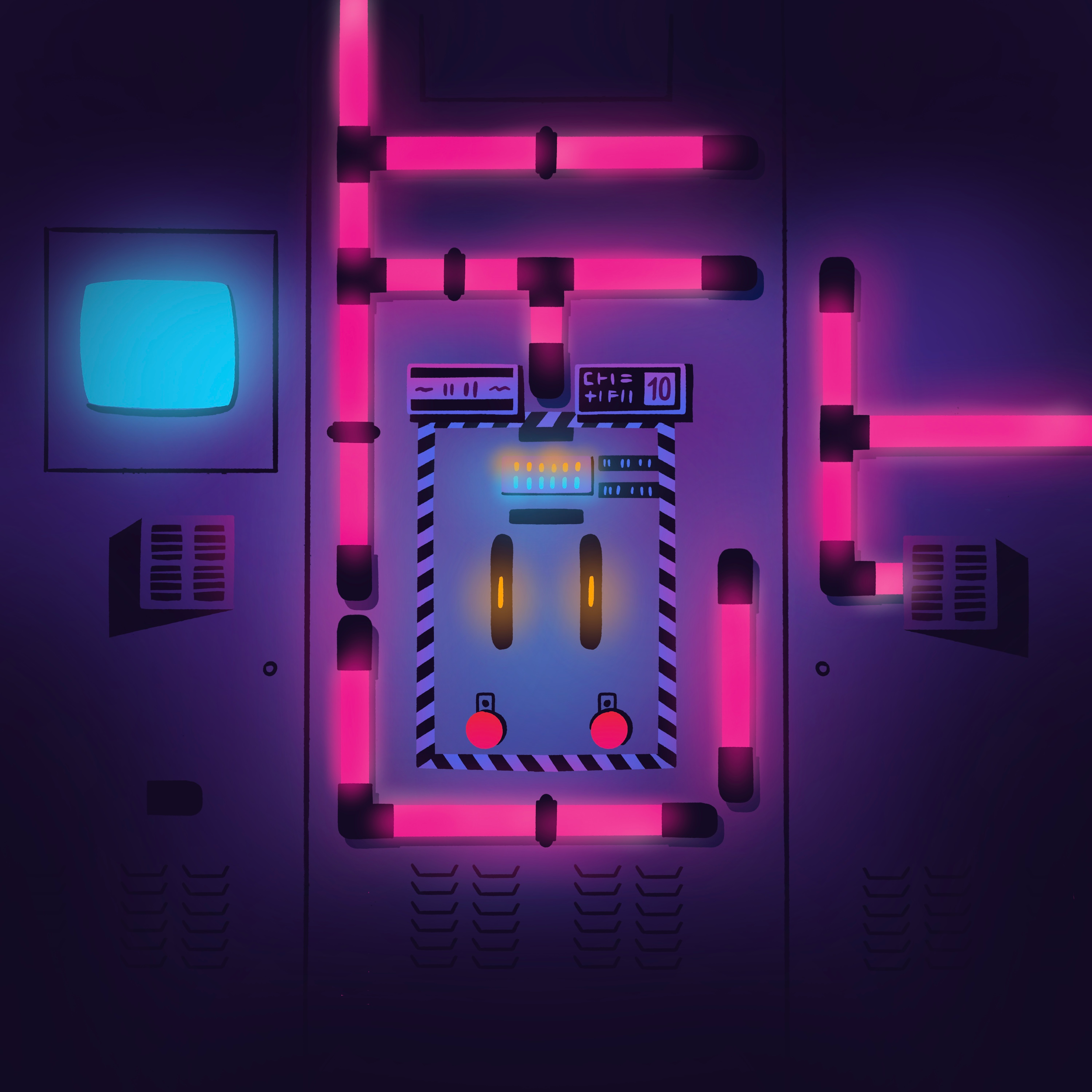
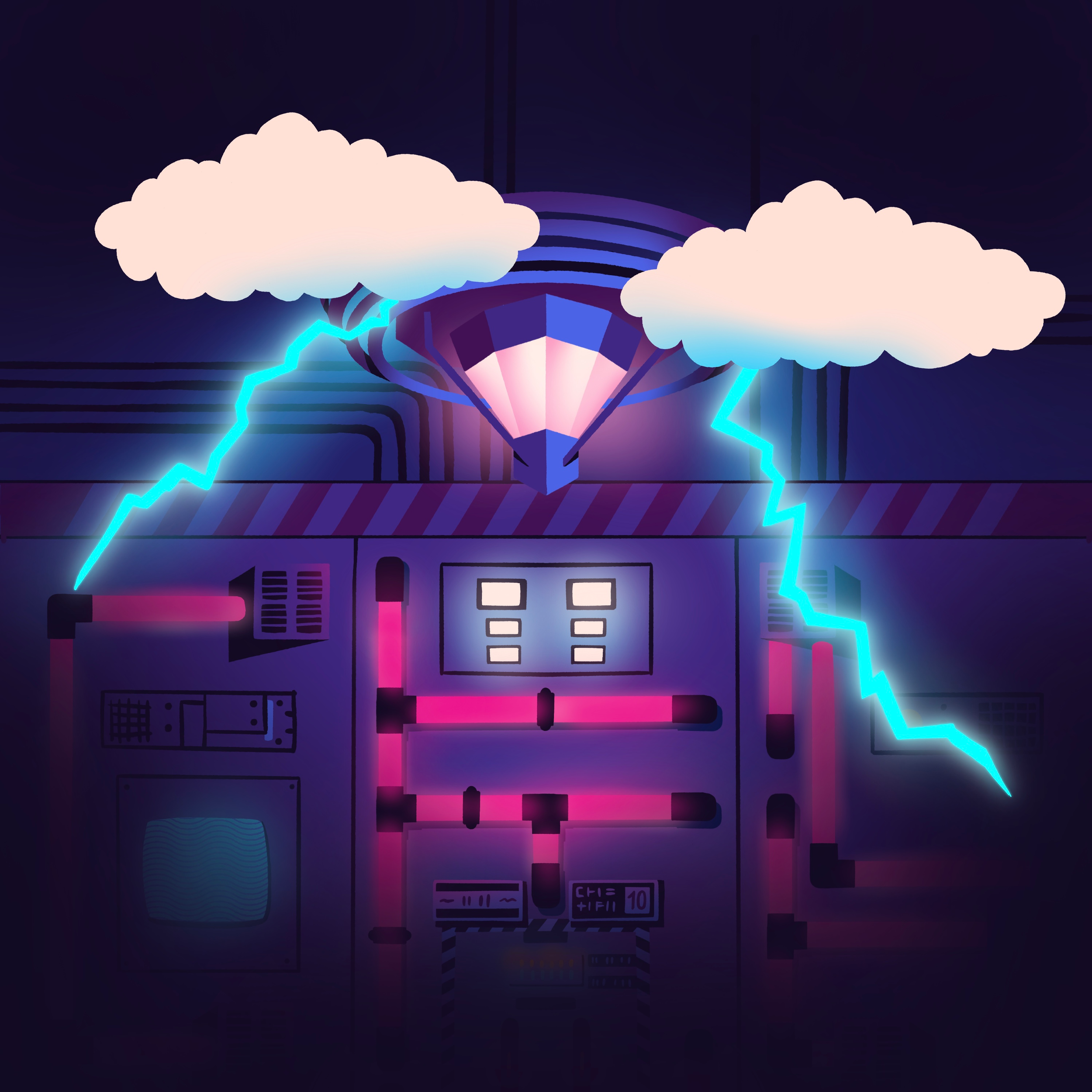

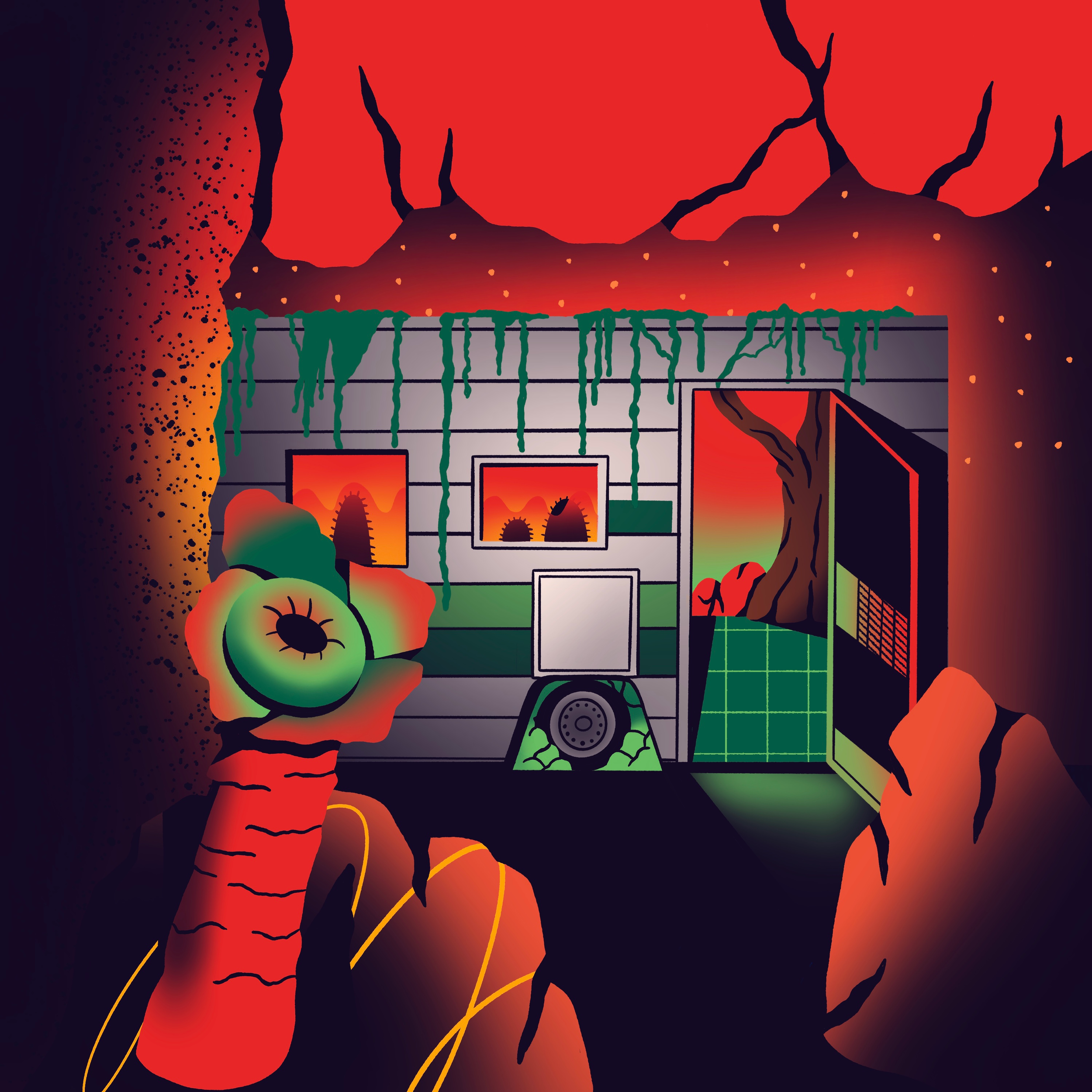
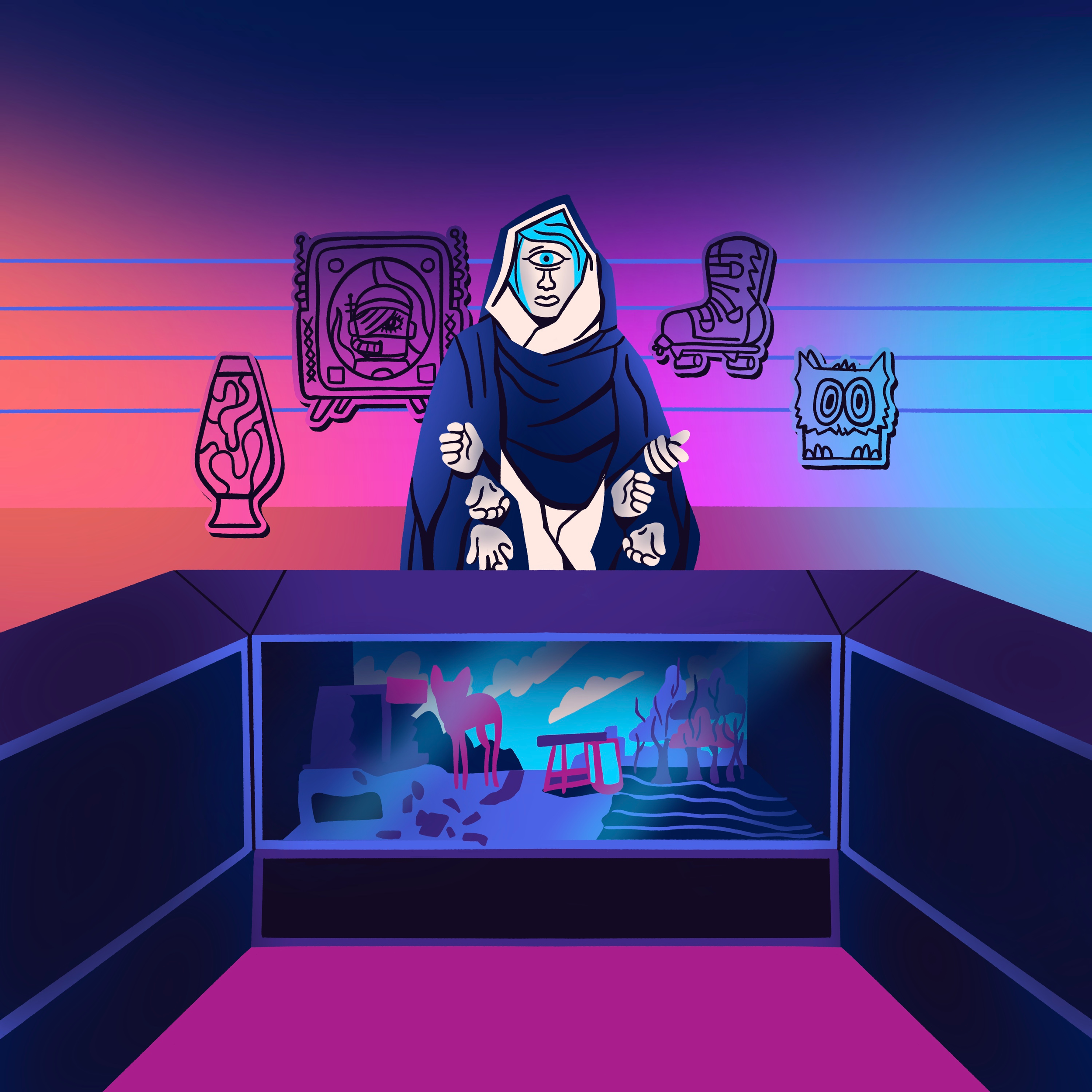
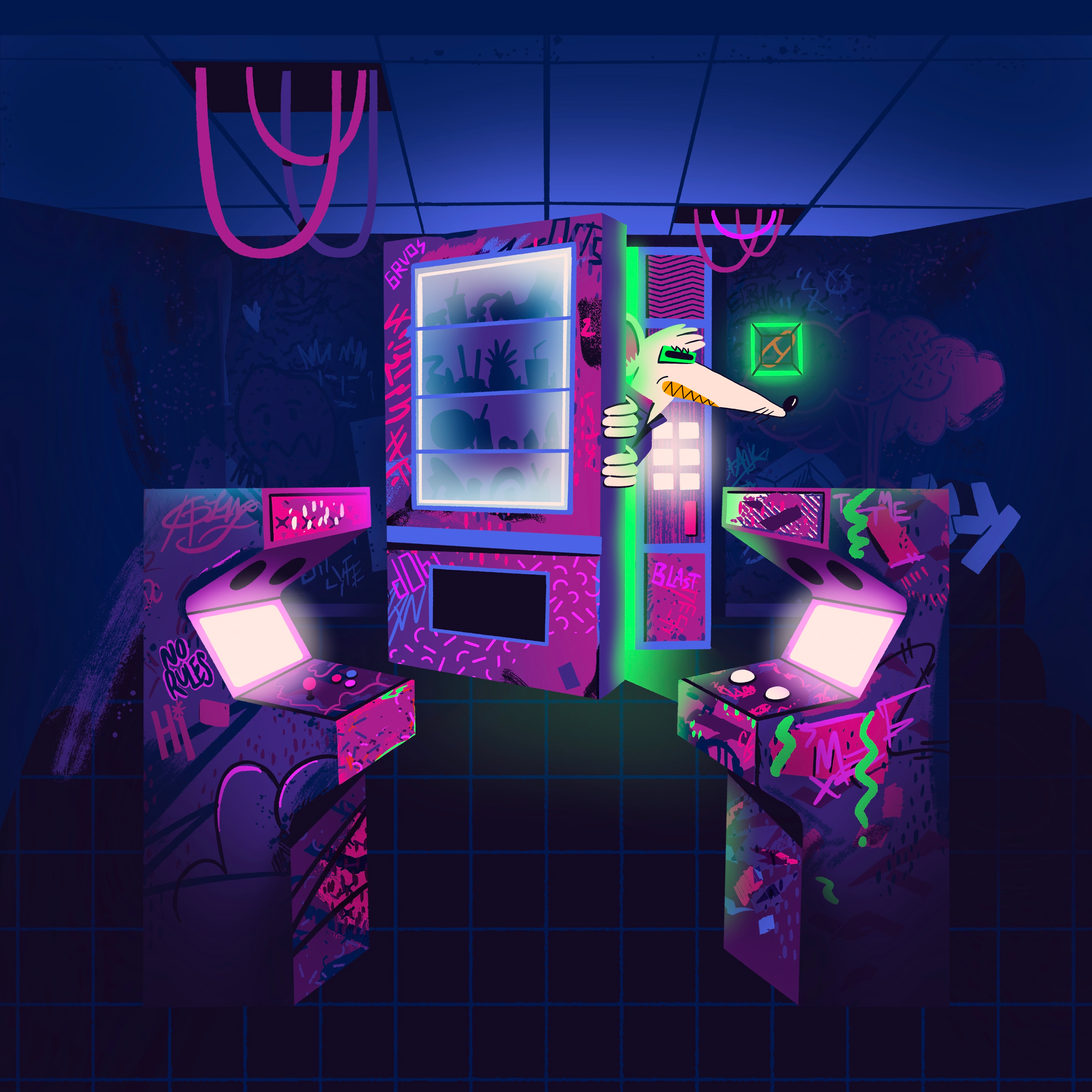
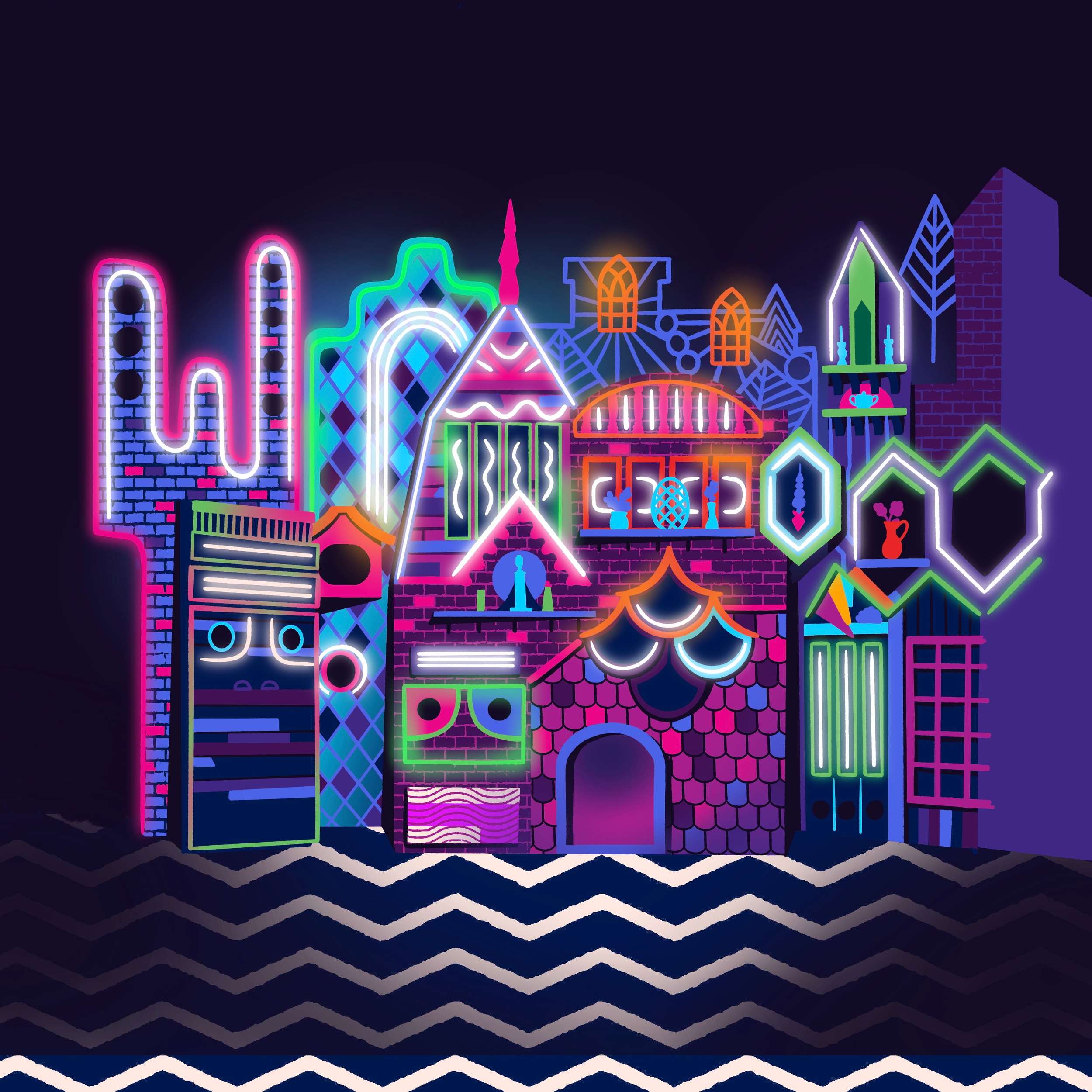
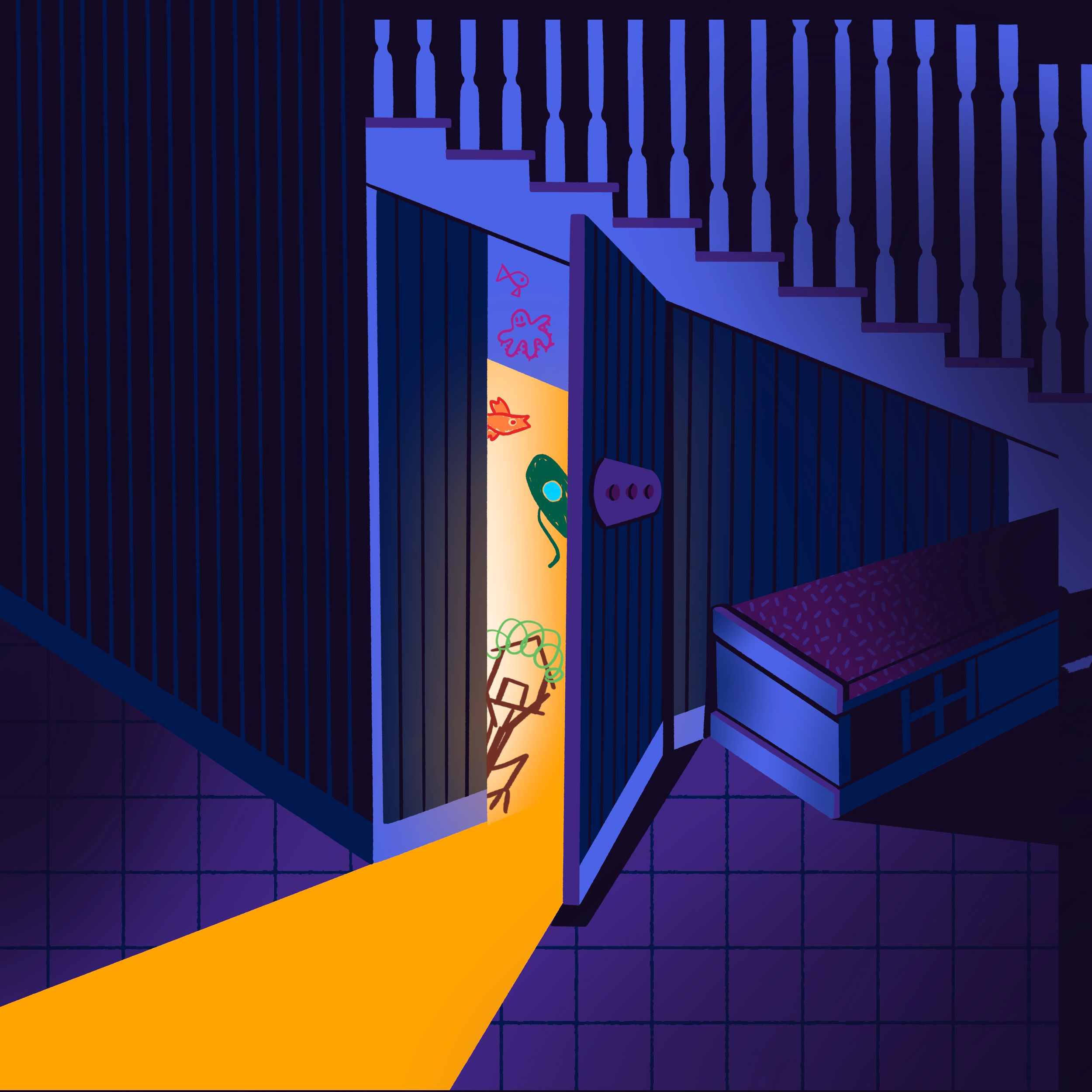
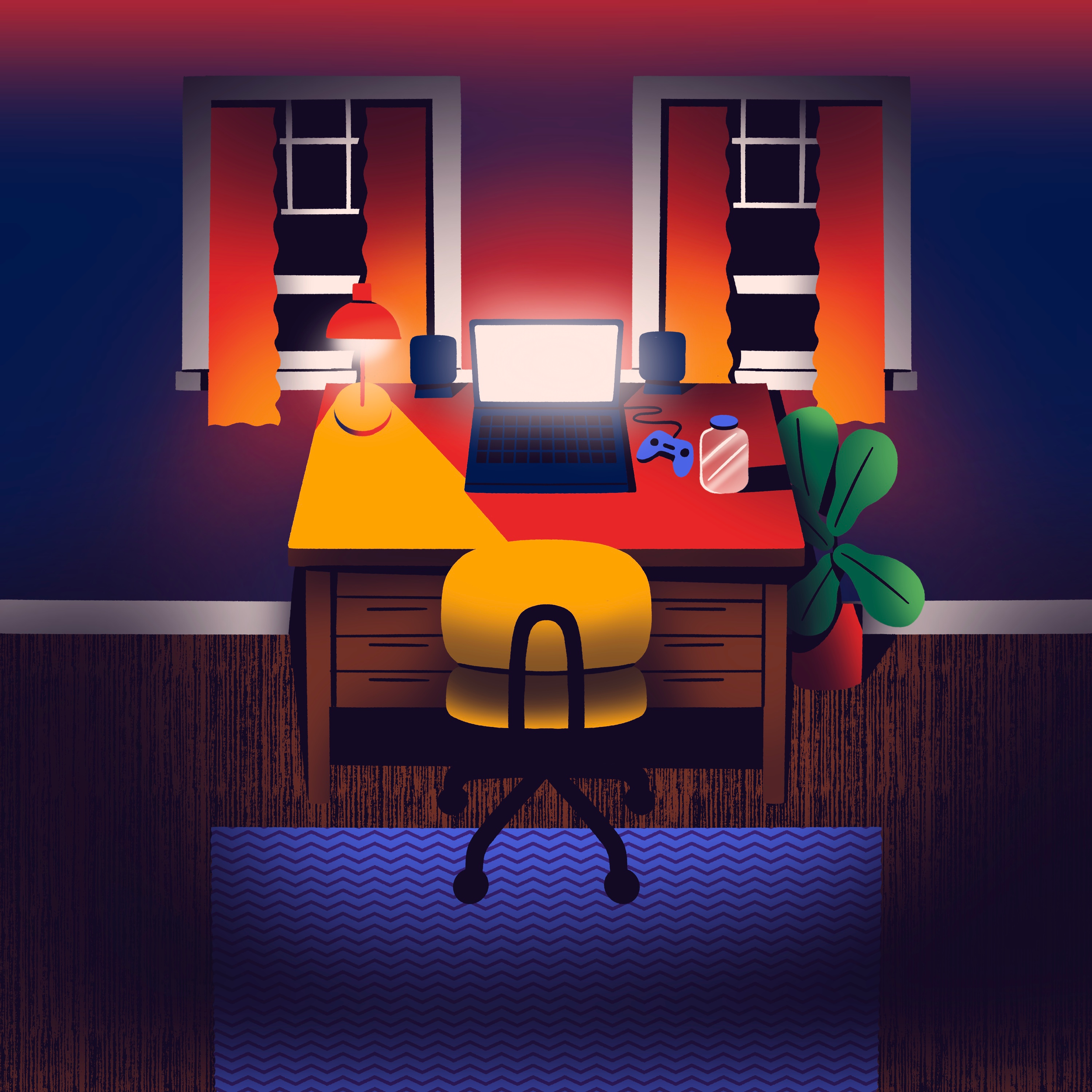
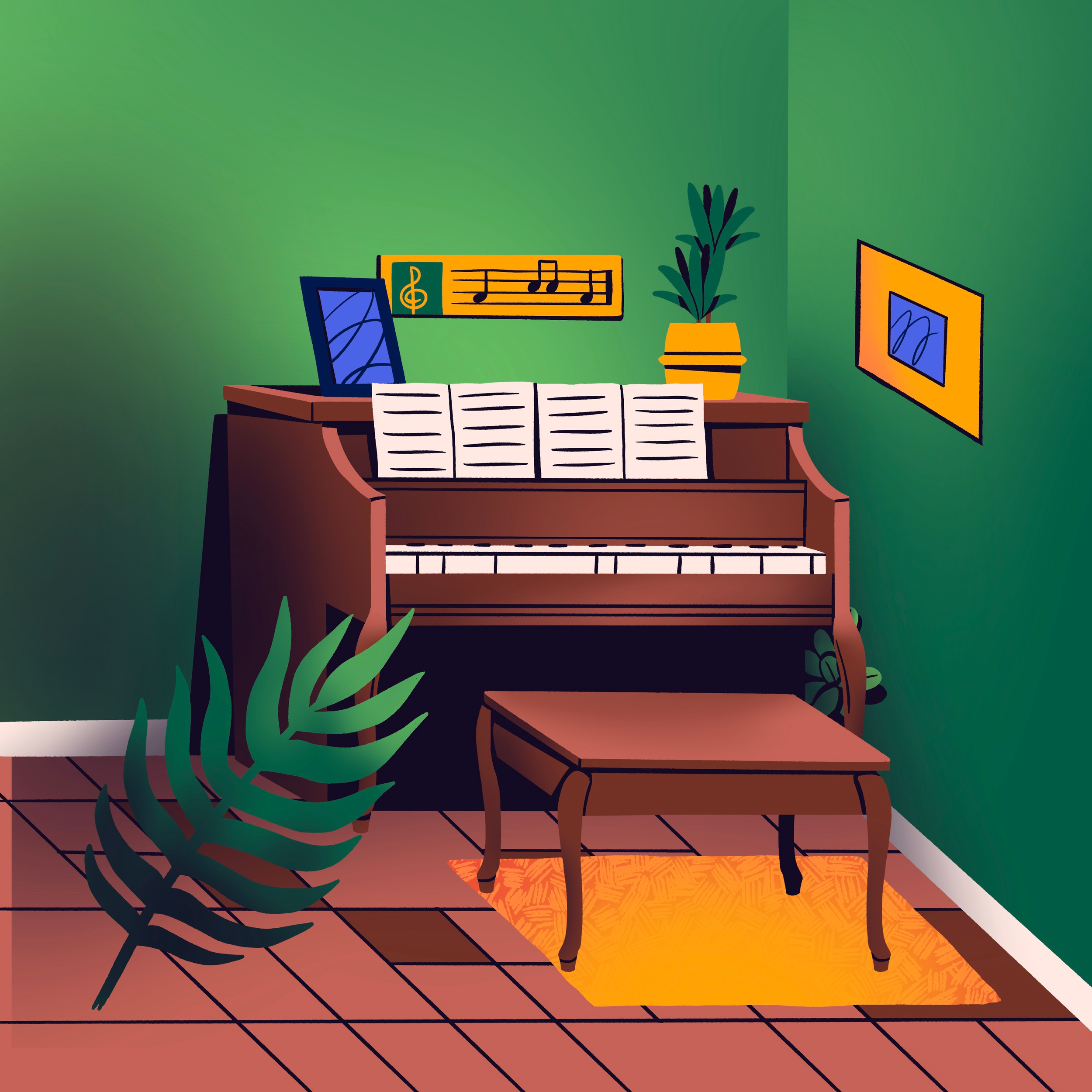

Nathan Walker, an illustrator that I’ve had the pleasure of working with in the past, was brought in to create a series of illustrations assigned to each collection that a guest could unlock and collect using the Psychic Sensor feature in the app. Additionally, as the Psychic Sensor feature was rolled out at other Meow Wolf exhibitions, more illustrations needed to be created. I helped guide our illustrator in defining an illustration style that would nicely extend across exhibitions. I also helped define some of the subjects for each illustration based on the physical spaces within the exhibitions where each collection is hidden.
Psychic Sensor Illustrations
Applet: DreamTV
Furthermore, the more organic layout presents some difficulty to maneuver. While it may be seemingly infinite, it is not, and the desire to navigate through the videos in a more linear and familiar fashion may appeal to certain users. Therefore we design the applet to do both. By exploring the more organic grid of videos, tapping anyone of them transitions into a fullscreen view, one that is more familiar to most users. From here they have the option of exiting out of the fullscreen view and return to the field of blobular video modules, or they can use the ‘next’ and ‘previous’ UI controls to transition between videos in a linear fashion while still in the fullscreen view.
The Meow Wolf app is essentially made up of various mini-apps, or applets, similar to what you might see on a standard mobile device, but with perhaps more of a twist. One of the applets I helped design was a video applet. Similar to YouTube or TikTok, this applet shows a stream of video content.
However, to make it better align with the Meow Wolf brand, we wanted to do something that stood out a little more. For our video app, we took the approach of displaying the videos in a more organic presentation. The idea was to treat the user’s device as a window peering into the ether of a seemingly infinite stream of video content created by Meow Wolf across all their varying projects. The motion study (below) was presented to the design team for them to further design out and coordinate with the development team to figure out how to pull off a relatively ambitious concept.
Applet: The Gyre Intercom
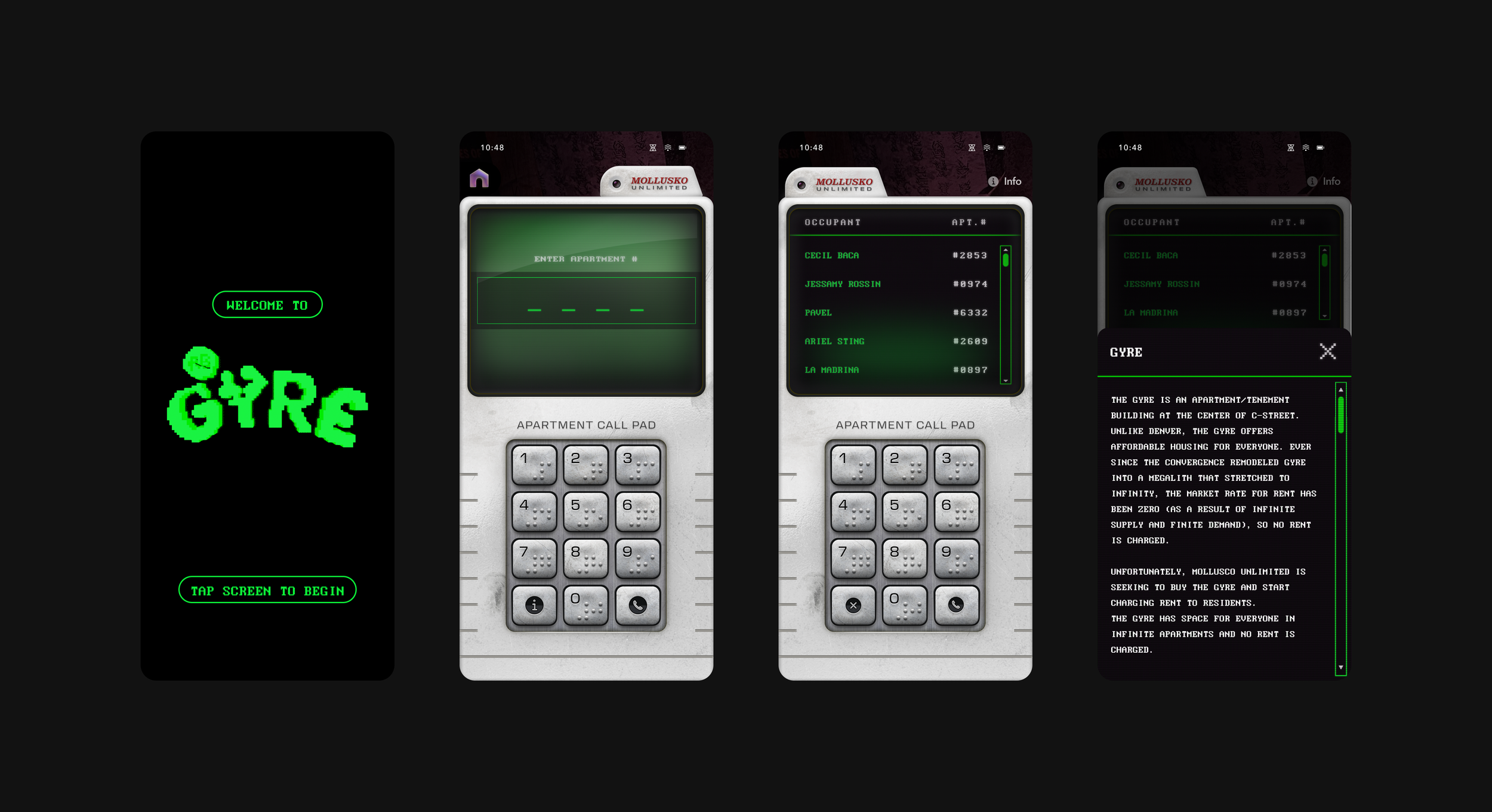
The Gyre is an apartment building located in C-Street in the Meow Wolf Convergence Station exhibition in Denver, CO. This apartment is not of this world and has infinite occupants from various worlds. Within the Denver exhibition, guests can visit The Gyre and interact with its tenants via the intercom located at the entrance. By typing in the number of a specific apartment, or by selecting a tenant from the directory, guests can see videos of these individual tenants as if they were on a video call with them.
Since this attraction is anchored to a physical space within the Convergence Station exhibition, we created a virtual version of it within the app to further extend the narrative beyond the walls of the exhibition. Why we typically steer clear of skeuomorphism in the app, it seemed appropriate here given the feature is meant to emulate a physical device within the space. While there is a directory within the intercom that enables users to engage randomly with characters, some numbers are integrated into the gameplay so that users can use this feature to find clues that may help them solve the mystery of Convergence.
After launching version 1.0, we recognized the need for an experience designed specifically for guests inside the exhibition. Exhibition Mode streamlined the app and surfaced only the most relevant, location-based features—deprioritizing features intended for use outside of exhibitions.
Exhibition Mode
Objective
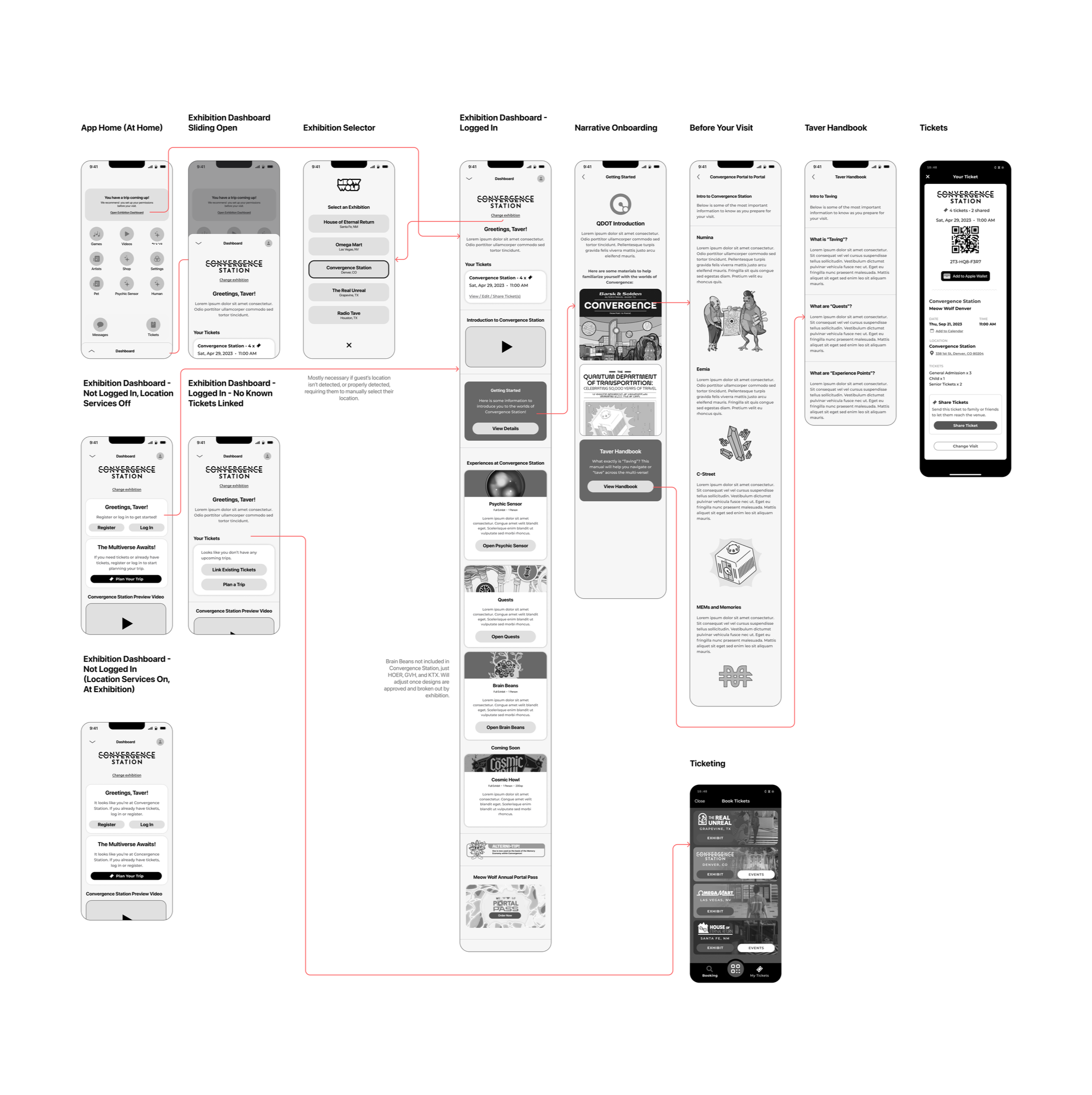
The primary goal of Exhibition Mode is to support guests throughout their visit—from preparing for the trip and navigating to the venue, to parking, ticketing, and entry—while onboarding them into the narrative they were about to experience and prompting key permissions in advance so they could get the most out of the app once inside.
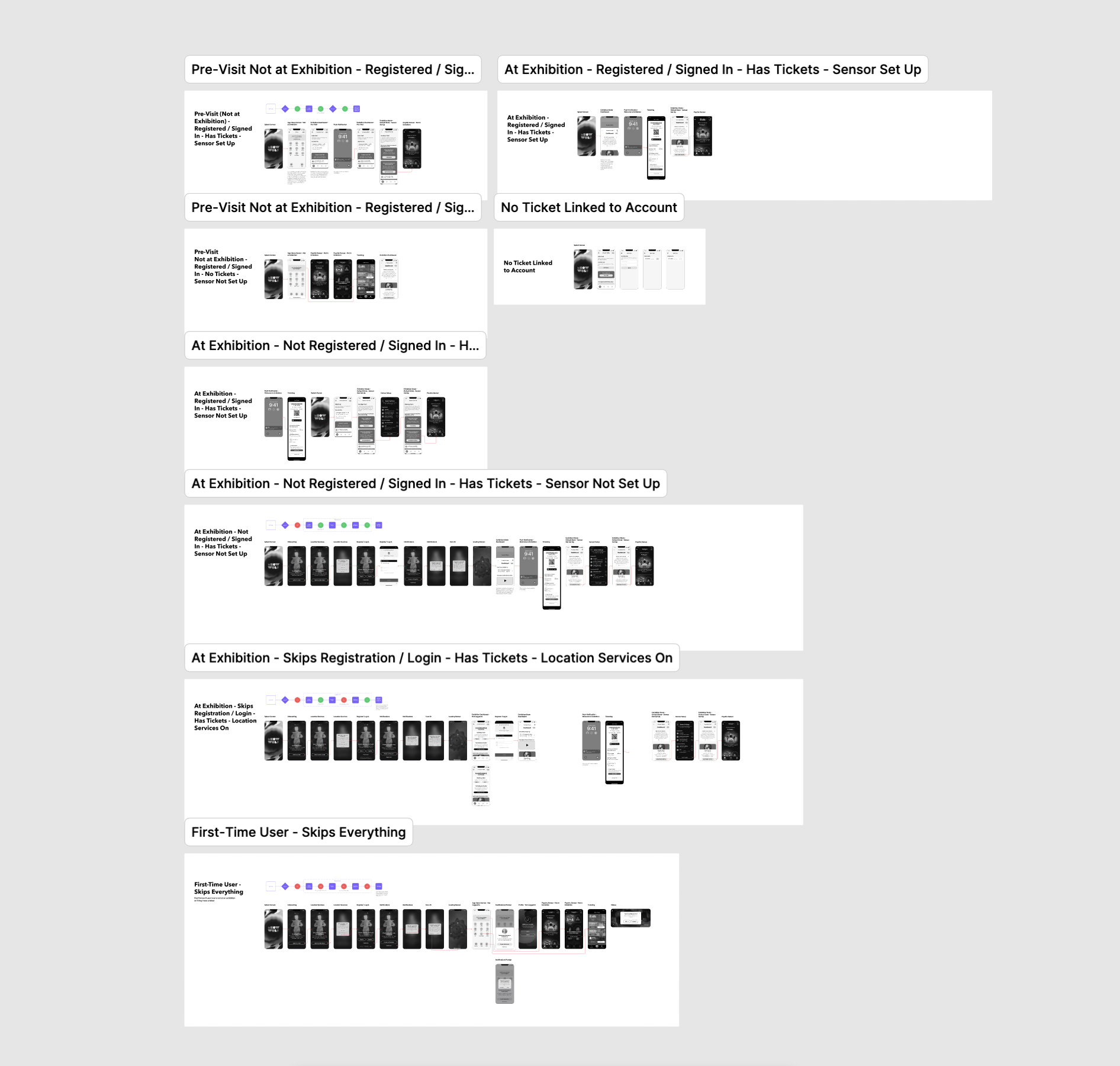
Conditional Inputs / Flow States
Laying out flows based on each of these conditions was vital to us designing an experience that is tailored to the needs of the guest, meets them where they are, and facilitates a smooth experience all the way from pre-visit to visit to post-visit.
Has the guest already registered their account?
Are they logged in?
Have they used the app before?
If they have used the app before, did they skip onboarding?
Do they already have tickets?
Are their tickets linked to their account?
Have they setup their bluetooth and location services?
03 RESULT
Shipped in 2024 with the Psychic Sensor applet pattern rolled out across five Meow Wolf exhibitions. The app achieved a 4.9-star iOS App Store rating from 1.6K downloads, modest adoption relative to Meow Wolf's multi-million annual visitor base, but exceptionally high satisfaction among the audience that opted in. The Psychic Sensor became the canonical applet model that each venue built against, demonstrating the conversational-narrative interface scaled across five narratively distinct exhibitions without redesign.
What I can't claim from this engagement: the behavioral and business indicators I defined in Section 01 — return-visitation segmented by app usage, story-thread completion rates, annual pass conversion — were never instrumented in a form the design team could access beyond the app-store-level signal.
04 REFLECTION
This project fundamentally reshaped how I think about digital products not as isolated interfaces, but as adaptive participants within larger experiential systems. The most meaningful challenge was not adding technology, but determining when technology should step back in order to preserve curiosity, autonomy, and human discovery. Designing for immersive environments reinforced the idea that the success of a digital product is not always measured by how much it captures people’s attention, but by how effectively it supports moments beyond the screen.
If I could go back, the dataset I'd want is the conversion funnel from venue visit → app awareness → download → first story arc. The 4.9 rating tells me the experience worked for the people who opted in; what I don't know is whether 1.6K represents the natural ceiling for an opt-in narrative companion at immersive venues, or whether discoverability friction kept adoption an order of magnitude below where it could have been. The answer points to two completely different next-version design responses.